See your AI teammate in action now
Ready to make support faster, kinder, easier and help customers feel good about choosing you?
PS: Sales improves too...
No credit card required
14 days free trial
DIY or Guided setup
Ready to make support faster, kinder, easier and help customers feel good about choosing you?
PS: Sales improves too...
No credit card required
14 days free trial
DIY or Guided setup
A guide to the 12 best contact center automation tools for 2026, covering feature comparisons, screenshots and links, use cases by industry, and implementation considerations.
Manish Keswani

Summary by MagicalCX AI
The best contact center automation in 2026 is human-augmenting, not agent-replacing, because tools that automate routine work like WISMO queries, ticket routing, and after-call summaries free agents for complex, high-empathy cases and can surface concrete patterns like “20% of all queries” tied to a single product friction point.
Your agents are swamped with repetitive questions, your first-contact resolution rates are suffering, and your customers expect instant, personalized support. The traditional contact center model is cracking under the pressure of these modern demands. The solution isn't just about hiring more people; it's about empowering your existing team with intelligent automation that handles the routine tasks, freeing them to focus on high-value, complex customer interactions. Finding the right contact center automation tools is critical, but the market is crowded with platforms that promise everything but deliver a disjointed experience.
This guide cuts through the noise. We provide a detailed analysis of the top 12 automation platforms, moving beyond generic feature lists to give you a clear picture of how each tool performs in the real world. You will find screenshots, direct links, and actionable insights tailored to specific industries like e-commerce, SaaS, and fintech. We'll explore how these solutions can:
We will break down each platform, including options like Genesys Cloud CX, NICE CXone, and our own empathy-first platform, MagicalCX, so you can see exactly how they compare. We also examine their limitations and provide implementation considerations to help you make a confident decision. While this article focuses specifically on contact centers, a broader operational view is also valuable. To gain a comprehensive understanding of various platforms available for streamlining operations, explore complete guides on general workflow automation tools. Let’s find the right automation strategy to scale your support and build lasting customer loyalty.
MagicalCX earns its place as our featured choice by fundamentally reframing contact center automation from a cost-cutting tool to a revenue-positive, relationship-building engine. It’s an empathy-first AI platform engineered to deliver context-aware, human-feeling conversations that customers appreciate. The platform excels at turning standard support interactions into opportunities for retention and growth, making it a standout among more traditional contact center automation tools.

What sets it apart is its EFRO™ (Empathy, Fairness, Revenue, Outcomes) Engine. This proprietary intelligence allows the AI to perform agentic actions like processing orders, saving a potential cancellation, or suggesting a fair upsell directly within a support conversation. For example, an e-commerce customer asking about a return might be offered an instant exchange with a small discount on a related item, converting a potential loss into a new sale. This is guided by a core principle of fairness, so actions are only taken when genuinely helpful.
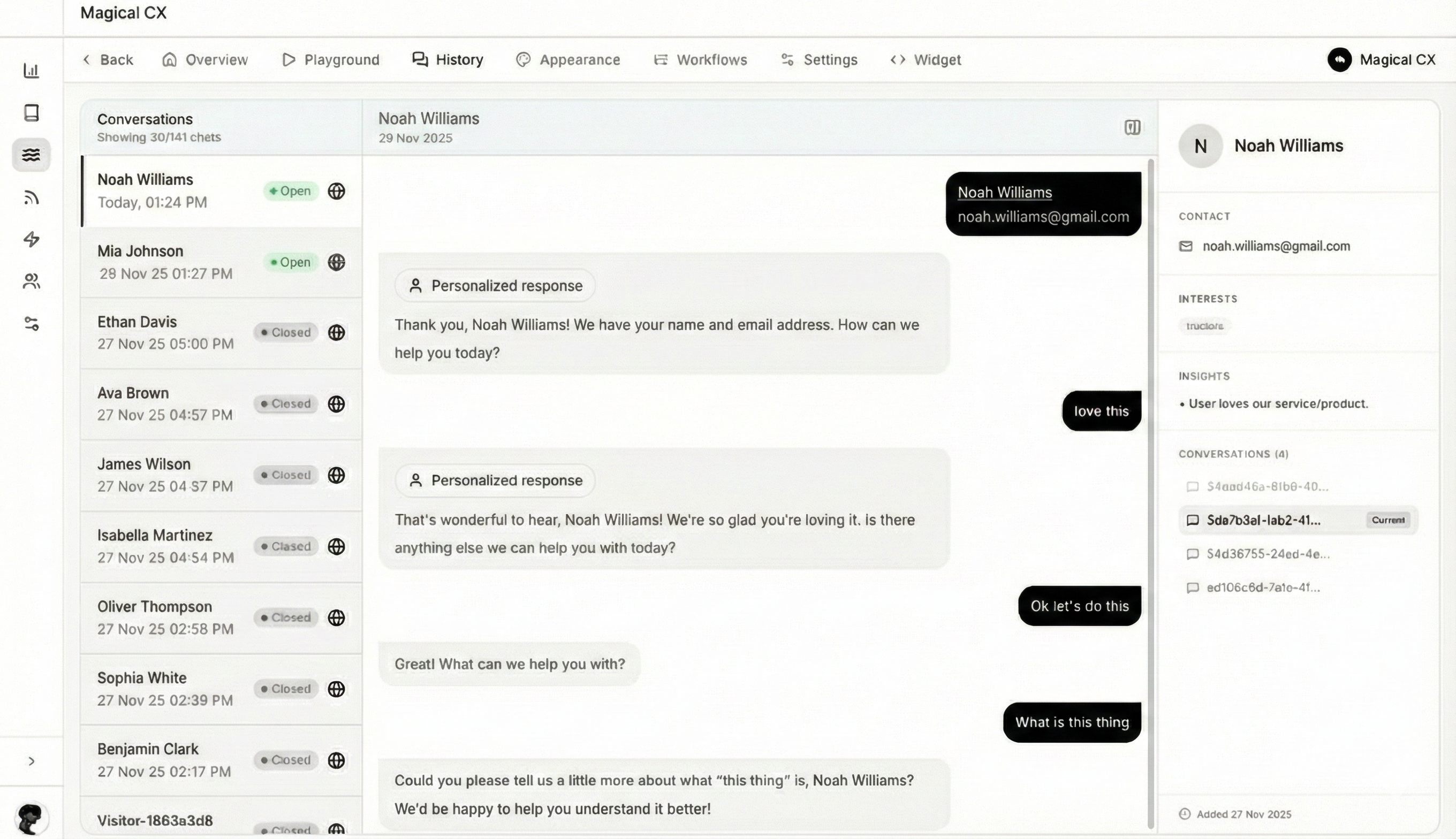
Its CRM-like conversational memory is another key differentiator. Customers never have to repeat their issue or history, as the AI maintains a complete, context-rich profile across all channels (web chat, email, WhatsApp, Instagram, Messenger). This creates a frictionless experience, particularly during handoffs to human agents, who receive the full conversation history.
Key Features and Benefits
| Feature | Practical Benefit |
|---|---|
| EFRO™ Agentic Engine | The AI doesn't just answer questions; it takes action. A practical example: It can process a return, change a subscription plan, or offer a relevant upsell, turning support into a revenue channel. |
| CRM-like Memory | Customers receive deeply personalized and context-aware responses without having to repeat themselves. For instance, a customer asking "Did my last payment go through?" gets a direct answer, not a request for their account number. |
| Omnichannel Unified Inbox | Agents manage conversations from all digital channels in one place. A customer can start a chat on your website and continue it on WhatsApp without losing context, even when handed off to a human agent. |
| Actionable Dashboards | Leaders get live dashboards and weekly reports that identify customer friction points and contact patterns. For example, you might see that 20% of all queries are about a specific confusing feature, giving you a clear signal to improve your product documentation. |
Actionable Insight: Use the 14-day free trial to test a specific, high-volume workflow, like "Where is my order?" or a subscription plan change. This will give you a clear measure of its accuracy and impact on your team's workload before committing. While pricing isn't public, the no-cost white-glove setup and a strong 99.9% uptime SLA make it a reliable choice for operations that cannot afford downtime. The primary limitation is the lack of public pricing, requiring a sales discussion to determine the full cost.
Visit MagicalCX to Request a Demo
Genesys Cloud CX is an enterprise-level CCaaS (Contact Center as a Service) platform known for its deep, native automation capabilities across both voice and digital channels. It’s designed for complex, omnichannel operations that require more than basic chatbots, making it a strong contender among contact center automation tools for large-scale businesses. The platform integrates AI across the entire customer journey, from initial contact to post-interaction analysis.

Unlike solutions that require multiple add-ons, Genesys provides a unified environment where you can build and manage native voicebots and digital bots that pull information directly from your knowledge base. For a practical example, a fintech company could deploy a voicebot to handle common queries like "What's my account balance?" or "Reset my password," freeing up human agents for intricate fraud investigations. Its predictive engagement feature can proactively offer chat assistance to a high-value e-commerce customer lingering on a checkout page, a direct action to reduce cart abandonment.
Actionable Insight: Start by implementing AI-powered routing for your most common inquiry type. This provides a measurable impact on first-contact resolution and AHT without overhauling your entire workflow. You can find more strategies in this guide on how to automate customer service. While its powerful feature set is a major draw, the platform's complexity can be a hurdle for smaller teams, and costs can escalate as you add advanced AI functionalities.
Website: https://www.genesys.com
NICE CXone is a well-established, end-to-end CCaaS platform with a strong focus on automation that spans the entire customer interaction lifecycle. It combines self-service, agent assistance, and workforce engagement into a single cloud environment. This makes it one of the more complete contact center automation tools for organizations that need a unified solution, particularly those in regulated industries like finance and healthcare, thanks to its specialized compliance features.

The platform’s Enlighten AI engine powers its automation, providing everything from intelligent virtual agents for self-service to real-time agent guidance. For example, a healthcare provider could use a NICE voicebot to securely handle appointment scheduling and prescription refill requests, adhering to HIPAA standards. Meanwhile, its proactive engagement can identify a customer struggling on a banking website and offer chat support before they abandon their mortgage application—a direct action to improve conversion rates.
Actionable Insight: If you're in a regulated industry, prioritize testing NICE's pre-built compliance bundles. This can dramatically reduce implementation time and legal risk. While NICE CXone’s extensive feature set is a significant plus, its breadth can create a steep learning curve. New teams should plan for dedicated training time to master its capabilities.
Website: https://www.nice.com
Five9 has established itself as a mature cloud contact center solution with a strong focus on practical automation. Its platform is recognized for its intelligent virtual agents (IVAs), robust outbound dialing capabilities, and deep integrations, making it a reliable choice among contact center automation tools for businesses that need both inbound and outbound efficiency. Five9 provides a balance between powerful AI and practical, agent-centric tools.

The platform’s IVA Studio allows teams to build and deploy voice and digital bots using pre-built templates, accelerating self-service initiatives. As a practical example, a real estate company could use an IVA to pre-qualify inbound leads by asking about budget and desired location before handing the conversation to a live agent. This ensures agents only speak to warm, qualified prospects. Its Agent Assist feature provides real-time transcription and AI-generated summaries, reducing after-call work and improving data accuracy in the CRM.
Actionable Insight: If your business relies on outbound calls for sales or collections, test Five9's predictive dialer with a small segment of your contact list. Measure the increase in agent talk time per hour to see a direct ROI. You can build on this by learning more about effective contact center operations. While Five9 is powerful, its pricing often assumes larger seat counts, so smaller teams should get a custom quote.
Website: https://www.five9.com
Talkdesk CX Cloud is a cloud-native contact center platform that packages its AI capabilities into a suite called Talkdesk AI. It stands out by emphasizing a quick time-to-value, supported by its no-code/low-code Automation Designer and transparent plan structure. This makes it a compelling choice for businesses that need to deploy sophisticated automation without a lengthy or complex implementation cycle.

The platform is designed for practical, everyday automation. For example, a B2B manufacturing firm can use the Automation Designer to create a workflow that automatically identifies a caller as a high-value client based on their phone number, bypasses the standard IVR, and routes them directly to their dedicated account manager. Similarly, its omnichannel engagement allows an e-commerce brand to manage conversations from voice, SMS, and social media within one unified agent desktop, ensuring context is never lost.
Actionable Insight: Non-technical teams should leverage the Automation Designer to build and test one simple workflow, such as an automatic follow-up email after a support case is closed. This demonstrates the platform's ease of use and immediate value. While its transparent pricing is a plus, be sure to confirm which AI features are included in your chosen plan, as many are reserved for higher tiers.
Website: https://www.talkdesk.com
Amazon Connect is a serverless, usage-based contact center platform built on the AWS infrastructure, offering a highly modular approach to automation. Instead of a single, all-in-one suite, it allows businesses to assemble their ideal contact center by adding services like AI-powered analytics and self-service bots as needed. This makes it an excellent choice for companies with fluctuating contact volumes or those already deeply integrated into the AWS ecosystem.

The pay-as-you-go model is its main differentiator among contact center automation tools. A retail business, for example, could scale up its voice and chat capacity almost instantly to handle the holiday rush and then scale back down in January, only paying for the exact usage. However, its strength is also its challenge; optimizing Amazon Connect often requires AWS technical skills to configure the various metered components effectively.
Actionable Insight: If you experience significant seasonal spikes in contact volume, model your costs using Amazon Connect's pricing calculator for both your peak and off-peak months. This will give you a clear picture of the financial benefits of its pay-as-you-go model. The complexity of its billing can be difficult to predict, so start with a small, contained project to understand the costs.
Website: https://aws.amazon.com/connect
Twilio Flex is an API-first, highly customizable CCaaS platform that serves as a blank canvas for contact center automation. Unlike turnkey suites, Flex allows developer-heavy teams to build their contact center from the ground up, tailoring workflows, user interfaces, and channel integrations to exact specifications. This makes it a standout choice for enterprises with unique operational needs that don't fit into a pre-built box.

Its core strength lies in its programmability. As a practical example, a real estate company could build a custom workflow that routes SMS inquiries about a specific property directly to the listing agent’s mobile app, bypassing a central queue entirely. A B2B SaaS firm might create a unique agent desktop that pulls data from multiple internal systems into a single view. The platform’s flexibility also extends to pricing, with options for per-active-user-hour or per-named-user licensing.
Actionable Insight: Before committing, have your development team build a small proof-of-concept on Flex, such as a basic IVR that integrates with one of your internal databases. This will help you realistically estimate the development resources required. The DIY nature of Twilio Flex is its primary drawback, making it less suitable for teams without in-house technical talent.
Website: https://www.twilio.com/flex
For organizations already embedded in the Cisco ecosystem, the Webex Contact Center offers a path of least resistance for adopting powerful automation. It’s a cloud-based CCaaS platform that extends the familiar Webex environment into a full-featured contact center, complete with an AI Assistant for agent guidance and post-interaction summaries. This makes it a compelling option among contact center automation tools for businesses prioritizing security and integration within their existing Cisco stack.

The platform’s strength lies in its native connection to Webex Calling and Meetings. As a practical example, a B2B tech company using Webex for internal collaboration can seamlessly escalate a support ticket from a chat into a video call with a product specialist without switching applications. The AI Assistant automatically generates summaries and transcripts, saving agents significant administrative time and ensuring accurate records.
Actionable Insight: If you're already a Webex user, pilot the contact center with one team to test the unified experience. Measure the time saved by agents who no longer need to switch between their communication and contact center apps. Its value is most apparent when used as part of the broader Webex suite, and pricing is typically provided via a custom quote.
Website: https://www.webex.com
For businesses already operating within the Salesforce ecosystem, the Salesforce Contact Center presents a deeply integrated automation solution. It combines Service Cloud with native voice, digital engagement, and AI, creating a unified platform where customer data is the foundation of every interaction. This approach makes it one of the most powerful contact center automation tools for organizations that prioritize a single, comprehensive view of the customer.

The primary advantage here is context. An agent receives a call via Service Cloud Voice and immediately sees the customer's entire history. Automation can be built using Salesforce Flow. For example, a B2B SaaS company can automatically create and assign a high-priority case when an enterprise-level customer sends an email with the word "outage" in the subject line. This tight CRM integration removes the data silos that often hinder effective automation.
Actionable Insight: If you are a Salesforce user, start by mapping out a key customer journey (e.g., from lead to support ticket). Identify two or three points in that journey where a Salesforce Flow could automate a manual task, and build those out first. The platform’s costs can increase significantly with add-on licenses, so focus on leveraging the core CRM data you already have.
Website: https://www.salesforce.com
Zendesk is a name many recognize for its powerful ticketing system, and its approach to automation is built upon that solid foundation. By combining the Zendesk Suite with its Contact Center add-ons, businesses get a ticketing-first CX platform that layers in AI and omnichannel capabilities. This setup is focused on ease of use and rapid deployment, making it one of the more approachable contact center automation tools for teams that need to get running quickly.
Its strength lies in its unified agent workspace, where AI agents and an Agent Copilot provide support across messaging, email, and voice channels. For a growing e-commerce brand, this means an AI agent can handle initial order status questions 24/7 by pulling data from the integrated help center. When a query requires human intervention, the entire interaction history is passed to a live agent, who then receives AI-suggested responses to resolve the issue faster.
Actionable Insight: Begin by using Zendesk's AI to analyze your incoming tickets and identify the top 3-5 most common questions. Then, build an AI agent (chatbot) specifically to answer those questions. This is a quick way to show immediate deflection value. Businesses should note that advanced contact center features require purchasing add-ons.
Website: https://www.zendesk.com
Google Cloud Contact Center AI (CCAI) Platform is a powerful, composable solution for businesses that want to build custom automation using Google’s best-in-class AI building blocks. Rather than offering a single, pre-packaged application, CCAI provides the core components like Dialogflow CX for virtual agents. This makes it one of the most flexible contact center automation tools for tech-savvy teams or those working with an integration partner.

This modular approach allows for precise, purpose-built solutions. For example, a B2B manufacturing company could use CCAI to build an internal agent assist tool that transcribes calls in real-time and automatically surfaces technical specifications from a private knowledge base. A real estate firm could deploy a virtual agent to handle initial rental inquiries, qualify leads by asking about budget and move-in dates, and schedule property viewings directly in an agent’s calendar.
Actionable Insight: Instead of building a full contact center, consider using one CCAI component to augment your existing platform. For instance, integrate Agent Assist with your current CCaaS to provide real-time suggestions to your agents. This provides a taste of Google's AI power without a full migration. You can learn more by exploring AI-powered customer service platforms. A successful deployment almost always requires in-house expertise or a specialized partner.
Website: https://cloud.google.com/solutions/contact-center-ai-platform
Dialpad Ai Contact Center positions itself as a leader in practical, “agentic AI” designed for quick adoption by SMB and mid-market teams. It focuses on providing immediate value through real-time agent assistance and post-call automation, making it a standout among contact center automation tools for businesses that prioritize a fast time-to-value. The platform is built around its core Ai, which transcribes every call in real-time.

Unlike platforms with a steep learning curve, Dialpad’s value is immediately apparent. A growing e-commerce brand can use its real-time transcripts and sentiment analysis to monitor a difficult customer call and have AI-powered playbooks pop up for the agent, suggesting specific de-escalation phrases. After the call, Dialpad automatically generates a summary with action items, which can be pushed to a CRM. This approach allows teams to improve performance without extensive training.
Actionable Insight: Enable the Ai Scorecards feature for a week and review the results. Identify one or two common areas where agents are underperforming according to your quality rubric and use that data to create a targeted training session. This provides a fast, data-driven way to improve agent performance. Many of its most powerful automation features are reserved for its more expensive plans.
Website: https://www.dialpad.com
| Product | Core features / Capabilities | UX & Quality (★) | Price & Value (💰) | Target Audience (👥) | Key Differentiator (✨ / 🏆) |
|---|---|---|---|---|---|
| MagicalCX 🏆 | Conversational memory, agentic actions, omnichannel, guided workflows, 360° profiles | ★★★★★ (4.9/5) | 💰 Demo + 14‑day trial; pricing by quote | 👥 e‑commerce, SaaS, SMB/mid‑market, CX leaders, FinTech | ✨ EFRO™ agentic intelligence, HumanlyClear voice, DIY or no‑cost white‑glove setup, +98% self‑learning accuracy |
| Genesys Cloud CX | AI routing, predictive engagement, native bots, agent/supervisor copilots, WEM | ★★★★ | 💰 Quote/tiers; higher costs for WEM & AI packages | 👥 Large enterprises & complex CCaaS operations | ✨ Broad native AI + mature ecosystem & integrations |
| NICE CXone (Mpower) | Virtual agents, routing, agent assist, QM/WFM, industry bundles | ★★★★ | 💰 Flexible packaging; usage‑based elements affect TCO | 👥 Regulated industries, large contact centers | ✨ Strong WEM, analytics and compliance tooling |
| Five9 Intelligent Cloud | IVAs (voice & digital), real‑time transcription, agent assist, outbound dialer | ★★★★ | 💰 Published pricing assumes larger seat counts; add‑ons may add cost | 👥 Contact centers with heavy outbound/campaign needs | ✨ Robust outbound/campaign tools + deep CRM integrations |
| Talkdesk CX Cloud | AI copilots, Automation Designer (no/low‑code), omnichannel, analytics | ★★★★ | 💰 Transparent published plans; multi‑tiered | 👥 Mid‑market → enterprise seeking quick time‑to‑value | ✨ No/low-code automation + clear pricing structure |
| Amazon Connect | Serverless CC, conversational analytics, tasks/cases, omnichannel | ★★★★ | 💰 Pay‑as‑you‑go; granular metered components | 👥 AWS‑centric teams, variable volume environments | ✨ Deep AWS integration; serverless scalability |
| Twilio Flex | Programmable routing, customizable UI, omnichannel via APIs, Agent Copilot | ★★★★ | 💰 Flexible per‑hour or per‑user licensing | 👥 Enterprises with developer resources | ✨ API‑first, highly customizable platform |
| Cisco Webex Contact Center | AI assistant, transcripts/summaries, topic analytics, omnichannel routing | ★★★★ | 💰 Quote‑based; best value with Cisco stack | 👥 Cisco‑centric enterprises & secure environments | ✨ Tight Webex integration + Cisco security posture |
| Salesforce Contact Center | Omnichannel routing, Service Cloud Voice, automation, unified CRM context | ★★★★ | 💰 Often requires add‑ons; costs rise if not on Salesforce | 👥 Organizations already on Salesforce CRM | ✨ Single customer record + vast extensibility (Flow/AppExchange) |
| Zendesk Suite + Contact Center | Ticketing‑first CX, AI agents, omnichannel, QA/WFM via add‑ons | ★★★★ | 💰 Suite + add‑ons; quick deploy but advanced features cost extra | 👥 SMBs and teams prioritizing ease‑of‑use | ✨ Intuitive admin, fast deployment, strong integrations |
| Google Cloud CCAI Platform | Dialogflow CX virtual agents, STT/TTS, agent assist, conversational analytics | ★★★★ | 💰 GCP services billed separately; composable pricing | 👥 Teams building advanced conversational AI; GCP users | ✨ Best‑in-class conversational AI building blocks |
| Dialpad Ai Contact Center | Real‑time transcripts, AI CSAT, live assist, digital virtual agents | ★★★★ | 💰 Transparent list pricing; advanced features in higher tiers | 👥 SMB → midmarket seeking fast deployment | ✨ Agentic AI focus with transparent pricing and quick setup |
You've explored a dozen powerful contact center automation tools, from all-in-one giants like Genesys and NICE CXone to flexible platforms like Twilio Flex and specialized AI from Google Cloud. The journey through this landscape of options reveals a clear truth: automation is no longer a futuristic concept but a foundational component of modern customer service. The question isn't if you should automate, but how and where to apply it for the greatest impact.
Throughout this guide, we've seen automation manifest in various forms: intelligent routing directing customers to the right agent, AI-powered chatbots handling routine queries 24/7, and agent-assist tools providing real-time guidance. The key takeaway is that the most successful automation strategies don't aim to replace human agents but to augment their abilities. By offloading repetitive, low-value tasks, you free up your team to handle complex, high-empathy interactions that build lasting customer loyalty.
Choosing the right tool can feel overwhelming. To simplify your decision, focus on your specific operational reality. Your ideal solution depends heavily on your business model, technical maturity, and core customer service philosophy.
For E-commerce & D2C Brands: Your focus is on speed and scalability. An actionable insight is to prioritize tools with strong self-service for "Where Is My Order?" (WISMO) inquiries, as this often makes up a large percentage of contact volume. Platforms like Zendesk or MagicalCX are excellent for this.
For SaaS & Subscription Companies: Retention is your primary goal. A practical application is using automation to proactively identify users who encounter errors or haven't used key features, then triggering an automated email with a helpful guide. Tools like Salesforce Contact Center or Dialpad excel here.
For High-Touch B2B or FinTech: Trust and accuracy are paramount. Look for tools that can automate the initial data collection for complex processes (like client onboarding) before handing off to a human expert. Secure platforms like Cisco Webex Contact Center or NICE CXone are well-suited for this.
Once you've shortlisted your top contenders, your implementation strategy will determine your success. Avoid a "big bang" rollout. Instead, adopt a phased approach that minimizes disruption and maximizes learning.
Ultimately, the goal is not to achieve 100% automation. It's to find the perfect balance where technology handles the predictable and your human team manages the exceptional. This strategic blend empowers your agents, delights your customers, and builds a resilient, efficient, and deeply human customer experience.
Ready to see how an empathy-first approach changes the automation game? MagicalCX delivers AI-powered summaries, sentiment analysis, and agent co-pilots that focus on understanding customer emotion, not just processing tickets. Discover how our unique contact center automation tools can help you build stronger relationships and drive retention by visiting MagicalCX for a personalized demo.