See your AI teammate in action now
Ready to make support faster, kinder, easier and help customers feel good about choosing you?
PS: Sales improves too...
No credit card required
14 days free trial
DIY or Guided setup
Ready to make support faster, kinder, easier and help customers feel good about choosing you?
PS: Sales improves too...
No credit card required
14 days free trial
DIY or Guided setup
Learn how to increase customer lifetime value by calculating and segmenting CLV, building retention, onboarding, upsell and win-back workflows, and tracking key KPIs.
Manish Keswani
Summary by MagicalCX AI
Focusing on retention over acquisition is the fastest path to higher customer lifetime value because acquiring a new customer costs 5x more, loyal customers spend 67% more, and even a 5% retention lift can increase profits by 25–95%.
Growing your business isn't just about chasing new leads. The real, sustainable growth comes from nurturing the customers you already have—transforming a single purchase into a long-term, profitable relationship. This is the heart of increasing customer lifetime value.
For years, the startup mantra has been all about acquisition. We pour money into ads, content, and sales, all in the pursuit of that next new customer. But as marketing channels get more crowded and expensive, this approach is quickly becoming a treadmill to nowhere.
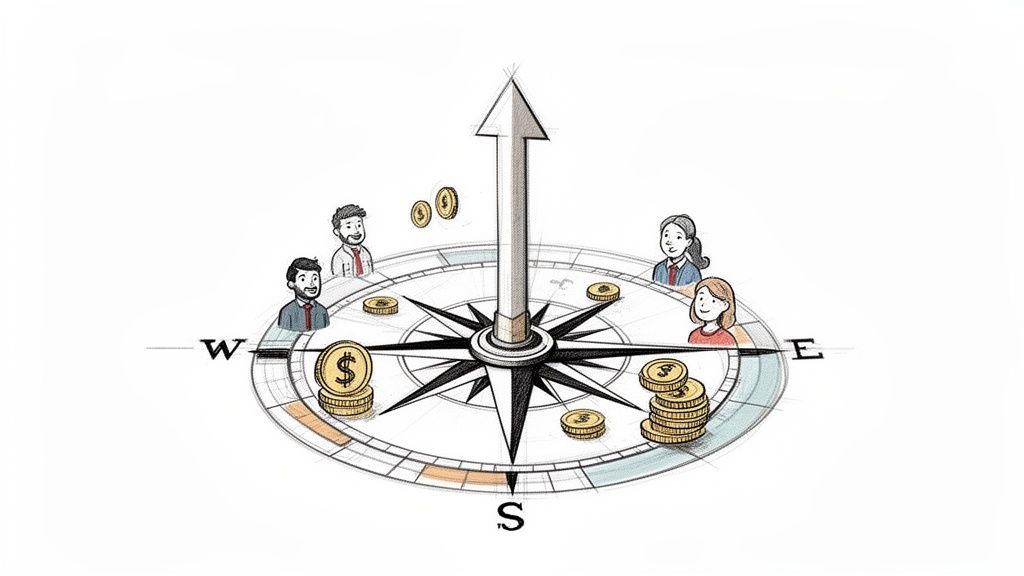
Customer Lifetime Value (CLV) offers a much smarter way forward. It's more than just a metric; it’s a mindset that guides your business toward sustainable profitability. When you know what a customer is truly worth over their entire relationship with you, you start making fundamentally better decisions.
Let's look at the hard numbers, because they don't lie. Acquiring a new customer costs 5 times more than keeping an existing one. That alone should make you pause.
But the story gets even better. Your loyal customers are your best customers, spending an average of 67% more than people who are just buying for the first time. For any SaaS or subscription company fighting the constant battle against churn, even a small improvement in retention pays massive dividends. Increasing it by just 5% can boost your profits by an incredible 25-95%.
The takeaway is simple: your current customer base is a goldmine. It's a predictable, scalable revenue engine just waiting for you to turn the key. If you need a refresher, this guide on what is CLTV is a great place to start.
When you start prioritizing CLV, your whole perspective shifts. The central question changes from, "How do we land the next sale?" to "How do we make this customer wildly successful for years to come?"
This mindset organically starts to influence every part of your business:
When you see every single customer touchpoint as an opportunity to build long-term value, you flip the script. Your support team stops being a cost center and turns into one of your most powerful profit drivers. You're no longer just surviving transaction to transaction; you're building a business that thrives on deep, lasting relationships.
To get a clearer picture of how this playbook works, here’s a quick overview of the key levers we’ll be pulling to drive CLV growth.
| Strategy Lever | Primary Impact On... | Example Action |
|---|---|---|
| Customer Segmentation | Average Purchase Value & Frequency | Creating a "VIP" tier for your top 10% of spenders with exclusive perks like free shipping or early access to new products. |
| Retention & Expansion Flows | Customer Lifetime & Purchase Frequency | Building an automated email sequence that reminds a customer to re-order their favorite coffee blend 25 days after their last purchase. |
| CX Touchpoint Optimization | Customer Lifetime & Average Purchase Value | Implementing a one-click checkout process to reduce friction and make repeat buying effortless. |
| Systematic Testing & KPIs | All CLV Components | A/B testing two different win-back email offers (e.g., 15% off vs. a free gift) to see which one reactivates more dormant users. |
Each of these strategies is a powerful tool on its own. Together, they create a comprehensive system for maximizing the value of every customer you earn.
Let's be honest: a single, company-wide CLV number looks great in a boardroom presentation, but it’s a vanity metric. It completely masks what’s really happening under the hood. The real magic happens when you stop looking at the average and start segmenting your customers. This is where you find the actionable insights that actually drive growth.
Calculating CLV doesn’t require a PhD in data science. At its core, it’s about understanding how much a customer spends, how often they buy, and how long they stick around. To get started, you need to understand the fundamentals of how to calculate customer LTV with models that actually fit your business. This isn't just an academic exercise; it's the foundation for a smarter, more sustainable growth strategy.
The numbers tell a compelling story. Your most loyal customers can deliver up to 10 times the value of their first purchase, which is incredible. Yet, a massive 75% of customers buy from a business just once and never come back. This huge gap is exactly why smart founders are shifting their focus from chasing short-term gains with ad spend to building long-term customer relationships.
Once you have your CLV data, the real work begins. Segmentation is all about grouping customers who behave in similar ways. It’s how you move from a one-size-fits-all approach to creating personalized experiences that actually resonate with different types of buyers.
Good segmentation turns your data into a strategic roadmap. It shows you exactly where your revenue is coming from and, more importantly, where your biggest growth opportunities are hiding. To do this well, you'll need to pull data from various sources—your CRM, e-commerce platform, and support desk. This is why having solid customer data integration best practices in place is so critical.
Here are a few high-impact segments I see businesses use all the time:
By breaking your customer base into these distinct groups, you can move from generic marketing blasts to precise, surgical interventions. Instead of asking, "How can we increase revenue?" you start asking, "How can we turn more Loyalists into Champions?"
Identifying these segments is just the starting point. The real goal is to design a specific strategy for each one. What works for a Champion will completely fall flat with an At-Risk customer, and vice versa.
To help you get started, here's a simple framework for connecting your segments to specific strategic goals. This table turns your analysis into a clear, actionable plan.
This table breaks down each customer segment, their key characteristics, and the primary goal you should have for them to boost their lifetime value.
| Segment | Characteristics | Primary CLV Goal | Actionable Example |
|---|---|---|---|
| High-Value Champions | High purchase frequency, high AOV, long customer history, likely to refer others. | Nurture & Reward: Treat them like VIPs to maximize their lifetime. | Invite them to an exclusive beta testing group for new products and send a personalized thank-you gift on their one-year anniversary. |
| Loyalists | Consistent purchase history, good engagement, but may not have high AOV. | Expand & Upsell: Introduce them to higher-tier products to increase their AOV. | After they purchase their usual running shoes, send a targeted email showcasing complementary high-performance socks and moisture-wicking shirts. |
| At-Risk Customers | Declining purchase frequency, recent support issues, reduced engagement. | Re-engage & Win Back: Use proactive outreach and special offers to prevent churn. | If a subscriber hasn't watched anything in 3 weeks, send a "Here's what you've missed" email with personalized recommendations and a "Welcome back" offer. |
| One-Time Buyers | Made a single purchase and have not returned for an extended period. | Drive Second Purchase: Create targeted follow-up campaigns to highlight value. | 30 days after their first purchase, send an email with a 15% discount and showcase best-selling products related to their initial buy. |
This segmented approach is the key to systematically increasing customer lifetime value. It lets you focus your time, budget, and energy where they’ll make the biggest difference—turning at-risk accounts into loyalists, and loyalists into champions for your brand.
Once you've sliced your customer base into meaningful segments, it’s time to get your hands dirty. The next move is to build automated, yet deeply empathetic, workflows that connect with each group at precisely the right moment. Theory is one thing, but execution is what separates the winners from the rest.
Real retention isn’t about some grand, one-off gesture. It's the sum of a hundred small, perfectly timed interactions that consistently show your value and earn their trust.
These workflows are your round-the-clock engine for growing CLV. They work 24/7 to welcome new users, spot opportunities for them to get more value, and bring back customers who might be drifting away. The whole point is to make every single customer feel seen and understood, transforming mundane touchpoints into moments that build serious loyalty.
This process is straightforward: start with the data, segment your customers, and then build strategies that speak directly to them.
This visual lays out the path from insight to action. Now, let’s dig into four essential workflows you can build to make this happen.
A customer's first few days with you are make-or-break. I can't stress this enough. A clunky or uninspired onboarding is a one-way ticket to churn. A great one, however, is a guided missile to their first "aha!" moment—that magical point where they get the value you deliver.
Practical Example (SaaS Company):
Practical Example (E-commerce Brand):
Nobody likes being sold to. Pushing irrelevant products is the fastest way to alienate a loyal customer. A smart upsell or cross-sell strategy isn't about aggressive sales; it’s about being genuinely helpful. You use their past behavior to make recommendations that actually improve their experience.
Done right, this turns a sales pitch into a valued service, deepening the relationship and boosting your average order value.
A good upsell feels less like a transaction and more like a trusted recommendation from a friend who knows you well. It should solve the customer's next problem before they've even thought to ask.
Here's how this looks in the real world:
Sitting around waiting for customers to complain is a losing game. It’s a reactive stance that slowly erodes loyalty. A proactive support system flips the script, using data to spot signs of frustration and offering a helping hand before the customer even asks. This shows you're paying attention and can turn a potential disaster into a moment of delight.
Practical Example: A customer is struggling on your checkout page.
This tiny intervention can be the difference between a sale and an abandoned cart. It’s a classic tactic for how to increase customer lifetime value by removing friction when it matters most.
Not every quiet customer is a lost cause. For your high-value segments, a targeted win-back campaign can work wonders. The secret is to ditch the generic "We miss you!" emails. Instead, tap into their purchase history to remind them exactly why they loved you in the first place.
Here’s a practical example for a subscription coffee service:
Each of these workflows is a system for building relationships at scale. By automating empathy at these critical moments, you create a customer journey that feels personal, proactive, and consistently valuable.
When we talk about modern customer experience, it's not about replacing your best people with bots. It’s about scaling their best qualities. A real strategy for boosting customer lifetime value comes down to making people feel seen and understood, and this is where an empathy-first approach to AI changes everything. It turns routine interactions into moments that build loyalty, all at a scale your team could never manage alone.
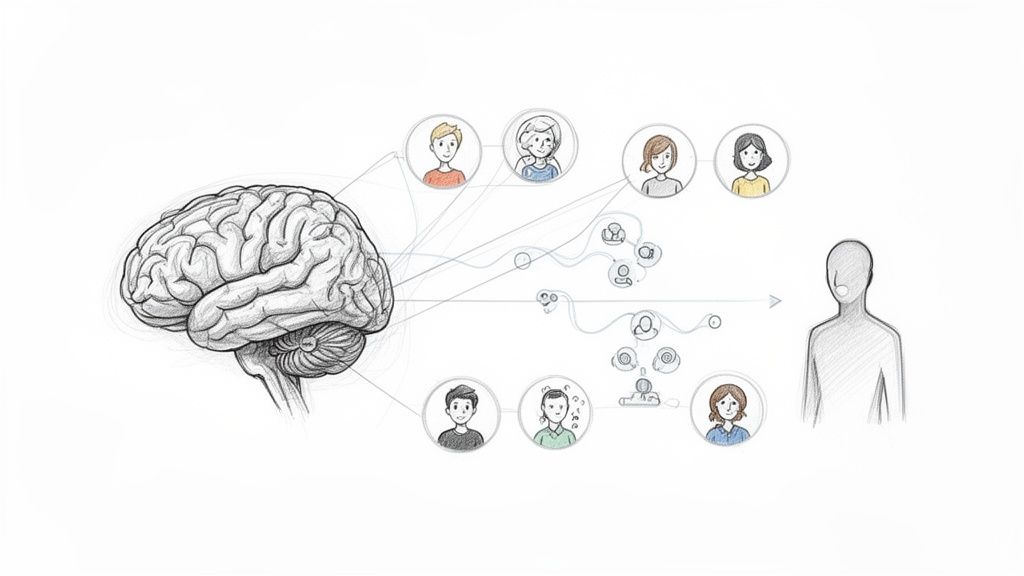
The goal here is simple: eliminate friction and build trust. You want to turn every support ticket into proof that you've got your customer's back. This means moving way beyond the clunky, disconnected chatbots we've all learned to hate.
Think about a standard chatbot. It’s like talking to someone with short-term memory loss. Every single conversation starts from scratch, forcing your customers to repeat their order number, their problem, and their entire history with you. It’s an infuriating experience that basically screams, "We don't know who you are."
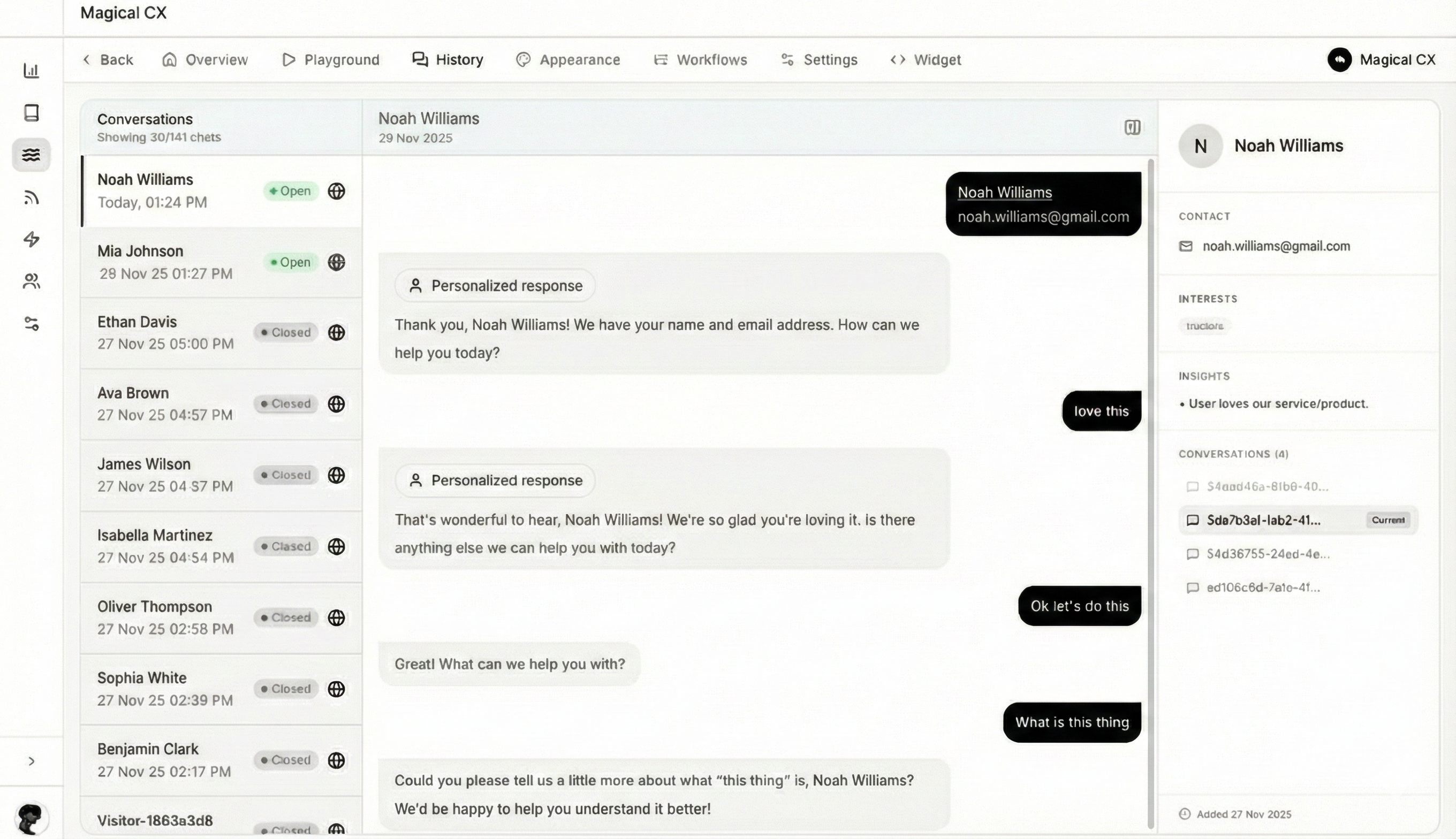
An intelligent AI with conversational memory is a different beast entirely. It keeps a single, unified profile for every customer that follows them across every channel—web chat, email, social DMs, you name it. This creates one seamless, ongoing dialogue instead of a bunch of broken, isolated chats.
Practical Example: A customer, Sarah, emailed you last week about a shipping delay. Today, she opens a chat on your site.
That simple change in greeting is powered by knowing who she is, her order history, and her recent support tickets. It immediately shows you remember her.
The difference between a generic chatbot and an AI with a 360-degree customer view is the difference between making a customer feel like a case number and making them feel like a valued partner. This is the foundation of scaling empathy.
Once you have that complete customer profile, your AI can stop just answering questions and start proactively solving problems. It can connect the dots between different data points to figure out what a customer needs before they even have to ask. This doesn't just save them time; it builds incredible goodwill.
Let's look at how this plays out in a common e-commerce scenario.
The Scenario: A customer's package is marked "delivered," but they message you asking, "Where is my order?"
The second response is light-years ahead. It shows you're on top of the situation, gives helpful context, and offers a clear, immediate path to a solution. It shows competence and care, which are the bedrock of a strong customer relationship. Truly understanding the nuances of empathy in customer service is what allows you to program AI to deliver these kinds of experiences.
Of course, even the smartest AI knows when a human touch is needed. The trick is to make that transition totally seamless, carrying over all the context you've gathered. A bad handoff forces the customer to start over, erasing all the trust the AI just built.
A practical, smart handoff works like this:
When the human agent joins, they don't say, "How can I help you?" They say, "Hi David, I have your case details here. I'm so sorry for the frustration with that delivery. Let's get this sorted out for you right now."
That simple, informed opening makes the customer feel heard. It’s a massive retention tool, and the financial impact is enormous. Boosting retention unlocks incredible profitability: a mere 5% retention increase can surge profits by 25-95%. This is because repeat buyers drive 67% higher spend and are far more likely to buy again, making a retention-first strategy a no-brainer.
By letting AI handle the routine tasks and flawlessly tee up the complex ones, you free up your team to focus on the high-value, relationship-building work they do best. This blend of automated efficiency and scaled empathy is a potent formula for driving up customer lifetime value.
So, you've designed all these fantastic, automated workflows and personalized customer journeys. That’s great, but it’s all just theory until you can prove it’s actually working. A brilliant strategy means nothing if you can't see the results. This is the part where we connect all those retention efforts directly to revenue.
When you start tracking the right things, CLV stops being some abstract marketing metric and becomes a shared mission. It gives everyone—from product to sales to support—a clear line of sight into how their work directly impacts the company's long-term health. The latest State of Sales report found that 42% of sales leaders now count on recurring revenue as their top source, which puts retention front and center.
To get a real handle on your progress, you need a dashboard with a handful of core metrics. Think of these KPIs as the vital signs of your customer relationships; they tell you if your strategies are truly landing or just making noise.
Here are the essential KPIs you should be watching like a hawk:
By keeping these on your radar, you can stop guessing and start making data-backed decisions. You’ll see exactly which campaigns are driving repeat purchases or which product updates are making customers healthier and happier.
One of the most powerful mindset shifts you can make is seeing your support team as a revenue driver, not a cost center. To make that case, you have to draw a straight line from their day-to-day metrics to real financial outcomes.
For instance, tracking First Contact Resolution (FCR) is standard practice. But what if you correlated it with customer retention? You might find that customers whose problems are solved on the first try have a 15% higher retention rate over the next year. Now that’s a powerful story—one that ties a support KPI directly to a huge impact on CLV.
Stop asking if a customer is satisfied and start asking if they're successful. Satisfaction is temporary, but success builds the kind of loyalty that drives long-term value. When your entire company rallies around that idea, you're not just offering support; you're building an engine for growth.
Your retention workflows should never be "set it and forget it." The companies that win at this are constantly experimenting, tweaking, and refining their approach to find out what really moves the needle. For that, A/B testing is your best friend.
Instead of operating on hunches, you can run simple tests to see what your customers actually respond to.
Every test delivers a clear winner, giving you hard data to systematically improve every touchpoint. This commitment to continuous improvement is what turns a good retention strategy into a great one, steadily pushing your customer lifetime value higher and higher.
When you start digging into customer lifetime value, a few common questions always seem to pop up. Let's tackle some of the big ones so you can move forward with confidence.
This is a big one. While you can get some quick wins—like seeing a bump in Average Order Value from a new upsell flow—a real, sustainable jump in CLV is more of a marathon than a sprint. We're talking about building relationships, not just optimizing a single sale.
In my experience, you'll start to see your leading indicators move in the right direction within the first 3-6 months. Keep a close eye on things like customer satisfaction scores, repeat purchase rates, and overall engagement. These are the early signs you're on the right track.
The full impact on your top-line CLV number? That usually becomes crystal clear over a 12-18 month period. It simply takes time for the compounding effects of higher retention and more frequent purchases to show up in the data. The key is to watch both the early signs (retention) and the ultimate goal (CLV) to understand the whole story.
Not a chance. In fact, you could argue it's even more critical for smaller businesses and growing D2C brands. When you don't have a massive marketing budget to burn, getting the absolute most value from every single customer you've already won is the smartest way to grow.
Think about it: huge corporations can throw money at expensive acquisition campaigns just to see what sticks. Most of us can't afford that luxury.
Your existing customers are your most reliable and predictable revenue stream. By focusing on CLV, you build a resilient business that isn't at the mercy of skyrocketing ad costs or market swings. It’s the foundation for sustainable growth.
Yes, absolutely. You don't need a complex AI suite to get started. The fundamentals of a great CLV strategy—things like stellar customer service, thoughtful communication, and a simple loyalty program—can be handled with basic tools or even manually when you're just starting out.
For example, you can manually segment your top 20 customers in a spreadsheet and send them personalized thank-you emails. You can use a simple email marketing tool to create a basic welcome series for new buyers.
But here’s the reality check: as you grow, it becomes humanly impossible to give every customer a proactive, personalized experience at scale.
This is where smart automation comes in. A platform powered by AI isn't just about automating repetitive tasks; it's about scaling empathy. It lets you run sophisticated retention plays around the clock, on every channel, in a way that your team could never manage on their own.
Ready to turn every customer interaction into a revenue opportunity? MagicalCX is the empathy-first AI platform that helps you build deeper relationships, scale support effortlessly, and measurably increase customer lifetime value. See how our intelligent workflows and 360-degree customer view can transform your customer experience.


