See your AI teammate in action now
Ready to make support faster, kinder, easier and help customers feel good about choosing you?
PS: Sales improves too...
No credit card required
14 days free trial
DIY or Guided setup
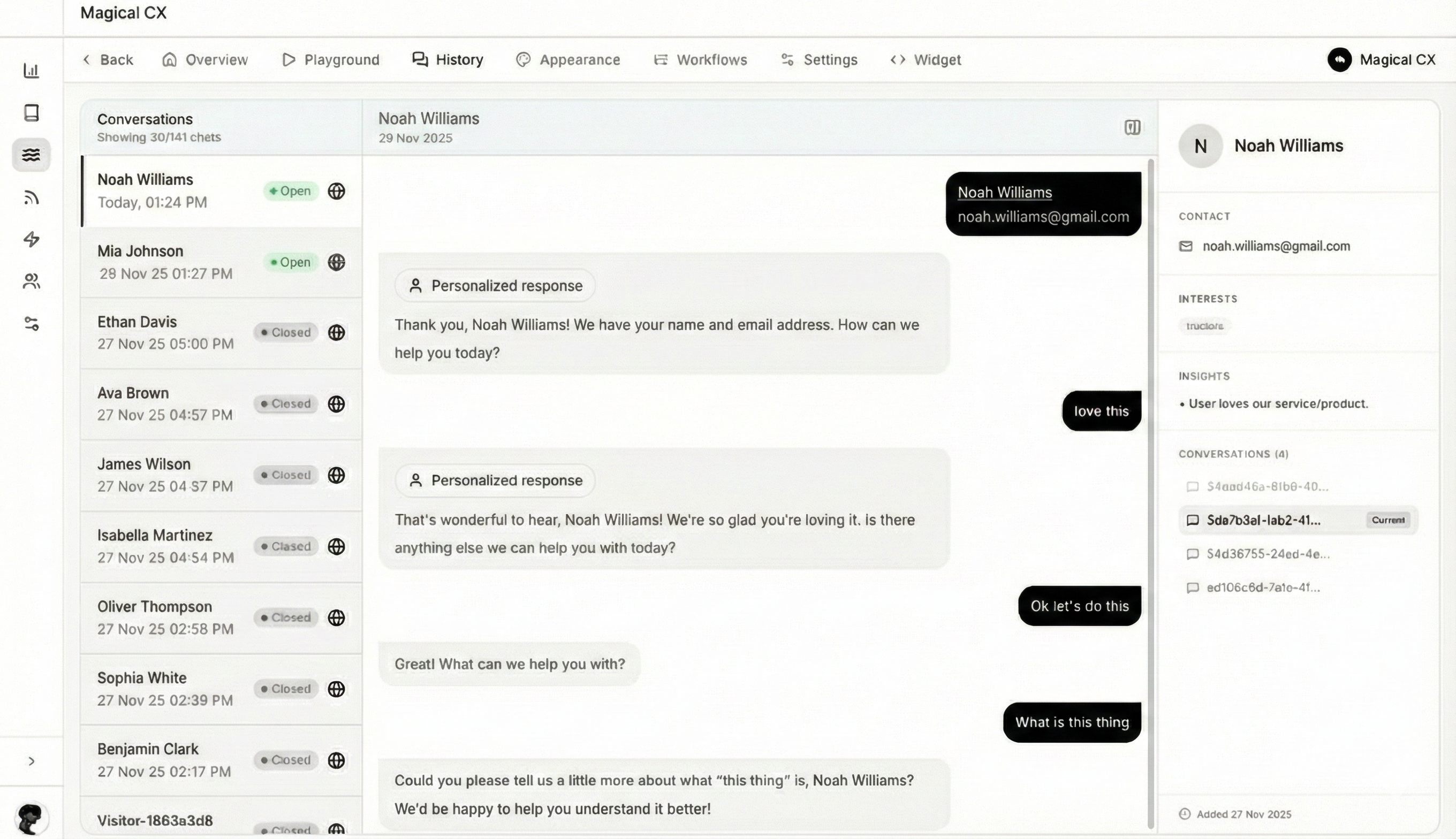
Ready to make support faster, kinder, easier and help customers feel good about choosing you?
PS: Sales improves too...
No credit card required
14 days free trial
DIY or Guided setup
Learn how to use conversational AI in e-commerce, covering chatbot vs conversational AI, memory and agentic actions, omnichannel journeys, implementation steps, and ROI metrics.
Manish Keswani
Summary by MagicalCX AI
Conversational AI turns e-commerce support into a measurable revenue lever, lifting conversion rates up to 4X (3.1% to 12.3%), enabling 35% cart recovery against the 70% average abandonment rate, and helping shoppers complete purchases 47% faster.
Conversational AI is the technology that lets online stores have smart, human-like conversations with their customers. It works across your website, social media, email—wherever your customers are. Forget those clunky, pre-programmed chatbots. We're talking about advanced AI that understands context, remembers past chats, and actually gets things done. It turns every customer touchpoint into a genuinely helpful and personal experience, which is how brands today boost sales, improve support, and build real customer loyalty.
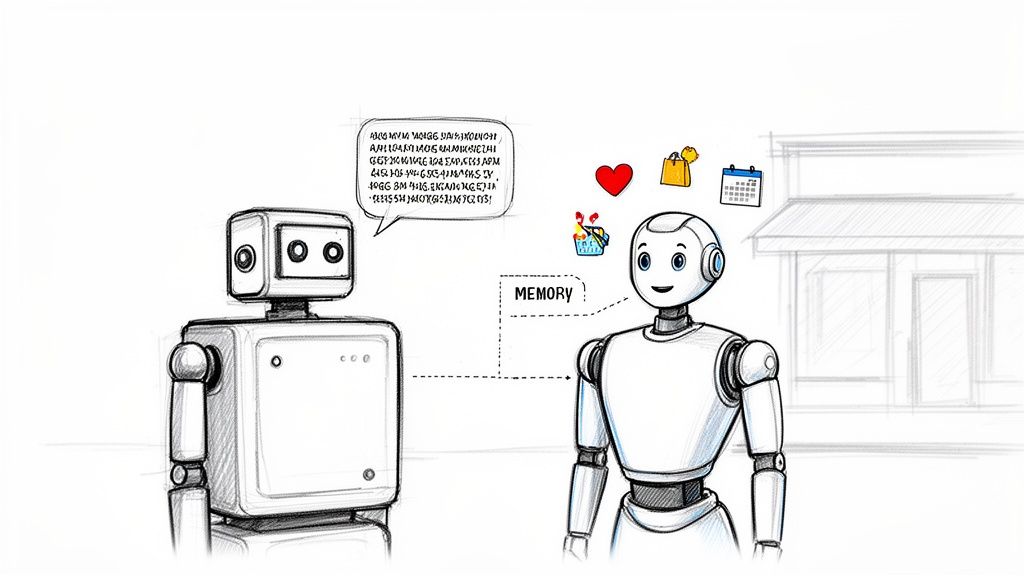
Most e-commerce brands have tried basic chatbots. You know the type—they follow a very strict script. Think of them like a vending machine: you press B4, you get chips. If you ask for something that isn't on the menu, the machine just gives you an error message. They’re fine for simple, repetitive questions like "Where's my order?" but they completely break down the moment a customer asks something a little different.
True conversational AI for e-commerce is a whole different ballgame. It’s less like a vending machine and more like an experienced personal shopper who really knows their stuff. This kind of AI doesn't just hunt for keywords; it grasps the context, the customer's intent, and even what they aren't saying.
To see just how different these two technologies are, it helps to compare them side-by-side.
| Feature | Basic Chatbot | Conversational AI |
|---|---|---|
| Understanding | Keyword-based | Understands context, intent, and sentiment |
| Conversation Flow | Rigid, follows a strict script | Flexible, adapts to the user's needs |
| Memory | Has amnesia; forgets past interactions | Remembers past purchases and conversations |
| Personalization | Generic, one-size-fits-all responses | Deeply personalized and relevant suggestions |
| Capability | Answers simple, predefined questions | Solves complex problems and takes action |
| Goal | Deflect support tickets | Drive revenue and build relationships |
As you can see, the jump from a basic bot to conversational AI isn't just an upgrade—it's a fundamental shift in strategy from simply answering questions to actively helping customers and growing your business.
One of the biggest game-changers here is conversational memory. A basic chatbot starts every conversation from zero. It has no idea who the customer is or what they talked about five minutes ago. This forces customers to repeat themselves, creating those frustrating, robotic loops that kill brand trust.
Conversational AI, on the other hand, remembers everything. It keeps track of past purchases, previous support questions, and even what a customer was just looking at on your site. This creates a single, continuous dialogue that makes every interaction feel personal and relevant.
That small act of remembering completely changes the tone of the interaction. It goes from a cold transaction to a warm, helpful conversation.
While basic bots are purely reactive, conversational AI is proactive. It doesn't just wait for a customer to type a question. It analyzes their behavior and conversational cues to figure out what they need, often solving problems before the customer even gets frustrated.
The core difference is moving from just responding to words to understanding the goal behind them. The AI doesn't just see "I can't find my size"; it understands the customer wants to buy the item and can proactively suggest alternatives or sign them up for a back-in-stock alert.
This ability to understand a customer's true intent is what makes it so powerful. If a customer asks, "Do you ship to Canada?" and follows up with, "What are your return fees?", the AI knows these are pre-purchase hurdles. It can then step in to reassure them by highlighting your hassle-free international return policy, smoothing over that friction point and guiding them toward a confident purchase. This is how you turn every chat—whether on your site, in an email, or via social media DMs—into a meaningful conversation that drives your business forward.
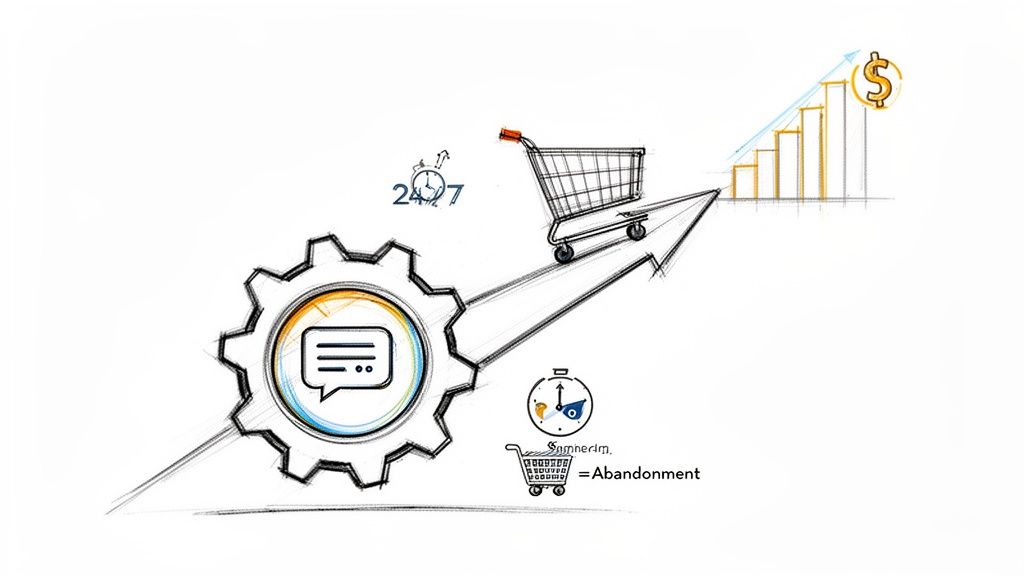
Investing in conversational AI for e-commerce isn't just a "nice-to-have" anymore; it's a fundamental driver of growth. In a world where your customers demand immediate answers and fluid experiences, this technology delivers a serious competitive edge by directly improving the numbers that matter most to your bottom line.
Think about it this way: every unanswered question or moment of hesitation on your site is a leak in your sales funnel. Conversational AI acts as a smart, ever-present assistant that plugs those leaks. It’s a game-changer for turning browsers into buyers.
For years, customer support was seen strictly as a cost center—a necessary expense for fixing problems after they happened. Conversational AI completely flips that script. It turns support into a proactive revenue engine that actively boosts sales and customer lifetime value (CLV).
The numbers speak for themselves. The global conversational AI market is exploding, fueled by the demand for 24/7, personalized service. What was a $14.79 billion market in 2025 is expected to rocket to $82.46 billion by 2034. E-commerce is leading the charge, using AI to handle questions and drive sales right inside a chat window. In fact, global spending on conversational commerce is projected to hit an incredible $290 billion by 2025.
This isn't just about answering questions faster. It’s about creating genuinely better shopping experiences that produce real business results.
The core business case for conversational AI isn't just about deflecting tickets. It’s about increasing conversion rates, recovering abandoned carts, and building the kind of brand loyalty that keeps customers coming back.
When an AI can guide a shopper to the perfect product, instantly clarify a shipping policy, or offer a relevant discount at just the right moment, it's not just supporting—it's selling.
Cart abandonment is the silent killer of e-commerce revenue. Nearly 70% of all online shopping carts are left behind. Why? More often than not, it's because of a last-minute question about sizing, shipping costs, or return policies. Waiting for an email response just isn't going to cut it.
Conversational AI provides the instant gratification shoppers need to get over that final hurdle. It can proactively engage with a customer who’s been lingering on the checkout page, turning a moment of doubt into a confident purchase.
Here’s a practical example:
A customer adds a pair of expensive hiking boots to their cart but pauses for 60 seconds on the checkout page. The AI can be programmed to trigger a proactive message: "I see you're looking at the SummitPro boots! Great choice. Did you know they come with a 30-day, no-questions-asked return policy, even after you've worn them on a trail?"
That simple, timely intervention addresses a huge potential worry (what if they don't fit?) and removes the friction that leads to abandonment. By solving problems in the moment, conversational AI gives your conversion rates a significant lift.
Today's online shoppers have incredibly high expectations. They want personalized interactions and expect brands to be available whenever and wherever they are—whether that’s on your website, a mobile app, or sliding into your social media DMs.
Failing to meet these expectations has real costs, from lost sales to a damaged brand reputation. Conversational AI helps you deliver a consistently great experience across every channel, 24/7, without having to exponentially scale your support team. This isn't just about keeping customers happy today; it's about future-proofing your business.
Theory is great, but the real magic of conversational AI for e-commerce happens when you see it in action. This isn't just a single tool for a single problem. Think of it as a flexible assistant that elevates every single stage of the customer lifecycle, from their very first click to their tenth purchase and beyond.
Let's dive into the practical, real-world ways this technology transforms a standard online shop into a seamless, supportive, and deeply personal experience.
The first step is turning curious visitors into happy customers. Instead of just sitting back and waiting for a shopper to figure things out on their own, conversational AI can step in and act like a friendly, expert personal shopper. It's all about guiding them to the perfect product.
This is a game-changer because, let's face it, many new visitors land on your site without knowing exactly what they want. They might have a vague idea—"I need new running shoes"—but they need a bit of expert advice to feel confident hitting that "buy" button.
A conversational AI can kick off a helpful dialogue with a few smart questions:
Based on the answers, the AI doesn’t just spit out a generic list of products. It recommends the top one or two options that are a perfect match, explaining why they're the right fit. For example: "Based on your trail running and marathon training, I recommend the TrailBlazer Pro. It has the deep lugs you need for grip and the extra cushioning for long distances. Would you like to see the available colors?" This guided selling approach builds immediate trust and makes that first purchase feel like a no-brainer.
Once a customer has made a purchase, the journey isn't over. It just shifts into the post-purchase support phase. This is where so many brands get bogged down, answering the same time-consuming questions over and over again—questions that are perfect candidates for automation.
The goal of AI in customer support isn't to replace humans, but to free them up. By automating the predictable, you empower your human agents to focus on the complex, high-value conversations where their empathy truly shines.
A good conversational AI can handle the most common support questions with flawless efficiency, 24/7. This gives customers the quick, accurate answers they want without having to wait.
Practical Examples of Automated Support Workflows:
These automated workflows slash response times and cut operational costs, all while delivering the instant gratification modern shoppers have come to expect.
The final—and arguably most important—stage is retention. This is where you turn a one-time buyer into a loyal fan, and conversational AI is your secret weapon for nurturing that long-term relationship. It lets you stay connected with customers long after the delivery truck has driven away.
Imagine this: two weeks after a customer buys a new skincare product, the AI sends a friendly, non-pushy message: "Hi Alex! Just wanted to see how you're enjoying the new Vitamin C serum. Have you had a chance to try it yet?"
This simple, proactive follow-up opens the door for feedback and makes the customer feel genuinely cared for. If they love the product, the AI can offer a helpful tip. If they have a concern, it can seamlessly hand the conversation off to a human agent.
Other powerful retention strategies include:
By using conversational AI to create these thoughtful touchpoints, you build real brand affinity that keeps customers coming back for more.
To really get what makes modern conversational AI for e-commerce tick, you have to pop the hood and look at the engine. Forget the complex jargon for a minute. It all comes down to a few core technologies working in concert to create those smooth, human-like conversations we're all starting to expect. These are the ingredients that make the difference between a genuinely helpful AI and a basic, dead-end chatbot.
At its core, a smart conversational AI doesn't just hear words; it understands intent, remembers past conversations, and most importantly, does things. This is how it graduates from a simple Q&A bot into a proactive partner in the customer's journey.
You can see how these capabilities touch every part of the customer lifecycle, from the first time they find you all the way through to building long-term loyalty.
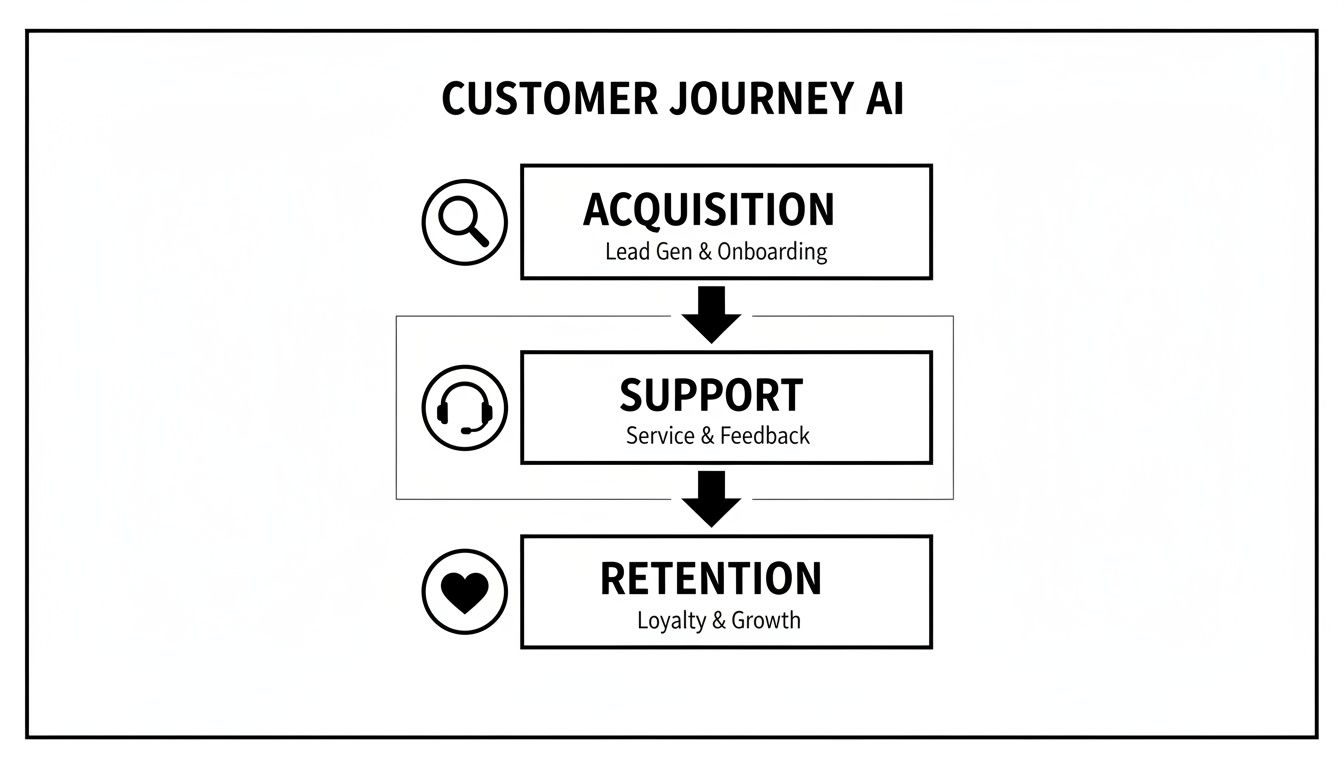
As the diagram shows, AI isn’t siloed in one department. Its skills are woven through every stage, creating a single, intelligent experience for the customer.
Have you ever had to re-introduce yourself to a friend every single time you talked? Of course not, but that’s exactly what talking to a basic chatbot feels like. Conversational memory is the cure for this digital amnesia. It lets the AI remember past chats, purchase history, and even what a customer was browsing.
This continuous thread of memory creates one long, unbroken conversation with each person. The AI knows they’re a returning customer, it remembers the shipping issue they had last month, and it has a good idea of what they like, making every interaction feel personal and genuinely helpful.
One of the biggest game-changers in modern AI is the jump from just talking to taking agentic actions. This is the AI's ability to actually do things for the customer, not just spit out information. It's the difference between an AI that says, "You can track your order on our website," and one that says, "I see your package is out for delivery and should be there by 3 PM. Want me to ping you when it's two stops away?"
This simple shift turns the AI into a real assistant that can:
By taking direct action, the AI cuts out extra steps, solves problems on the spot, and makes the entire experience frictionless.
The real value of agentic AI is its ability to close the loop. It doesn't just point customers in the right direction; it walks the path with them, completing the necessary steps to solve their problem on the spot.
Your customers don't stick to one channel. They might start a question on your website, follow up with an Instagram DM, and then reply to a confirmation email. Omnichannel orchestration is what makes sure the conversation stays consistent and intelligent, no matter where it happens.
This means the AI's memory and context travel with the customer. A chat started on your mobile app can be picked up seamlessly on WhatsApp without forcing the customer to repeat everything. It ensures you have one brand voice and one continuous, customer-focused dialogue.
Of course, none of this works in a vacuum. A truly effective AI needs to be deeply connected to your core e-commerce tools—your CRM, helpdesk, and inventory system. This integration creates a 360-degree view of the customer, giving the AI the data it needs to be truly personal and effective. To really nail the implementation, you have to understand the architecture and get familiar with the top AI chatbot platforms that make these advanced systems possible.
Getting started with conversational AI for e-commerce isn’t about some massive, intimidating tech project. It's much more about a smart, step-by-step rollout. Think of it like building a house—you need a solid blueprint before you start swinging a hammer. This roadmap will help you ground your plan in clear goals and get real value from day one.
Jumping into this process starts with knowing exactly what you want to accomplish. If you don't have specific targets, you're just buying shiny new tech without a purpose.
Before you even start looking at vendors, you have to define what success actually means for your business. What specific problem are you trying to fix? The single most important thing you can do is tie your AI project to metrics that matter.
Your goals need to be concrete and measurable. Here are a few solid examples:
When you have KPIs like these, you have a real yardstick to measure performance. Your AI becomes a growth engine, not just another line item on your budget.
My best advice? Don't try to boil the ocean. Start small. Pick one or two high-impact, high-frequency problems that are eating up your team's bandwidth. Nailing these "quick wins" proves the concept, builds momentum, and shows immediate value to the rest of the company.
Often, the best place to start is with post-purchase support, since these questions are usually predictable and repetitive.
Actionable Insight: A great first workflow to automate is the classic "Where Is My Order?" (WISMO) question. It's the most common query in e-commerce, and a well-built AI can answer it instantly by integrating with your shipping provider's API. This frees up your agents to handle the truly tricky stuff.
Once you’ve mastered that, you can move on to automating returns and exchanges. Designing a simple, guided conversation for this process eliminates a huge headache for customers. If you're looking for more technical guidance, this resource on how to build a conversational commerce platform offers some great implementation insights.
With your first couple of workflows mapped out, it's time to plug the AI into your existing tech stack. For the AI to do its job—to take those agentic actions we discussed earlier—it needs to communicate with your helpdesk, CRM, and order management system. This integration is what lets it pull up an order number or process a refund on its own.
After you've tested everything thoroughly, you're ready to go live. I always recommend a soft launch. Maybe you activate the AI for just a small percentage of your website traffic or only turn it on during off-peak hours. This lets you see how it performs in the real world and tweak things before a full rollout. You can dig deeper into these strategies to automate customer service with confidence.
And remember, this isn't a "set it and forget it" project. The final phase is really a continuous loop: monitor your KPIs, listen to customer feedback, and keep refining your workflows to make them even better.
So, you're thinking about investing in conversational AI. That’s great, but how do you prove it’s actually worth the money? Simply counting the number of chats it handles won't impress anyone in the boardroom. You need to connect its performance to the numbers that really matter to your leadership team.
The trick is to look past vanity metrics and focus on how the AI directly impacts your bottom line—both by making customers happier and making your operations leaner.
To make a rock-solid case for your AI, you need to track a smart mix of metrics. Some will focus on support efficiency, while others will zero in on revenue. This gives you the full story of your AI's contribution, from cutting costs to actively driving sales.
Here are the essential numbers you should have on your dashboard:
Want to play with the numbers yourself? You can use our AI vs Human Support ROI Calculator to get a clearer picture of the financial impact by comparing AI and human support costs.
The data doesn't lie: AI-assisted shopping can have a massive impact on your sales. Recent studies show that AI chat can boost conversion rates by an incredible 4X, jumping from 3.1% for unassisted shoppers to 12.3% for those who get help.
People who use AI also finish their purchases 47% faster, which is a powerful weapon against the staggering 70% average cart abandonment rate. In fact, a well-timed AI intervention can bring back 35% of those would-be-lost sales, proving its direct impact on your revenue. If you want to dive deeper, you can find more stats on AI's impact on e-commerce.
Actionable Insight: Your goal should be to shift the conversation from, "How many tickets did the AI deflect?" to "How much revenue did the AI generate?" By tracking conversion uplift and cart recovery, you can prove your conversational AI isn't just another expense—it's a powerful growth engine.
This is where dashboards and reports become your best friend. A solid AI platform gives you live insights into what frustrates your customers and what drives them to buy. This data doesn't just help you justify the initial investment; it helps you constantly fine-tune your strategy to get the absolute most out of your conversational AI, every single day.
Jumping into the world of conversational AI for your e-commerce store naturally brings up some questions. Let's tackle the most common ones head-on, so you can see how this all works in practice.
Absolutely not. Think of it as empowering them, not replacing them. Conversational AI is like a brilliant assistant that works around the clock, handling all the repetitive, predictable questions that clog up your support queue. Think order tracking, return requests, and shipping queries.
This frees up your skilled human agents to focus on what they do best: solving complex, high-stakes problems and handling sensitive customer situations where a genuine human touch is essential. The result? Your team is more effective, less burned out, and your customers get faster, smarter support across the board.
Practical Takeaway: The goal is to make your human team more human. Let the AI handle the routine stuff, so your people can provide the empathy and expert problem-solving that builds real customer loyalty.
This is probably faster than you're imagining. With a modern, intuitive platform, you're not looking at a massive, months-long project. You can get your first critical workflows—like automating "Where is my order?" inquiries—up and running in just a few days or weeks.
The trick is to start small and scale. Launch one or two key use cases that will make an immediate impact, prove the value, and then build from there. This approach ensures a quick win and a smooth rollout.
This is a big one. A basic chatbot is really just an interactive FAQ. It’s built on simple rules and keywords. If a customer's question doesn't perfectly match its script, it hits a dead end and says, "Sorry, I don't understand."
Conversational AI is in a completely different league. It's smart. It understands the intent behind the words, remembers the context of the conversation, and can actually do things. It doesn't just answer a question about a return; it starts the return process for the customer right there in the chat. It's the difference between a static menu and a helpful concierge.
Ready to see how an empathy-first AI can redefine your customer experience and drive real growth? Explore MagicalCX and discover how to turn every conversation into a relationship-building opportunity. Learn more at https://www.magicalcx.com.


