See your AI teammate in action now
Ready to make support faster, kinder, easier and help customers feel good about choosing you?
PS: Sales improves too...
No credit card required
14 days free trial
DIY or Guided setup
Ready to make support faster, kinder, easier and help customers feel good about choosing you?
PS: Sales improves too...
No credit card required
14 days free trial
DIY or Guided setup
Manish Keswani
A personalized customer experience is all about treating each customer like a unique individual, not just another number in a spreadsheet. It’s a strategy that goes way beyond generic, one-size-fits-all interactions. By using what you know about a customer—like their purchase history or recent support chats—you can anticipate what they need, remember what they like, and deliver relevant, helpful conversations at every turn.
When you get this right, customers feel genuinely understood and valued. For example, instead of a generic "Special Offer!" email, a customer receives a notification that the specific running shoes they viewed last week are now 10% off, in their size. That's the difference.
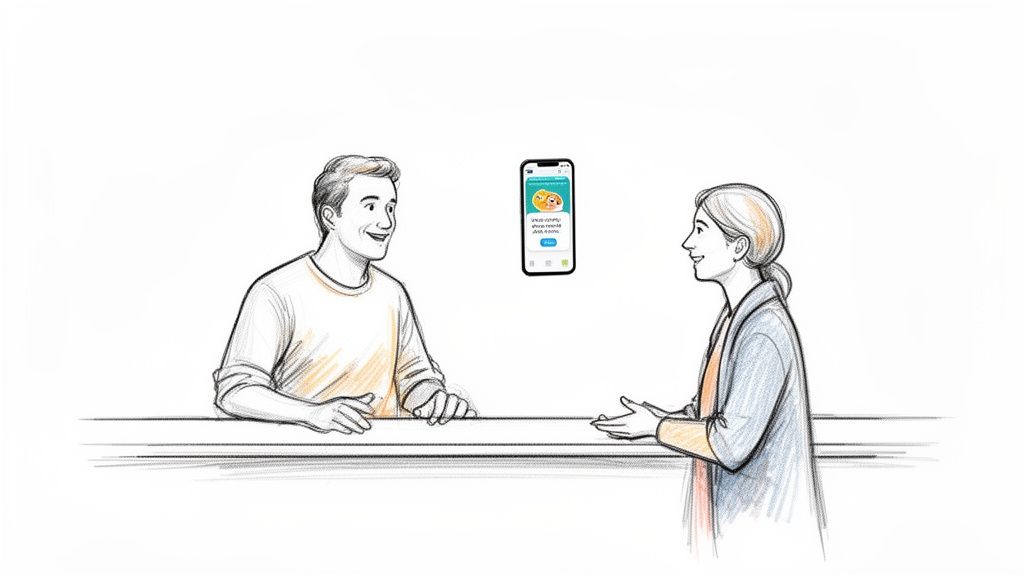
Let's ditch the textbook definitions for a moment. The best way to think about a personalized customer experience is to picture the digital version of that amazing local shopkeeper you know. You know the one—they greet you by name, remember what you bought last time, and actually care enough to ask how you're doing. They make you feel seen.
In the business world, this means creating interactions that aren't just customized, but are truly empathetic and context-aware. It's the difference between a generic email blast with [First_Name] plugged in and a proactive WhatsApp message that says, "Hi Alex, we see your delivery is delayed. We've already refunded the shipping fee, and here's a new tracking link. We're sorry for the trouble."
True personalization isn’t a one-off campaign; it's a core business strategy. It's about building an intelligent, ongoing conversation with your customers wherever they choose to interact—on your website, in their inbox, or through a support chat. This kind of approach is the bedrock of a strong digital customer experience that builds real loyalty. For a deeper dive, check out our guide on crafting a winning digital customer experience.
The whole strategy depends on understanding a customer's journey and their intent, right now. It’s about using data to answer their unspoken questions and solve problems before they become frustrating. Done well, it feels less like marketing and more like genuine help.
"Businesses should view AI as an opportunity to provide more customized and relevant marketing experiences for their customers and ultimately drive their business forward."
A truly personal experience is built on a few non-negotiable pillars. These elements work in harmony to create a journey that feels so seamless and intuitive, your customers will feel like your brand just gets them.
By weaving these components into every customer touchpoint, you build a powerful competitive advantage. Customers won't just buy from you; they'll build a lasting relationship with your brand because they consistently feel heard and appreciated. That's the heart of a modern, personalized customer experience.
Let's be honest, the days of one-size-fits-all marketing are long gone. In a world overflowing with generic messages, your customers aren’t just hoping for a personalized customer experience—they flat-out expect it. If you're not delivering, you're not just missing an opportunity; you're actively hurting your bottom line.
Think about it like this: a generic marketing email is like a megaphone shouting into a crowded stadium, hoping someone pays attention. True personalization is like pulling up a chair and having a real conversation, where you know their name, what they care about, and what they actually need from you. It’s this fundamental shift that turns customer support from a cost center into a powerful revenue driver.
This isn't just a gut feeling; the data tells a powerful story. When you take the time to understand customers as individuals, the return on that investment shows up in your most important business metrics.
Customers are ready and waiting for this. A huge 59% of consumers say companies should be using the data they share to create better, more personal interactions. This isn't just talk—it affects where they spend their money. In fact, 88% of online shoppers admit they're more likely to stick with websites that personalize their experience. You can see even more compelling numbers in these customer experience statistics on Zendesk.com.
This isn't a fad. It’s a core driver of financial success. Fast-growing companies generate 40% more revenue from personalization than their slower competitors. That single statistic explains why market leaders pull ahead while others get left behind.
One surprisingly great, personalized interaction can be the start of a lasting relationship. The research is clear: a full 60% of consumers are likely to become repeat customers after just one personalized shopping experience. That's how you turn a first-time browser into a loyal advocate who keeps coming back and spends more each time.
A smart personalization strategy directly improves the metrics that matter most:
A truly personalized customer experience goes way beyond using a first name in an email. It’s about remembering a customer's history, anticipating their next move, and delivering solutions so smoothly that they feel genuinely looked after.
This is where modern personalization really hits its stride: connecting genuine empathy to real revenue. It’s not about spamming customers with the same generic offer on every channel. It’s about sending a context-aware message on WhatsApp, Instagram, or email that remembers the last conversation and only suggests an upgrade when it actually makes sense for them.
Consider this: Gartner found that 86% of B2B customers expect service reps to already have their information on hand when they reach out. This is exactly where empathy-first platforms like MagicalCX come in, using 360° customer profiles to make every conversation smarter. To see how this plays out in the real world, check out our guide on weaving empathy in customer service into your operations.
When you combine deep customer understanding with thoughtful, relevant action, customers don't just stay—they spend more, tell their friends about you, and become the bedrock of your company's growth.
So, how do you actually deliver a personalized customer experience? It’s not a single, giant leap. A better way to think about it is like climbing a ladder—each rung represents a deeper, more meaningful level of understanding and interaction. You build on what came before.
This framework helps you figure out where you are today and what the next logical step should be. The journey starts with simple observations and evolves toward predictive, journey-aware conversations. By understanding these four levels, you can create a clear roadmap to transform your customer interactions from generic to genuinely personal.
This hierarchy shows how your personalization efforts directly impact the bottom line, starting with influencing shoppers and ultimately driving real revenue.
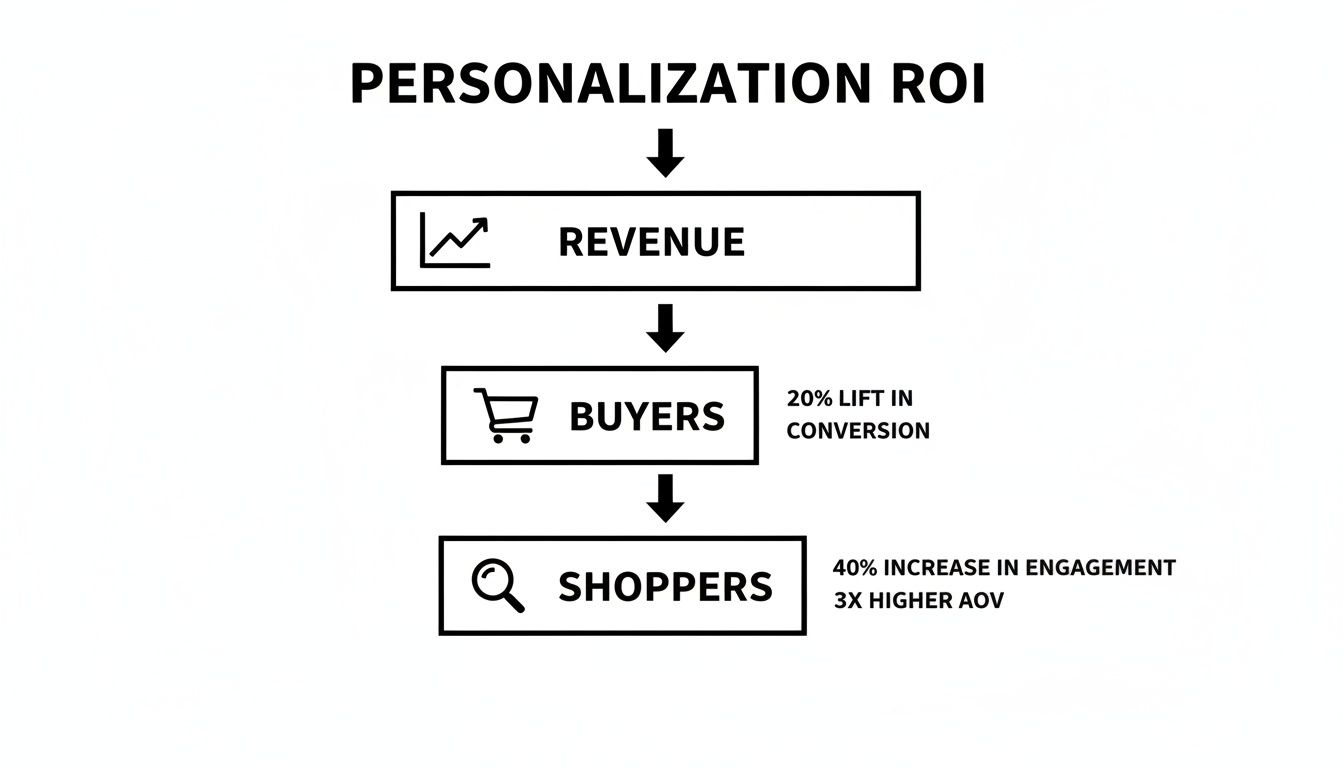
As you can see, the end goal is always to tie personalization back to revenue growth. That journey starts by turning casual browsers into loyal, repeat customers.
To help break it down, here’s a look at the four distinct levels of personalization, what drives them, and what they look like in the real world.
| Personalization Level | Core Data Source | Business Application Example | Primary Impact |
|---|---|---|---|
| Behavioral | Real-time user actions (clicks, views, searches) | An e-commerce site showing "You Might Also Like" based on items just viewed. | Increase immediate engagement and product discovery. |
| Transactional | Past purchase history (what, when, how often) | A coffee brand emailing a customer about a new dark roast they know they'll love. | Drive repeat purchases and increase Customer Lifetime Value (CLV). |
| Contextual | Environmental data (location, device, weather, time) | A food delivery app promoting "rainy day comfort food" during a storm. | Improve relevance and create timely, "in the moment" offers. |
| Lifecycle | Customer journey stage (new, active, at-risk) | A SaaS tool sending onboarding tips to a new user who hasn't used a key feature. | Boost retention, reduce churn, and nurture long-term loyalty. |
Each level builds upon the last, giving you a richer, more complete picture of your customer. It’s not about picking one; it’s about mastering each in turn.
This is where everyone starts. Behavioral personalization is all about reacting to what a customer is doing on your website or in your app right now. The data is immediate and action-oriented, focusing on clicks, page views, and search terms.
Think of it as a helpful store clerk who sees you looking at running shoes and points you toward the new arrivals in that aisle. It’s simple, relevant, and based on what’s happening in the moment.
The next step up the ladder is to look at a customer's history with your brand. Transactional personalization uses past purchase data—what they bought, when they bought it, and how often—to make smarter predictions about what they'll want next.
This is where you move beyond reacting to browsing and start understanding a customer's established tastes. Your recommendations suddenly feel less like a guess and more like a thoughtful suggestion from someone who gets them.
A great personalized customer experience is built on memory. Transactional data is your brand's memory of what a customer loves, allowing you to create offers that resonate on a much deeper level than a simple browsing-based recommendation.
Here's where things get really interesting. Contextual personalization adds another layer by bringing in real-time, environmental factors. This goes beyond a customer's own actions and history to include their location, the device they're using, the local weather, or even the time of day.
The experience starts to feel incredibly timely and adaptive. You're not just answering who the customer is, but also where they are and what's happening around them at that very moment.
This is the pinnacle of personalization. It involves tailoring every interaction based on where a customer is in their unique journey with your brand. Are they a brand-new lead, a first-time buyer, a loyal advocate, or a customer at risk of leaving? Each stage demands a completely different conversation.
Lifecycle personalization combines behavioral, transactional, and contextual data to create a complete picture of the customer relationship. It’s about playing the long game—nurturing that relationship with the right message at the right time.
Delivering a truly personal experience to every customer, every time, isn’t magic. It all comes down to having the right technology working together seamlessly. While plenty of tools out there promise "personalization," a world-class experience actually hinges on three core capabilities that go way beyond a basic customer data platform.
Think of these three as a powerful trio. They allow your brand to remember, connect, and act with a human touch across every single interaction. Without them, even the best data in the world just sits there, useless and siloed. And that leads to the kind of frustrating, disconnected experiences we all hate.
Picture this: a customer asks a question on your website’s live chat, then follows up a day later on WhatsApp. If they have to start the entire conversation from scratch, you've already failed. This is exactly where Conversational Memory comes in.
At its core, Conversational Memory is the system's ability to hold onto the full context of every interaction, no matter the channel or how much time has passed. It's like giving your brand a perfect digital memory, so customers never, ever have to repeat themselves. It’s the foundation for having a continuous, intelligent dialogue.
While Conversational Memory provides the what, Omnichannel Orchestration is the how. It’s the engine that connects all your different channels into one cohesive journey. It ensures the experience feels consistent whether a customer is browsing your website, using your mobile app, or messaging you on Instagram.
This isn't just about showing up on multiple channels; it's about making them work together as a single unit. True orchestration allows a conversation to start in one place and finish in another without anyone skipping a beat.
A modern personalization stack doesn't just manage channels in parallel—it weaves them together. The goal is to create a single, continuous experience where the channel is irrelevant to the customer because the context always follows them.
The final piece of the puzzle is moving from simply reacting to customer questions to proactively solving their problems. Agentic Actions are what empower your AI systems to not just provide answers, but to actually take initiative and complete tasks on the customer's behalf. This is the leap from a simple assistant to a truly capable agent.
Fueled by a unified customer profile and perfect conversational memory, an agentic AI can automate complex tasks that used to require a human. It can figure out what a customer really needs and then execute the steps to resolve their issue, all on its own.
This is what the ultimate personalized experience looks like: anticipating a need and solving it before it even becomes a problem. When you build your tech stack around these three pillars, you can finally move from "How can I help you?" to "It's already done."
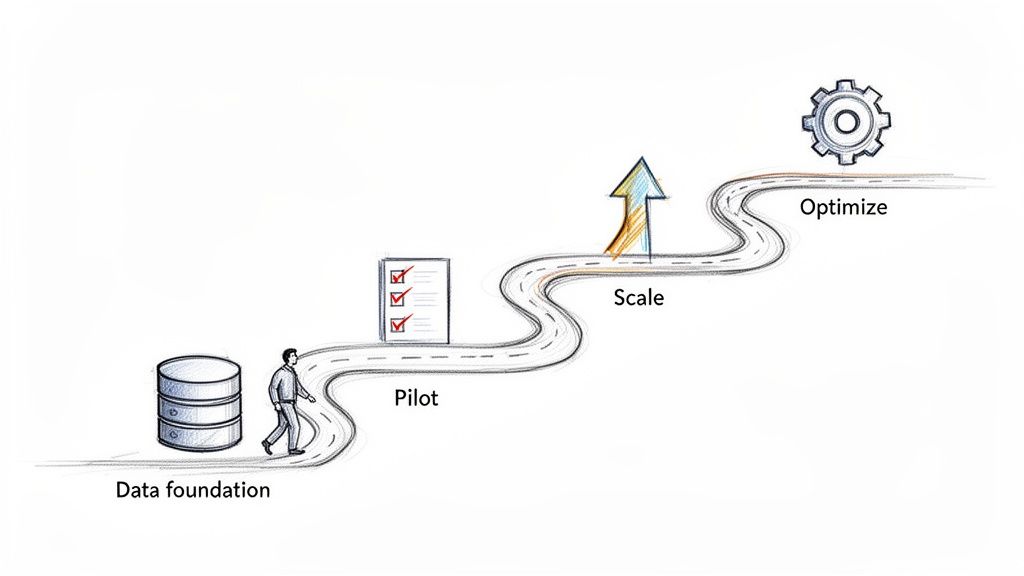
Knowing you need a personalized customer experience is one thing; actually building it is another. The good news is, you don’t have to boil the ocean or overhaul your entire operation overnight. The most successful teams follow a practical, step-by-step approach—often called a "crawl, walk, run" strategy—that lets them build momentum, prove value, and scale their efforts intelligently.
This roadmap breaks the journey into four manageable phases. By following this structure, you can sidestep common pitfalls like launching with messy data or trying to personalize everything at once. Instead, you'll build a solid, scalable foundation that pays dividends for years to come.
Before you can personalize a single interaction, you need clean, accessible data. This isn't just a box to check; it's the bedrock of your entire strategy. Without a solid data foundation, you're just guessing, and your personalization efforts will feel random and disconnected.
Think of your data as the fuel for your personalization engine. If the fuel is dirty or incomplete, the engine will sputter and fail. A unified customer profile, combining behavioral, transactional, and contextual data, is absolutely essential for delivering a seamless experience.
With a clear view of your data, you can now get strategic about what you want to achieve. A common mistake is aiming for "personalization" for its own sake. To be effective, you have to tie your strategy directly to specific, measurable business outcomes.
Your goals will guide every decision you make from here on out, ensuring your personalization efforts are focused and truly impactful. This strategic clarity keeps you from wasting time and money on initiatives that don't move the needle.
Now it's time to get your hands dirty, but on a small, manageable scale. A pilot program is your chance to test your assumptions, learn quickly, and score an early win that builds excitement and support for a broader rollout.
Your pilot should have a defined start and end date, crystal-clear success metrics, and a dedicated team. This focused approach lets you work out the kinks in your process and technology before you try to scale up.
Once your pilot program has delivered real, measurable results, you’re ready to "run." This final phase is all about scaling your personalization efforts across the entire customer journey and continuously optimizing for even better results.
This is where the real power of a platform like MagicalCX shines, as it allows you to apply what you've learned to every touchpoint, from the first marketing email to post-purchase support. Globally, this is what customers expect; 71% of B2C and 86% of B2B buyers now anticipate that companies know their interaction history. You can explore more findings in these customer experience statistics on apizee.com.
Scaling isn’t a one-and-done project; it requires a commitment to ongoing analysis. Use live dashboards to monitor performance, spot friction points, and uncover new opportunities for personalization. This continuous feedback loop ensures your strategy evolves with your customers' needs, turning your customer support from a cost center into a true engine for growth and loyalty.
Jumping into personalization often kicks up a few practical questions. How do you even start without a massive budget? And how do you walk the tightrope between personalization and privacy? Let's tackle the common hurdles leaders face so you can move forward with confidence.
Good news: you don't need a huge war chest to start making customer interactions more personal. The secret is to start smart by using the data and tools you already have. Most businesses are sitting on a goldmine of customer information right inside their CRM or e-commerce platform.
The trick is to focus on high-impact, low-cost strategies first. Nail these, and you'll get some early wins that prove the value of personalization, making it much easier to justify bigger investments later.
Here are a few practical ways to get started:
Many modern platforms are built for a DIY setup, letting you automate these kinds of basic personalized journeys without needing a team of developers. This approach delivers a quick, measurable return and builds the momentum you need for a more advanced strategy.
This one trips people up all the time, but the distinction is actually pretty simple. It all comes down to who’s in the driver's seat. Customization is driven by the user; personalization is driven by the brand.
Customization is what happens when a user manually adjusts their own experience. Think about switching an app to "dark mode," rearranging widgets on a dashboard, or choosing your notification preferences. The user is actively making choices to shape the interface to their own liking.
Personalization, on the other hand, is when the system or brand proactively shapes the experience for the user based on their data and behavior. It’s predictive and happens in the background, without the user having to lift a finger.
Personalization makes the customer feel understood by anticipating their needs. Customization gives the customer control over their environment. A great strategy uses both, but personalization is where you build deeper, more empathetic relationships at scale.
For example, Netflix suggesting shows based on what you’ve watched is classic personalization. A practical business example is an e-commerce site remembering your shoe size and automatically filtering search results for you. Customization would be you manually selecting your size from a dropdown filter.
In an era of data-driven everything, privacy is more than just a legal box to tick—it's the bedrock of customer trust. The great news is that ethical personalization and strong privacy aren't at odds. When done right, they actually reinforce each other.
It all boils down to transparency and a clear value exchange. Customers are usually willing to share information when they understand how it's going to make their lives easier. Be upfront about what you collect and how it helps you serve them better.
Here are actionable steps for respecting privacy:
When you prove your value and put the customer in control, you build the kind of trust that makes them comfortable sharing their data with you.
To truly prove the impact of your personalization efforts, you need to track the right metrics. It's not enough to look at surface-level numbers; you need a blend of customer experience (CX) and core business KPIs. This gives you the full story of how your strategy is affecting both customer happiness and the bottom line.
On the customer experience side, focus on metrics that reveal if interactions are getting smoother and less frustrating. Key indicators here include:
For direct business impact, tie your CX strategy to the financial metrics that matter. Look at things like:
An integrated platform with live dashboards is crucial here. It allows you to connect specific personalized workflows directly to improvements in these core metrics. This is how you prove the financial return of your strategy and turn customer experience into a measurable growth engine.
Ready to transform your customer support from a cost center into a revenue-positive powerhouse? MagicalCX uses an empathy-first AI to deliver human-like, personalized experiences that build loyalty and drive growth. Learn how we can help you move from “How can I help?” to “It’s already done” by exploring our platform.


