See your AI teammate in action now
Ready to make support faster, kinder, easier and help customers feel good about choosing you?
PS: Sales improves too...
No credit card required
14 days free trial
DIY or Guided setup
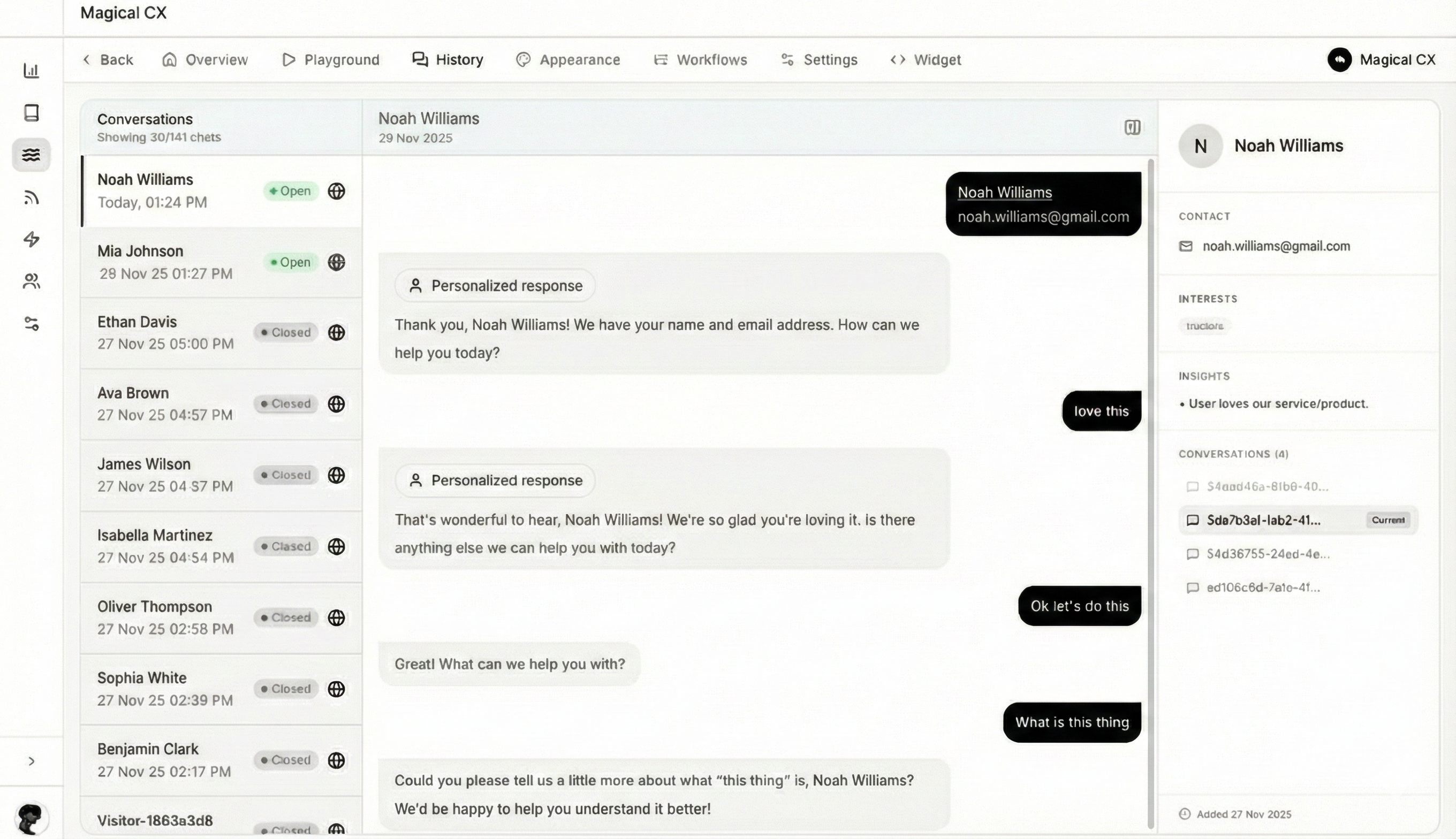
Ready to make support faster, kinder, easier and help customers feel good about choosing you?
PS: Sales improves too...
No credit card required
14 days free trial
DIY or Guided setup
Manish Keswani
When we talk about empathy in customer service, we're not just talking about being nice. It's about having the skill to genuinely understand what a customer is feeling and what they truly need—beyond the immediate problem they're calling about. It’s the ability to feel with your customer, which turns a routine support call into an experience that builds real trust.
True empathy in customer service is a world away from scripted apologies and forced politeness. It's a deliberate approach where agents learn to listen between the lines, picking up on the customer's emotional state and what’s really driving their frustration. This shifts customer support from being a necessary expense to a powerful tool for keeping customers happy and growing the business.
Here's a practical example: a customer calls because their new software subscription isn't working.
A sympathetic agent says: "I'm sorry you're having trouble with your subscription." This is a passive acknowledgment.
An empathetic agent hears the frustration in the customer's voice and says: "It sounds like you were ready to get started on a project and this technical issue has completely blocked you. Let's get this fixed so you can get back to work." This response understands the impact of the problem, not just the problem itself.
It’s easy to mix these two up, but in a support setting, the difference is night and day. Sympathy is feeling for someone. Empathy is about feeling with them.
People often use these terms interchangeably, but they drive very different actions in a customer conversation. One builds a wall, the other builds a bridge.
Here's a quick comparison to clarify the critical differences between empathetic actions and sympathetic statements in a support context.
| Attribute | Sympathy (Feeling For) | Empathy (Feeling With) |
|---|---|---|
| Perspective | Your own (looking from the outside in) | The customer's (trying to see from their view) |
| Typical Phrase | "I'm sorry to hear that." | "I can see how frustrating that must be." |
| Impact | Creates distance, can feel like pity. | Fosters connection and shared understanding. |
| Result | Acknowledges the problem. | Drives collaborative problem-solving. |
Ultimately, sympathy is passive, while empathy is active.
Empathy moves you from a passive observer to an active problem-solving partner. It's the difference between acknowledging a customer's frustration and taking ownership of their experience to resolve it effectively.
This isn't just about warm feelings; it's about cold, hard cash. The business case for empathy in customer service is undeniable, with clear, measurable impacts on revenue and retention.
A comprehensive recent survey revealed that 60% of consumers are willing to pay more for a brand that shows genuine care. Even more telling, over 40% have walked away from a company because they felt it didn't care about their experience. You can dig into the full research on customer experience to see just how much it influences spending.
The message is clear: investing in empathetic support is a direct investment in your bottom line.
It might feel like a stretch to draw a straight line from empathy to your bottom line, but it’s one of the most reliable business strategies out there. When a customer feels genuinely heard and understood, their entire relationship with your brand shifts. An empathetic conversation turns a simple transaction into a real connection, which is the very foundation of long-term loyalty and, ultimately, more revenue.
Just think about a classic, frustrating scenario: a surprise billing error.
A standard, by-the-book response might fix the issue, but the customer still walks away feeling like just another ticket in the queue.
Now, imagine an empathetic approach: "Wow, I can see how that unexpected charge would be frustrating. Let’s get this sorted out for you right away." This small change validates their feelings and turns a negative moment into an opportunity to build trust.
That single interaction can mean the difference between a customer who leaves for a competitor and one who becomes a vocal advocate for your brand. The financial impact here is massive, especially when you consider that acquiring a new customer is five to 25 times more expensive than keeping one you already have.
Here’s where it gets tricky. Many companies think they’re delivering empathetic service, but their customers tell a very different story. This disconnect is what we call the "empathy gap," and it’s quietly draining your revenue. When a customer feels ignored or misunderstood, they’re not just unhappy—they’re already looking for the exit.
The numbers don't lie. A staggering 74% of U.S. customers reported a bad service experience in 2022, revealing a huge gap between what people expect and what they actually get. But when brands get it right, the payoff is huge: customers are 5.1 times more likely to recommend a company after a great interaction. These statistics from Nextiva's research on service quality point to a clear opportunity for any business willing to focus on genuine connection.
Empathy doesn't just stop customers from leaving; it actively grows their value over time. A customer who feels valued and respected is far more likely to make repeat purchases, upgrade to premium tiers, or try out other products you offer.
Here’s how empathy directly boosts Customer Lifetime Value (LTV):
It Builds Trust and Openness: When customers trust you, they’re more receptive to advice. An agent who truly gets their needs can easily spot an opportunity to suggest a product upgrade that actually helps them, turning a support call into a natural upsell. For example, an agent helping a customer struggling with manual data entry might say, "I see you're spending a lot of time on this. Our premium plan includes an automation feature that could save you hours each week. Would you like to see how it works?"
It Creates a "Forgiveness Factor": Strong, empathetic relationships build up a bank of goodwill. If a mistake happens down the road, a loyal customer is much more likely to be patient and understanding, which significantly lowers the risk of churn.
It Fuels Positive Word-of-Mouth: Happy customers become your most effective marketers. They share their good experiences with friends and family, creating a powerful—and free—customer acquisition channel that no ad campaign can ever truly replicate.
Investing in empathy isn't just an operational cost; it's a direct investment in your most powerful competitive advantage. It builds a moat around your business that price cuts and flashy marketing simply can't cross.
By focusing on empathy in customer service, you stop just managing problems and start cultivating relationships that pay dividends for years to come. This strategic shift transforms your support team from a cost center into a powerful engine for sustainable growth. The business case is undeniable: making customers feel seen and heard is one of the smartest ways to secure your company's future. Exploring the cost-effectiveness of empathy-driven AI solutions can show you how to put this strategy into action at scale.
Let's be honest: turning empathy in customer service from a buzzword on a whiteboard into a real, everyday practice is a heavy lift. You can't just tell your team to "be more empathetic" and expect results. It requires a deliberate, ground-up strategy. Building a truly empathetic team means changing how you hire, how you train, and how you empower your people on the front lines.
This isn't about fluffy concepts. It’s about embedding empathy into your operational DNA. It’s about creating an environment where your agents feel confident reading a customer's emotional state and, crucially, have the power to actually do something about it.
The best empathy training is hands-on, built around real-world scenarios, and focused on practical skills. It's far less about memorizing canned phrases and much more about developing an intuitive feel for the customer's perspective. Think of it as building muscle memory for empathetic responses.
A cornerstone of this is active listening. And I don't just mean hearing the words—I mean understanding the frustration, disappointment, or confusion behind the words. A simple but incredibly powerful technique here is the "repeat and confirm" method.
Example Scenario: Putting Active Listening to Work
Customer: "I'm so frustrated! I paid for overnight shipping for a birthday gift, and it's three days late. The party is tomorrow and I have nothing to give."
Standard Response: "Let me check the tracking number for you."
Empathetic Response: "It sounds incredibly frustrating that you paid extra for a delivery that didn't arrive in time for the birthday party tomorrow. I can absolutely see why you're upset. Let's look into this right away and find a solution."
See the difference? The second response immediately validates the customer’s feelings. It acknowledges the core problems—the missed deadline and the emotional letdown. That simple act builds instant rapport and takes the tension down several notches.
Tiny shifts in language can completely change the tone of a conversation. You can go from issuing a command to creating a collaboration in just a few words. This is a critical skill for any team serious about delivering empathy.
One of the fastest ways to build a bridge is to shift from "you" statements, which can sound accusatory, to "we" statements, which signal a partnership. It moves the agent from being an obstacle to being an ally.
Think about these simple but powerful language shifts:
Instead of: "You need to fill out the return form on our website."
Try: "Let's walk through the return form together to get this sorted out."
Instead of: "I don't have that information."
Try: "That's a great question. Let me find the right person who can answer that for us."
Instead of: "Unfortunately, company policy prevents that."
Try: "I understand what you're asking for. While our standard process doesn't cover this, let's see what other options we have."
These aren't just nicer ways of saying the same thing. They're about taking ownership of the customer's problem and positioning the agent as a helpful partner who is on their side.
You can teach skills, but it's much harder to teach someone to care. That's why hiring for empathetic traits is so important. When you're interviewing, look for these core attributes that go beyond just technical know-how.
Key Traits to Look for in Empathetic Candidates:
Curiosity: Does the candidate ask thoughtful questions? Curious people naturally dig deeper into a customer's problem instead of just slapping a surface-level fix on it. Actionable Tip: In an interview, ask: "Tell me about a time you had to solve a problem with limited information. What questions did you ask?"
Patience: Ask them to tell you about a time they handled a difficult, frustrated person. Their story will reveal everything about their ability to listen calmly and not rush to a solution before they understand the whole picture.
Emotional Intelligence: Can they read between the lines? Candidates with high emotional intelligence can sense a customer's mood—frustrated, confused, anxious—and instinctively adjust how they communicate. Actionable Tip: Present a hypothetical frustrated customer scenario and ask, "What do you think this customer is feeling, and what would be your first sentence in response?"
When you build a team with these inherent strengths, you're not starting from zero. You're hiring people who are already wired to help others, embedding empathy directly into your company culture. You can learn more about how our mission-driven team approaches these principles by reading about the values that guide MagicalCX. This kind of foundation ensures every customer interaction becomes an opportunity to build a stronger, more loyal relationship.
Scaling any human-centric process comes with a tough question: how do you keep that personal touch when your volume explodes? This is the central challenge for empathy in customer service. Many teams worry that bringing in AI and automation means sacrificing the very human connection they worked so hard to build.
But that's a common misconception. Modern AI isn’t here to replace your best agents; it’s here to make them even better. The goal isn't to fake empathy with a robot. It's to use technology to handle the tedious, repetitive tasks that drain your team's energy, freeing them up to focus their brainpower on the tricky situations where genuine human understanding makes all the difference.
Think about one of the most maddening customer experiences: having to repeat yourself over and over. Every time an agent asks, "Can you tell me your account number again?" or "Can you explain the problem one more time?" a little bit of trust wears away. This is where AI delivers an immediate and powerful win.
AI tools can act as a perfect, persistent memory of every single interaction a customer has had with your brand, across every channel. When a customer gets in touch, the AI can instantly arm the human agent with a complete backstory: past purchases, previous support tickets, and even what they were just doing on your website.
This complete context is the foundation of scalable empathy. It allows an agent to start a conversation with, "I see you were having trouble with your last order; let's get that fixed," instead of a generic, "How can I help you?"
That small shift changes everything. It tells the customer you know them, you remember them, and you respect their time.
At its core, any empathetic interaction follows a simple three-step process: Listen, Validate, and Act. Technology is uniquely positioned to support every single stage.
This flow shows how AI can gather all the background information (Listen), help an agent understand and confirm the customer’s feelings (Validate), and then suggest the right next steps (Act).
Beyond just remembering the past, automation can be designed to be proactively empathetic. Instead of waiting for a customer to hit a wall and reach out in frustration, AI can spot the signs of a struggle and offer help before they even have to ask.
Here are a few practical examples of this in action:
Spotting User Friction: An AI can notice when a customer is stuck, maybe clicking the same button repeatedly on the checkout page or spending a long time on a help article. It can then trigger a proactive chat message: "It looks like you might be having some trouble with the payment step. Would you like some help?"
Intelligent Follow-ups: After a tricky support issue is resolved, an automated system can send a follow-up email a few days later. A simple, "Hi Jane, just checking in to make sure everything is still working smoothly after our chat last week," shows you care beyond just closing the ticket.
Personalized Guidance: If a customer is exploring a new, advanced feature in your app, AI can offer a tailored tutorial video right when they need it. This anticipates their needs and provides support in the moment.
These automated actions feel empathetic because they’re timely, relevant, and genuinely helpful. They prove you're paying attention to the customer's journey and are invested in their success.
Integrating AI to support and scale empathy isn't about flipping a switch; it's a phased approach that blends technology with human insight. This framework outlines a practical path for getting it right.
| Phase | Key Action | Example with MagicalCX | Metric to Track |
|---|---|---|---|
| 1. Foundation | Automate context gathering. Use AI to pull all relevant customer data (history, orders, previous tickets) into a single agent view. | MagicalCX automatically presents a complete customer timeline to the agent the moment a chat or call begins. | Average Handle Time (AHT) - should decrease as agents spend less time searching for info. |
| 2. Augmentation | Provide real-time agent assistance. Use AI to analyze conversations and suggest empathetic phrases, relevant help articles, or next-best actions. | During a conversation about a late delivery, MagicalCX prompts the agent with, "Acknowledge frustration: 'That sounds really frustrating, let's track it down.'" | Agent CSAT Scores - should increase as responses become more consistent and helpful. |
| 3. Proaction | Deploy proactive, intent-driven support. Use AI to monitor user behavior on your site/app and trigger automated help based on signs of struggle. | The system detects a user repeatedly failing to log in and proactively opens a chat window offering to help reset their password. | Cart Abandonment Rate / Feature Adoption Rate - should improve as friction is removed. |
| 4. Optimization | Analyze interaction data for empathy gaps. Use AI to review conversation transcripts and identify trends where agents or bots are missing empathetic cues. | A report from MagicalCX highlights that conversations mentioning "confusing" are often escalated. This signals a need for better agent training on that topic. | First Contact Resolution (FCR) - should increase as you fix root causes of repeat issues. |
By following a structured approach, you ensure AI is a tool that enhances—not replaces—the human connection that defines great customer service.
The real secret to scaling empathy in customer service isn't choosing between people and AI, but blending them together. The data backs this up. It's estimated that by 2025, 95% of customer interactions will involve AI in some way. At the same time, seven in ten consumers feel that AI just can’t replicate a genuine human connection.
The winning formula is a hybrid model. In fact, more than four out of five consumers are more likely to stay loyal to companies that balance automation with easy access to human agents. You can dive deeper into these trends by exploring more statistics about the future of customer service.
This is where platforms like MagicalCX shine—they’re built to manage this delicate dance. The system can handle the initial data gathering, answer routine questions, and give agents the full picture. But it’s also smart enough to recognize the subtle signs of a high-stakes emotional situation, like severe frustration, and seamlessly hand the conversation over to a human agent who’s ready to handle it with real care.
Ultimately, automation becomes the agent's most valuable partner. It takes care of the grunt work, so your team can focus on what they do best: connecting with people, solving tough problems, and building the kind of relationships that keep customers coming back.
Theory is great, but seeing empathy in customer service play out in the real world is where you truly understand its power.
Empathetic interactions do more than just make customers feel good. They completely change the dynamic of a support ticket. They can instantly de-escalate a tense situation, build trust where there was none, and create moments that turn frustrated people into your biggest fans.
Let’s look at a couple of detailed scenarios to see the night-and-day difference between a standard, robotic reply and a genuinely empathetic one. These examples really highlight how a small shift in language can change everything.
This one is a classic—and it’s always emotionally charged. A customer eagerly orders a gift, pays for shipping, and it shows up in pieces. Their excitement instantly curdles into disappointment and stress.
Standard Response (The Robot):
"Please provide your order number and a photo of the damage. Once received, we will process a return label. You must ship the damaged item back to our warehouse before a refund can be issued."
While technically correct, this response is completely tone-deaf. It heaps more work onto an already upset customer, creates delays, and completely ignores their frustration. It's a transactional, impersonal reply.
Empathetic Response (The Human):
"I am so sorry to see your order arrived damaged; that must have been incredibly disappointing, especially if it was a gift. I've just processed a brand-new replacement to be shipped out to you today—no need to worry about returning the original. We want to make this right for you immediately."
This is a game-changer. It starts by validating their feelings ("incredibly disappointing"), takes immediate ownership of the fix, and removes all the friction. This kind of response doesn't just solve the problem; it repairs the emotional fallout and can leave the customer feeling even better about your brand than if nothing had gone wrong.
Imagine a new user trying to set up their account for your software, but they're stuck. They feel overwhelmed, maybe even a little foolish for not "getting it."
Standard Response (The Script):
"To complete the setup, you need to navigate to the 'Integrations' tab in your account settings and follow the on-screen prompts. Our help documentation provides a step-by-step guide."
This answers the question but misses the point entirely. It doesn't acknowledge their confusion and pushes them back to the same self-serve resources that likely caused the frustration in the first place.
Empathetic Response (The Guide):
"It sounds like the integration setup is being a bit tricky—I know that part can feel confusing when you're just getting started. Let’s get this figured out together. Would it be helpful if I walked you through it on a quick screen-share, or would you prefer I send a direct link to the exact spot in the settings?"
This is how you build a real connection. It normalizes their struggle ("I know that part can feel confusing"), offers a partnership ("Let's get this figured out together"), and gives them control. By providing options, you empower the customer and turn a moment of friction into a supportive, guided experience. It's all about creating a positive environment, much like how your customer service should feel like a favorite local cafe.
These examples prove that empathy isn't some fluffy "soft skill"—it’s a powerful strategic tool. It’s about training agents to listen for the emotion hiding behind the words and to respond to the person, not just the problem. When you get that right, you forge authentic connections that customers remember, talk about, and reward with their loyalty.
Even with the best of intentions, attempts at empathy in customer service can sometimes fall flat, turning a bad situation into a truly terrible one. Understanding the common missteps is the first move toward building a support culture that customers can actually feel. These mistakes can easily undo all your team's hard work and chip away at the trust you’re trying to earn.
One of the most common traps I see teams fall into is relying on rigid, pre-written empathy scripts. They're meant to create consistency, but they usually do the exact opposite, making your agents sound robotic and completely insincere.
Think about it: when an agent mechanically recites, "I understand your frustration," without connecting to the actual problem, it feels empty. Customers can spot this a mile away, and it often makes them even more irritated.
The solution isn't to get rid of guidelines altogether. It’s about moving from strict scripts to flexible frameworks.
Actionable Insight: Instead of scripting a full sentence, create a "validation phrase bank" for your agents. This toolkit could include adaptable phrases like "That sounds really difficult," "I can see why that's a problem," or "No wonder you're frustrated."
Actionable Insight: Train your team to recap the customer's issue in their own words before jumping to a solution. A simple, "Okay, so just to confirm, the payment page gave you an error after you entered your details, and you're worried the order didn't go through?" proves they were actually paying attention.
This approach gives agents the freedom to be human while still equipping them to handle tough conversations with confidence.
Another major landmine is toxic positivity. This is what happens when an agent brushes off a customer's genuine anger with an overly cheerful or dismissive tone. Telling a furious customer to "look on the bright side" or chirping "have a great day!" is just plain invalidating.
True empathy requires acknowledging the negative emotion, not plastering over it with forced happiness. It's about meeting the customer where they are, even if that place is one of anger or frustration.
To sidestep this, coach your team to validate the feeling first. A simple, "That sounds incredibly frustrating," or, "You're right to be upset," shows the customer you're on their side, not against them. For example, if a customer is angry about a service outage, an agent should say, "It's completely understandable that you're upset. Our service should be reliable, and we've let you down."
This might be the most damaging pitfall of all: creating a team of "powerless empathizers." This is when you train agents to understand and validate a customer's problem but give them zero authority to actually solve it.
An agent who says, "I completely understand why you're upset, but company policy prevents me from issuing a refund," just makes the company look heartless and rigid. It's a dead end for the customer and a morale-killer for the agent.
The fix is simple, but it requires trust: empower your agents. Give them the autonomy to issue credits, process returns, or offer discounts within clear guidelines. When an agent can say, "I get it, and I'm going to fix this for you right now," empathy turns into meaningful action. Actionable Insight: Create a "Make it Right" budget for each agent (e.g., up to $50 per incident) that they can use at their discretion to solve a customer's problem without needing manager approval.
Switching to an empathy-first support model is a big move, and it's natural to have questions about how it all works in the real world. Let's tackle some of the most common things leaders ask when they're ready to put empathy into practice.
This is the big one. While you can't just slap a number on "empathy," you can absolutely measure its impact on the metrics that matter most to your business. The trick is to look at key business indicators before and after you roll out new training and tools.
Customer Lifetime Value (LTV): When support interactions build real trust, customers stick around and buy more over time. Keep an eye on the LTV of customers who have positive, empathetic support experiences—you'll likely see it climb.
Churn Rate: At its core, empathy is about retention. If you see a meaningful drop in your churn rate after focusing on empathy, you know your strategy is hitting the mark.
Upsell and Cross-sell Rates: Agents who genuinely understand a customer's situation are perfectly positioned to suggest products or upgrades that actually help. This isn't a hard sell; it's a natural outcome of good problem-solving, and it directly boosts revenue.
First Contact Resolution (FCR): Empathetic agents listen more carefully, leading to a better understanding of the root problem. This increases the chances of solving the issue on the first try. Track your FCR rate; an increase is a strong sign of more effective, empathetic conversations.
It’s easy to confuse the two, but the difference is huge. Being nice is about politeness and a pleasant tone—table stakes, really. Empathy, on the other hand, is an active skill. It's about truly understanding and acknowledging a customer's feelings so you can get to the heart of their problem.
Niceness says: "I'm sorry you're having trouble."
Empathy says: "It sounds so frustrating that the feature isn't working as you expected, especially when you're up against a deadline. Let's figure this out together."
See the difference? Niceness is passive. Empathy is an active partnership focused on solving the problem.
Absolutely. While some people might have a more natural knack for it, empathy is a skill that can be built and strengthened just like any other. The key is to move beyond theory and get practical.
Effective training involves things like active listening exercises, role-playing tough customer scenarios, and learning specific validation phrases. With consistent coaching and the right frameworks, agents can build their "empathy muscles" over time. Actionable Insight: Run weekly team meetings where you review real (anonymized) support transcripts. Discuss what went well and identify specific moments where a more empathetic phrase could have changed the conversation's tone.
This is a critical balance to strike. The best approach is to use AI to empower your human agents, not to replace them. Let automation handle the tedious, repetitive work—like instantly pulling up a customer's complete order and support history.
This frees up your agent to focus entirely on the human connection and the complex problem at hand. Instead of a generic "How can I help you?", an AI-equipped agent can start with, "I see you were having trouble with your last order; let's get that sorted out right away." AI provides the context; the human provides the empathy.
Ready to scale empathy without losing the human touch? MagicalCX uses an empathy-first AI to deliver context-aware, human-like support that builds loyalty and drives revenue. See how it works.


