See your AI teammate in action now
Ready to make support faster, kinder, easier and help customers feel good about choosing you?
PS: Sales improves too...
No credit card required
14 days free trial
DIY or Guided setup
Ready to make support faster, kinder, easier and help customers feel good about choosing you?
PS: Sales improves too...
No credit card required
14 days free trial
DIY or Guided setup
A guide to 10 knowledge management best practices for CX in 2026, covering conversational memory, 360-degree profiles, AI automation, omnichannel orchestration, and predictive analytics.
Manish Keswani

Summary by MagicalCX AI
In 2026, the biggest CX gains come from treating knowledge as an AI-driven, omnichannel system where conversational memory and guided workflows cut average handle time by 30–40% and predictive analytics can flag churn risk signals like repeated help-page visits that correlate with up to 70% higher churn.
In a market where customers expect instant, personalized, and empathetic resolutions, customer support has become a key brand differentiator. The line between a loyal advocate and a frustrated detractor is often drawn by how effectively you manage and deploy knowledge. This process is no longer just about documenting answers in a static FAQ. It's about creating an intelligent, responsive ecosystem that empowers both your agents and your customers to find the right information at the right time.
Effective knowledge management is the foundation for scaling support operations efficiently. For e-commerce brands, SaaS companies, and high-volume contact centers, a strong strategy reduces agent ramp time, lowers operational costs, and directly impacts customer satisfaction. When agents can access accurate information instantly and self-service tools resolve issues proactively, support shifts from a reactive cost center to a strategic, revenue-positive engine. It is the core of modern customer experience.
This guide moves past generic advice to provide a clear playbook of actionable knowledge management best practices. We will break down 10 specific strategies that leading support teams are implementing to transform their operations. You will learn how to:
Each point is designed to provide practical implementation steps and real-world examples, helping you move from simply answering questions to proactively engineering exceptional customer journeys.
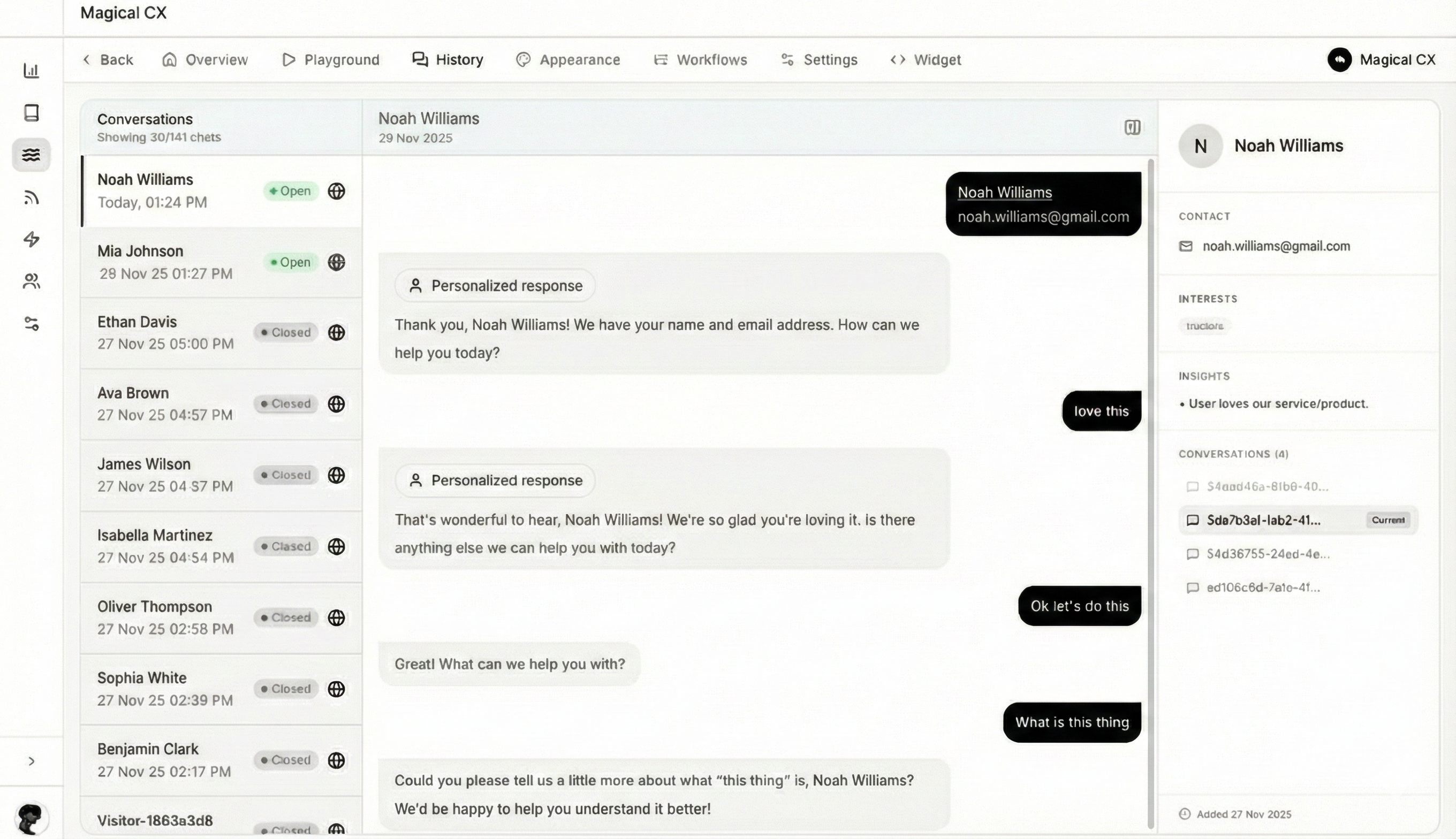
One of the most effective knowledge management best practices involves creating a system of conversational memory. This strategy focuses on maintaining a complete, accessible history of every customer interaction and its surrounding context across all channels. It eliminates the frustrating experience where customers must repeat their issue, order number, or history every time they switch from a chatbot to a live agent or from email to a phone call. Instead, each new interaction builds upon the last, providing agents and AI systems with the full picture of the customer's journey.

This approach treats customer history not just as a log file but as active, usable knowledge. For instance, a meal delivery service could use conversational memory to note a customer’s past complaints about a specific ingredient. The next time they contact support, the agent or AI can proactively say, “I see you’ve had issues with cilantro before. Let me ensure your next order is flagged correctly.” Similarly, a system like MagicalCX can provide an AI agent with the memory of a previous chat, allowing it to pick up the conversation exactly where it left off, even days later.
Successfully preserving context requires a deliberate technical and operational setup. Begin by unifying data sources into a central view, often through a Customer Data Platform (CDP) or deep CRM integration.
A core component of effective knowledge management involves building a 360-degree customer profile. This practice centers on creating a single, unified view of each customer by aggregating data from every touchpoint. It combines behavioral, transactional, demographic, and support history into one accessible profile, giving agents a complete picture of the customer's relationship with the company. This eliminates information silos and empowers teams to deliver truly personalized and context-aware support.

This method transforms fragmented data points into actionable intelligence. For instance, a streaming service like Netflix uses this profile to see not just a user's viewing history but also their device usage and past billing inquiries. If a customer reports a streaming issue, the agent can immediately see they primarily watch on a specific model of smart TV, allowing for faster, more accurate troubleshooting. Similarly, a B2B SaaS company can see if a user filing a bug report is from a high-value account currently in renewal talks, enabling them to prioritize the ticket appropriately.
Building a complete customer view requires a strategic approach to data integration and governance. Start by identifying the most critical data sources and expand over time to create a richer profile. For more details on this topic, explore these customer data integration best practices.
Effective knowledge management extends beyond simply storing information; it involves actively using that knowledge to resolve issues autonomously. This is where agentic automation comes in. This practice equips AI agents with the ability to understand customer intent, access relevant knowledge, and then execute tasks or intelligently route inquiries without human intervention. Instead of just answering questions, these agents can perform actions like processing a return, changing a subscription plan, or scheduling an appointment.
This approach turns a static knowledge base into a dynamic, action-oriented system. For example, a customer of a utility company can interact with an AI assistant and say, "I need to set up a payment plan for my overdue bill." The AI agent understands the intent, authenticates the user, pulls up their account details, consults the company's payment plan policies, and guides the user through setting up the new arrangement automatically. Similarly, an airline's AI agent can rebook a customer on the next available flight after a cancellation, handling the entire workflow.
Building a successful agentic automation system requires a measured approach that prioritizes both efficiency and customer trust. Start by identifying high-volume, low-complexity tasks that are ideal candidates for automation.
Effective knowledge management extends beyond a single channel. Omnichannel knowledge orchestration ensures that information is consistent, accurate, and accessible whether a customer interacts with a chatbot on your website, sends a DM on Instagram, or replies to an email. This practice unifies your knowledge base and support systems so customers can switch between channels without losing context or receiving conflicting information. The goal is to create one seamless, continuous conversation, regardless of the platform.
This strategy treats every channel as an integrated part of a larger customer journey. For example, a customer might start a chat on a retailer's website to ask about return policies, then later send an Instagram DM with a photo of the product they want to return. An orchestrated system allows the social media manager to see the previous web chat history and immediately process the return without asking the customer to repeat themselves. A tool like MagicalCX can ensure that an AI agent responding to a follow-up email can reference the initial web chat, maintaining a fluid experience.
Building a true omnichannel experience requires synchronizing both your technology and your team’s approach. Start by mapping the customer journey to identify key touchpoints and potential friction when moving between channels.
Beyond simply reacting to customer issues, a mature knowledge management strategy uses data to anticipate them. This practice involves applying predictive analytics to historical interaction data, customer behavior, and support metrics to foresee potential problems like churn, dissatisfaction, or escalations. It’s about proactively identifying friction points in the customer journey before they become widespread issues that flood support queues.
This approach transforms knowledge from a reactive tool into a proactive asset. For example, a SaaS company might analyze product usage and find that customers who repeatedly visit the help page for a specific feature have a 70% higher churn rate. This insight triggers a proactive in-app message offering a tutorial video to those users. Similarly, an e-commerce platform using MagicalCX can analyze contact patterns and identify that a recent website update is causing a spike in questions about shipping costs, allowing them to fix the user interface before it becomes a major problem.
Getting started with predictive insights doesn't require a full data science team. You can begin with existing tools and gradually build sophistication. The goal is to connect data points to predict outcomes and improve processes.
A truly effective knowledge base is not a static library but a dynamic, living resource. This knowledge management best practice involves creating a system that continuously learns from every support interaction to improve its accuracy and relevance. Instead of relying solely on manual updates, it uses AI to analyze resolution outcomes, customer feedback, and agent actions to automatically refine its content. This approach turns your support operations into a feedback loop that strengthens your knowledge base with each ticket solved.
This system works by identifying successful resolutions and learning from them. For example, if multiple agents successfully resolve a login issue by telling customers to clear their browser cache, the AI can detect this pattern. It might then automatically suggest a new knowledge base article titled "How to Fix Login Issues by Clearing Your Cache." A platform like MagicalCX can use its self-learning engine to extract correct answers from resolved conversations and use that information to improve its automated responses over time, often relying on technologies like Large Language Models (LLMs) to understand and process the unstructured text.
Building an AI-driven knowledge base requires a structured approach focused on quality control and continuous feedback. Start by identifying knowledge gaps where automation can have the most impact.
One of the most advanced knowledge management best practices is the integration of empathetic AI and emotional intelligence. This approach moves beyond simple keyword matching and transactional responses by training systems to recognize, interpret, and respond to human emotions. By analyzing sentiment, tone, and context, AI can deliver interactions that feel genuinely caring and emotionally aware, validating customer feelings and framing replies with the right level of warmth and understanding.
This strategy treats emotional context as a critical piece of knowledge. For example, a customer messages a clothing brand with, "You sent me the wrong size AGAIN. I'm so fed up." A basic AI might respond, "Please provide your order number." An empathetic AI would respond, "I can hear how frustrating this is, and I'm so sorry we made the same mistake twice. That's not the experience we want for you. Let's get this fixed immediately." This mirrors the emotional attunement of the best human agents, turning a negative interaction into a positive one.
Integrating emotional intelligence into your knowledge systems requires a focus on both technology and human-centric data. Start by identifying the emotional patterns that define successful support conversations within your organization.
A powerful knowledge management best practice is to build guided workflows that automate common, multi-step customer journeys. This strategy embeds business logic, decision trees, and required information collection directly into the support process. It moves beyond static help articles by creating interactive, step-by-step guides that ensure consistency, reduce agent error, and accelerate resolution for high-volume inquiries like returns, account changes, or technical troubleshooting.

This method turns procedural knowledge into an executable tool. For example, instead of an agent reading a 10-step article on how to process a warranty claim, a guided workflow presents them with a series of simple questions ("Is the product within its warranty period?"). Based on their answers, the system automatically pulls up the correct forms and logs the claim. This ensures no steps are missed. For customers, a self-service workflow for a SaaS password reset can guide them through security questions and automatically send a reset link without needing an agent.
Building effective guided workflows requires a clear understanding of your existing processes and a commitment to continuous improvement. Start by identifying the most frequent and repetitive tasks your support team handles.
A critical knowledge management best practice is establishing a transparent human handoff process that preserves complete conversational context. This practice ensures that when a customer moves from an AI chatbot or self-service tool to a human agent, the transition is seamless. The full history of the interaction, including the customer's issue, steps already taken, and emotional sentiment, is passed along, preventing the customer from having to repeat themselves and empowering the agent to resolve the issue efficiently and with empathy.
This strategy treats the AI-to-human escalation point not as a failure but as a deliberate, value-added step in the customer journey. For example, a customer tries to solve a billing issue with a chatbot. After two failed attempts, the chatbot says, "It looks like this is a complex issue. I'm connecting you to a billing specialist who has the full history of our chat." The agent then joins and says, "Hi Alex, I see you tried to update your credit card and got an error. I can help with that." This is a seamless, positive experience.
A successful handoff depends on a well-designed workflow that prioritizes both agent efficiency and the customer experience. Start by mapping out escalation triggers and the precise information agents need to succeed.
Effective knowledge management extends beyond just storing information; it involves transforming raw customer interaction data into structured insights for leadership while empowering support agents to act on that knowledge. This dual approach ensures that high-level strategy and frontline execution are perfectly aligned. It creates a virtuous cycle where data informs decisions, and empowered agents (knowledge workers) use that data to improve customer outcomes, generating new data in the process.
This practice moves away from simply tracking vanity metrics like ticket volume. For example, instead of just reporting "1,000 tickets about shipping," an actionable insight would be, "Tickets about shipping delays to California have increased 300% in the last 7 days, coinciding with our new logistics partner." This allows leadership to investigate the partner, not just tell agents to work faster. It also empowers agents, who are often the first to spot trends, to flag emerging issues.
Building a data-driven and agent-empowered culture requires both the right tools and the right mindset. The goal is to make data interpretation intuitive and agent learning continuous.
| Item | 🔄 Implementation Complexity | 💡 Quick Tips | ⭐ Expected Effectiveness | ⚡ Speed / Efficiency | 📊 Ideal Use Cases / Results |
|---|---|---|---|---|---|
| Conversational Memory and Context Preservation | High — requires multi-channel integrations, data governance, security | Implement data governance first; encrypt PII; generate concise context summaries | ⭐⭐⭐⭐⭐ — strong personalization and higher FCR | ⚡ Medium — reduces AHT (30–40%) with contextual handoffs | 📊 D2C, e‑commerce, SaaS onboarding, contact centers — fewer repeats, higher retention |
| 360‑Degree Customer Profile Integration | High — consolidates behavioral, transactional, and profile data across systems | Start with critical fields; automate enrichment; enforce RBAC | ⭐⭐⭐⭐ — enables deep personalization and predictive actions | ⚡ Low–Medium — improves decision quality more than immediate speed | 📊 E‑commerce recommendations, SaaS expansion/churn detection, B2B relationship management |
| Agentic Automation and Intelligent Workflow Routing | High — needs advanced NLU, ML models, decision rules and compliance logging | Begin with high‑volume, low‑complexity tasks; use human‑in‑loop for edge cases | ⭐⭐⭐⭐⭐ — scales support, reduces manual work significantly | ⚡ High — faster resolutions and 24/7 automation | 📊 Contact centers, returns/exchanges, onboarding — cost reduction and improved FCR |
| Omnichannel Knowledge Orchestration | High — complex cross‑platform integration and channel formatting | Map journeys; create channel tone guides; test context transfer | ⭐⭐⭐⭐ — consistent CX across channels | ⚡ Medium — better routing and faster responses when integrated | 📊 D2C social/WhatsApp, SaaS email/in‑app, financial services — seamless cross‑channel experiences |
| Predictive Analytics and Friction Point Detection | Medium–High — requires quality historical data and modeling | Start simple; combine metrics with feedback; set careful alert thresholds | ⭐⭐⭐⭐ — proactive issue resolution and churn prevention | ⚡ Low — delivers insights rather than instant actions | 📊 SaaS churn prediction, e‑commerce checkout optimization, subscription retention |
| Self‑Learning Knowledge Base with AI Continuous Improvement | Medium–High — needs ML pipelines and governance for content quality | Use quality gates; require human approval for low‑confidence updates; monitor feedback | ⭐⭐⭐⭐ — KB improves accuracy and self‑service over time | ⚡ Medium — reduces agent search time and improves resolution speed | 📊 High‑volume support, rapidly evolving products — better self‑service and reduced maintenance costs |
| Empathetic AI and Emotional Intelligence Integration | High — advanced sentiment/NLP, diverse training data, cultural sensitivity | Audit empathetic patterns; train on diverse examples; set escalation triggers | ⭐⭐⭐⭐ — improves CSAT and perceived humanness of interactions | ⚡ Low–Medium — may slightly lengthen responses for better tone | 📊 D2C, financial services, sensitive support scenarios — higher loyalty and NPS |
| Guided Workflows and Process Automation for Common Journeys | Medium — workflow design, branching logic, and backend integrations | Map processes first; involve ops; build flexibility for exceptions | ⭐⭐⭐⭐ — ensures consistency and reduces errors | ⚡ High — accelerates multi‑step processes (returns, onboarding) | 📊 E‑commerce returns, SaaS onboarding, subscription changes — faster, repeatable outcomes |
| Transparent Human Handoff with Context Preservation | Medium — context summarization and UX for warm handoffs | Keep summaries concise; train agents on AI context; measure escalations CSAT | ⭐⭐⭐⭐ — reduces restart friction and improves escalation outcomes | ⚡ Medium — speeds handoff resolution and reduces rework | 📊 Contact centers, complex B2B deals, high‑touch support — smoother escalations, higher satisfaction |
| Actionable Insights and Knowledge Worker Enablement | High — robust data pipelines, dashboards, and learning programs | Start with 5–7 key metrics; create role‑based views; link insights to actions | ⭐⭐⭐⭐ — drives data‑driven CX decisions and agent performance | ⚡ Low–Medium — prioritizes smarter work over immediate speed | 📊 Leadership reporting, CX strategy, agent enablement — identifies systemic fixes and improves onboarding |
Navigating the principles we've discussed, from integrating a 360-degree customer profile to implementing empathetic AI, marks a significant shift away from traditional information storage. This is not about building a static library of articles. Instead, you are constructing an intelligent, responsive ecosystem that anticipates needs, empowers your team, and learns from every single customer interaction. The knowledge management best practices detailed here are the building blocks for a system that actively drives business outcomes, transforming your support center from a cost center into a powerful engine for customer loyalty and growth.
The central theme is a move from reactive problem-solving to proactive experience creation. By focusing on predictive analytics to spot friction points before they escalate and using guided workflows to ensure consistency, you are fundamentally changing the support dynamic. Your agents, augmented with AI-driven insights and freed from repetitive tasks, become true knowledge workers. They are equipped to handle complex, high-value interactions that build lasting customer relationships.
To translate these concepts into reality, focus on a phased approach. Don't attempt to boil the ocean.
This journey requires a commitment to continuous improvement. The metrics you establish, from Customer Effort Score (CES) to agent proficiency over time, will be your guide. For a deeper dive into foundational principles that support this evolution, exploring additional expert resources can be incredibly beneficial. To further enhance your understanding and implementation, delve into the latest strategies and Top Best Practices for Knowledge Management. Adopting a mindset of ongoing refinement ensures your knowledge system never becomes obsolete.
Ultimately, mastering these knowledge management best practices is about creating a seamless flow of information that benefits everyone. Customers get fast, accurate answers. Agents feel confident and effective. And your business gains the operational efficiency and deep insights needed to thrive. This strategic approach turns every support touchpoint into a valuable data point, feeding a cycle of continuous improvement that directly impacts your bottom line.
Ready to put these principles into practice with a platform designed for the future of CX? MagicalCX integrates conversational memory, agentic automation, and a self-learning knowledge base into one unified system. See how you can transform your customer support by visiting MagicalCX today.


