See your AI teammate in action now
Ready to make support faster, kinder, easier and help customers feel good about choosing you?
PS: Sales improves too...
No credit card required
14 days free trial
DIY or Guided setup
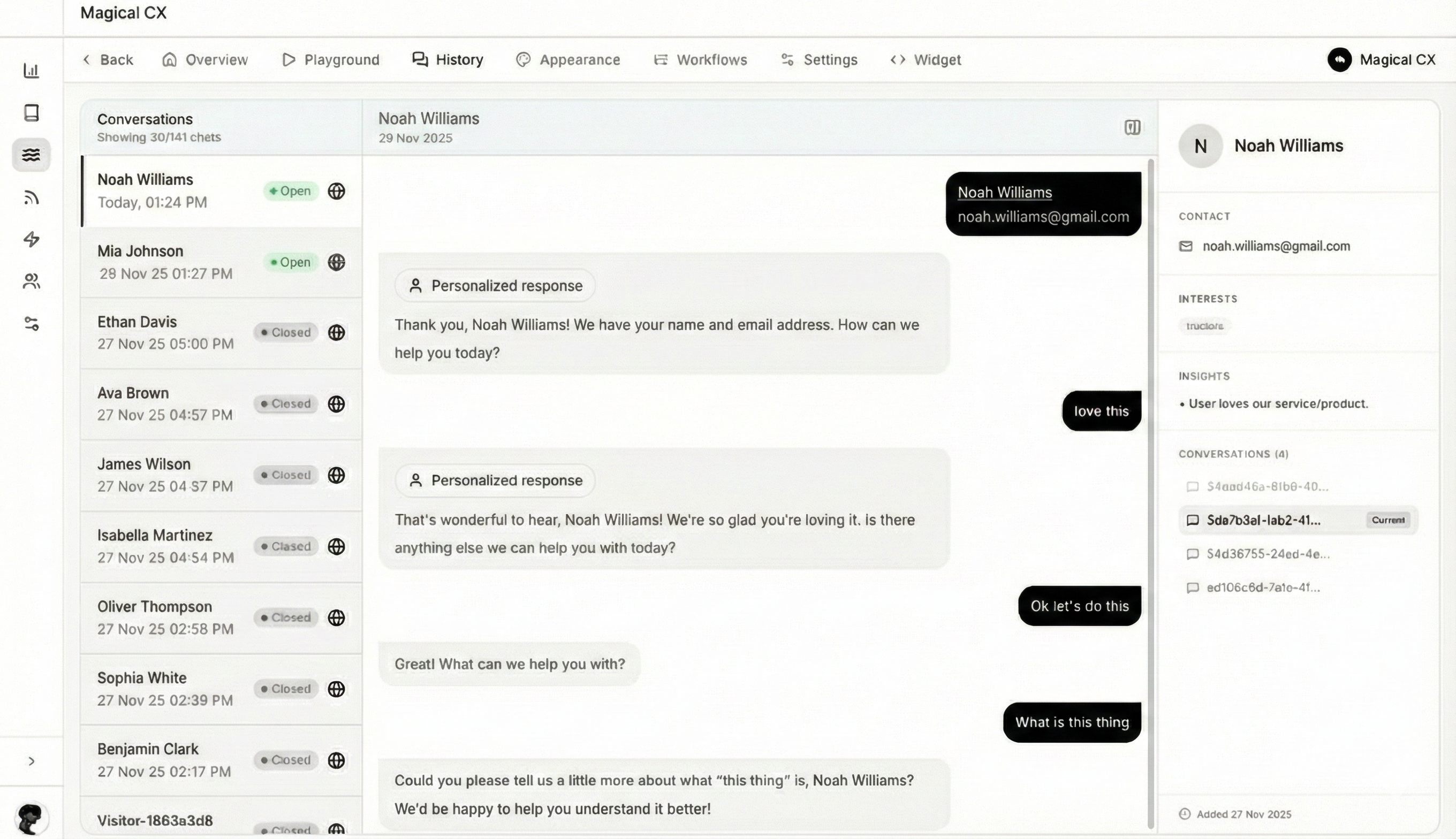
Ready to make support faster, kinder, easier and help customers feel good about choosing you?
PS: Sales improves too...
No credit card required
14 days free trial
DIY or Guided setup
Learn how to define Customer Effort Score (CES), measure and calculate it with CES 2.0 surveys, analyze feedback, reduce customer effort, avoid common mistakes, and link CES to CX metrics.
Manish Keswani

Summary by MagicalCX AI
Customer Effort Score is a stronger loyalty lever than “delight” because 94% of customers who have a low-effort experience say they will buy again versus just 4% after a high-effort experience.
Ever had to jump through a dozen hoops just to return something you bought online? You know, the kind of experience that makes you want to throw your computer out the window. Now, picture the opposite: a company that lets you start a return with a few taps in an app and drop it off with a simple QR code. Which one are you going to stick with?
That simple difference is exactly what Customer Effort Score (CES) is all about. It's a customer experience metric that cuts right to the chase, measuring how easy—or difficult—you make it for customers to get things done.
CES is built on a simple, yet powerful, truth about human nature: we gravitate toward the path of least resistance. People don't just want fancy, over-the-top service; more than anything, they crave effortless experiences. When a customer has to fight your systems, repeat themselves to different agents, or navigate a confusing website, you're creating friction. And friction is a loyalty killer.
For a long time, the prevailing wisdom was to "delight" the customer at all costs. But a landmark 2010 article in the Harvard Business Review flipped that idea on its head. The research argued that the real driver of loyalty wasn't delight, but simply making things easy.
Later studies by Gartner drove the point home, finding that a staggering 94% of customers who had a low-effort experience said they would buy from that company again. Contrast that with the mere 4% of customers who endured a high-effort experience. If you want to learn more about these customer effort findings on cxtoday.com, the data is eye-opening.
This makes CES an incredibly powerful predictor of future customer behavior. It doesn’t just capture a fleeting moment of happiness; it tells you how likely someone is to come back.
Think of CES as less of a survey and more of a diagnostic tool for your business. It shines a bright light on the exact points of friction in your customer journey, showing you precisely where things are breaking down.
A low-effort experience is the straightest path to customer loyalty. When you make things easy, customers have no reason to look elsewhere. They will reward you with repeat business and positive word-of-mouth.
Ultimately, CES helps you put your resources where they’ll have the biggest impact. It’s a foundational piece of any modern customer experience strategy and a critical input for a successful Voice of the Customer program. By focusing on making things easy, you build a stickier, more resilient business.
Figuring out your Customer Effort Score isn't some complex data science project. It's much simpler: just ask the right question at the right time. Your goal is to get a customer's gut reaction right after they’ve interacted with you, while the experience is still fresh in their mind.
Timing is everything here. You want to send your CES survey immediately after a specific touchpoint.
The way you ask the question matters just as much as when you ask it. A few different scales exist, but they all boil down to measuring one thing: effort.
The modern standard is CES 2.0. This updated method uses a clear statement and a 7-point scale, which is a huge improvement over older, more confusing questions.
CES 2.0 Question: "[Company Name] made it easy for me to handle my issue." Scale: A 7-point scale from 1 (Strongly Disagree) to 7 (Strongly Agree).
See the shift? This wording puts the responsibility on your company's process, not on the customer. It's a small change that gets you much more honest feedback. The best practice with CES 2.0 is to also include an open-ended follow-up question, like "Could you tell us why you chose that score?" This gives you the 'why' behind the number.
Calculating your score is refreshingly straightforward. You’re just finding the average of all the responses. This gives you one clean, simple number to track.
The CES Formula: Customer Effort Score = (Sum of All Scores) / (Total Number of Responses)
Let's run through a quick example. Say you surveyed 10 customers after a support interaction using the 1-7 scale. You get back these scores: 7, 6, 7, 5, 4, 7, 6, 3, 7, 5.
In this case, your Customer Effort Score is 5.7.
This simple metric has a massive impact on your business. Low-effort experiences are directly tied to customer loyalty and repeat purchases.

As the data shows, making things easy for your customers isn't just a nice-to-have; it's one of the most reliable ways to keep them coming back.
Collecting your Customer Effort Score is a great start, but let's be honest—the number itself doesn't fix anything. The real magic happens when you use that score to build a road map for making things better for your customers. A score is just a piece of data; acting on it is what turns your customer experience from reactive to genuinely strategic.

One of the first questions people ask is, "So, what's a good CES score?" The honest answer? It depends. There’s no universal magic number that works for every industry or situation. What's considered a "good" score for a simple e-commerce checkout will look very different from a "good" score for resolving a complex technical support ticket.
The secret is to worry less about how you stack up against others and focus more on your own internal trends. The only benchmark that truly matters is your own last score. The goal is simple: keep improving it.
To make sense of all the data pouring in, start by bucketing your scores into three simple categories. This approach instantly clarifies where your attention is needed most.
The score tells you what the effort level was, but the follow-up comments from customers tell you why. This is where the gold is hidden. If you notice a trend of comments all pointing to a confusing returns process, you’ve just found a specific, high-impact problem to solve.
Your CES score points you to the problem, but your customers’ words give you the solution. Digging into open-ended feedback is the fastest way to pinpoint the exact cause of customer friction.
For instance, imagine several customers give you a 3 and leave comments like, "I had to repeat my order number to three different people." You now know the problem isn't a single agent having a bad day; it’s a system or process failure where customer information isn't being passed along. Your actionable insight: Implement a system where chat history and customer data are automatically passed between agents, so the customer never has to repeat themselves.
For more ideas on tracking what matters, check out our guide on measuring customer service performance.
Knowing your Customer Effort Score is the first step. Actually improving it is how you turn that data into real customer loyalty. The good news is that you don't need to reinvent your entire business to reduce friction. It's all about making smart, targeted changes that clear roadblocks from your customer's path.
And the impact of getting this right is huge. Research from Gartner shows that customer effort is 40% more accurate than customer satisfaction when it comes to predicting loyalty. Their data is even more revealing: a staggering 94% of customers who had a low-effort experience said they would buy again. That number plummets to just 4% for those who had a tough time.
Every barrier you remove, every frustrating step you eliminate, is a direct investment in customer retention. Let's dig into some practical, high-impact ways to make your customer experience feel effortless.
Here’s a secret: many customers don't actually want to talk to you. They just want a quick, accurate answer to their question. When your FAQ page is a disorganized mess or your knowledge base is non-existent, you force them into a high-effort conversation they never wanted to have.
Instead of making them hunt for information, give them the tools to solve problems on their own terms.
A smooth start is just as important. Learning how to improve your customer onboarding process can dramatically lower a customer's initial effort and set the tone for a long-term, low-friction relationship.
Think about the interactions that are universally dreaded: processing a return, changing a subscription, or filing a claim. These multi-step processes are often confusing and time-consuming, making them prime candidates for bad CES scores.
This is where guided workflows can be a game-changer.
Instead of making customers figure out a complicated process on their own, a guided workflow turns it into a simple, step-by-step experience. This drastically lowers the mental energy required, making the interaction feel easy.
For example, MagicalCX can turn complex, high-effort problems into simple, automated solutions.
| High-Effort Customer Problem | Low-Effort Solution with MagicalCX | Impact on CES |
|---|---|---|
| A customer has to find a return policy, print a label, repackage the item, and drive to a shipping center. | The customer starts a return from their order history. A guided workflow asks a few questions and generates a QR code for a label-free drop-off. | Drastically Lowered Effort. A dreaded, multi-step chore becomes a seamless, three-click process. |
| A SaaS user needs to upgrade their plan but must navigate complex pricing pages and manually update their billing information. | An in-app prompt offers a one-click upgrade. A guided workflow confirms the change and automatically applies the new features and billing, all without leaving the dashboard. | Significantly Lowered Effort. The cognitive load of decision-making and manual data entry is completely removed. |
| An insurance customer has to call an agent, explain their situation, fill out a PDF form, and email it back to file a simple claim. | The customer opens the mobile app and is guided through a conversational workflow, where they can upload photos and answer questions to submit the claim in under five minutes. | Drastically Lowered Effort. An intimidating and time-consuming process becomes a quick and reassuring interaction. |
These examples show how automation can transform a task from a headache into a breeze. You can apply the same logic to almost any complex customer journey, from onboarding new users to managing account changes. To dig deeper into related efficiency metrics, you might be interested in our guide on average handling time.
One of the quickest ways to create a high-effort experience is to make customers repeat themselves. Nothing is more frustrating than explaining your issue to a chatbot, only to be transferred to a live agent who opens with, "So, how can I help you today?"
Omnichannel orchestration makes this problem disappear. By unifying customer data and conversation history across every channel, you create a single, continuous conversation that follows the customer wherever they go.
Imagine this common SaaS support scenario:
That small change makes a world of difference. The customer feels heard and valued, turning a potential point of friction into a smooth, low-effort resolution.
Putting a Customer Effort Score program in place is a smart move, but it's surprisingly easy to get it wrong. A few common missteps can mess with your data, leading you to draw the wrong conclusions or miss out on huge opportunities. Let's walk through the most frequent pitfalls and how to keep your feedback loop clean and effective.
Imagine asking a friend to rate a meal they ate last Tuesday. They’d probably shrug and say, “I think it was good?” That’s what happens when you send a CES survey a week after closing a support ticket. The memory is gone, the details are blurry, and the feedback is practically useless.
Actionable Insight: Automate your CES survey to trigger within 5 minutes of a key interaction, like a support ticket being marked "solved" or an online order confirmation. This ensures you're measuring the immediate feeling of effort, not a vague memory.
The way you word a question has a massive impact on the answer you get. If you ask something like, "How easy and convenient did we make it to solve your problem today?", you're subconsciously pushing for a positive response. This gives you a false sense of security while real friction points stay hidden.
The gold standard is the CES 2.0 format: “[Company Name] made it easy for me to handle my issue.” This simple statement forces a clear agree/disagree response and puts the focus squarely on your company's performance, not the customer’s feelings. The data you get will be much more honest.
Getting fixated on the raw number is a classic rookie mistake. The score tells you what happened, but the open-ended comments from customers tell you why. That "why" is where the gold is buried—it’s the specific, actionable feedback you need to actually make things better.
Actionable Insight: Create a simple weekly ritual for your team to review all CES comments. Use tags like checkout, bug, or returns to categorize feedback. This makes it easy to spot trends and assign ownership for fixing the root cause.
This is probably the biggest mistake of all: collecting feedback and then doing nothing with it, especially from unhappy customers. When someone takes the time to tell you they struggled, they’re giving you a gift—a chance to save the relationship. Ignoring them is a surefire way to lose their business forever.
Actionable Insight: Set up an automated alert (via email or Slack) for your support manager whenever a CES score of 1, 2, or 3 comes in. The protocol should be simple: the manager must reach out to that customer within 24 hours to apologize, understand the issue, and offer a resolution. This single action can turn a detractor into a loyal advocate.
Your Customer Effort Score isn't just another number to stick on a report. Think of it as a compass for your entire customer experience strategy. When you stop looking at CES in a vacuum and start weaving it into the fabric of your other business metrics, you unlock its real power. It reveals the why behind the what that other KPIs often miss.

For instance, a low Average Handle Time (AHT) might look fantastic on paper. It suggests your support team is flying through tickets. But if your CES is also tanking, that "efficiency" is probably just agents rushing customers off the phone without fully resolving their issues. This creates a painful, high-effort experience that guarantees customers will have to call back, killing both loyalty and any real operational gains.
To get the full story, you have to pair CES with other key metrics. Visualizing this data together on a single dashboard is like turning a collection of random numbers into a coherent narrative. It shows you exactly how reducing customer effort directly boosts the health of your business.
Your dashboard should connect the dots between effort and business outcomes:
With this integrated view, you can finally move beyond just reporting on what happened last month and start proactively shaping the future. Dig into your CES data to uncover those hidden friction points. Are scores consistently lower for people using your mobile app compared to your website? Does one specific type of problem always result in high-effort feedback?
By linking a low Customer Effort Score directly to positive business outcomes like higher retention and lower churn, you elevate CES from a simple metric to a core driver of business strategy.
This approach gives you the power to make smart, data-driven decisions. Instead of guessing where to invest your time and money, you’ll know precisely which improvements will make the biggest dent in both customer loyalty and your bottom line. It's how you prove that making things easy for customers is one of the sharpest business moves you can make.
Ready to turn complex customer journeys into effortless, automated experiences? MagicalCX uses conversational memory and guided workflows to reduce customer effort, boost loyalty, and drive revenue. See how MagicalCX works.


