See your AI teammate in action now
Ready to make support faster, kinder, easier and help customers feel good about choosing you?
PS: Sales improves too...
No credit card required
14 days free trial
DIY or Guided setup
Ready to make support faster, kinder, easier and help customers feel good about choosing you?
PS: Sales improves too...
No credit card required
14 days free trial
DIY or Guided setup
Manish Keswani
Improving first call resolution isn't just a technical exercise. It’s about building a customer support environment where your agents have the knowledge, tools, and authority to truly solve problems on the first attempt. This means getting serious about digging into why customers call back, untangling messy internal processes, and genuinely setting your team up for success.
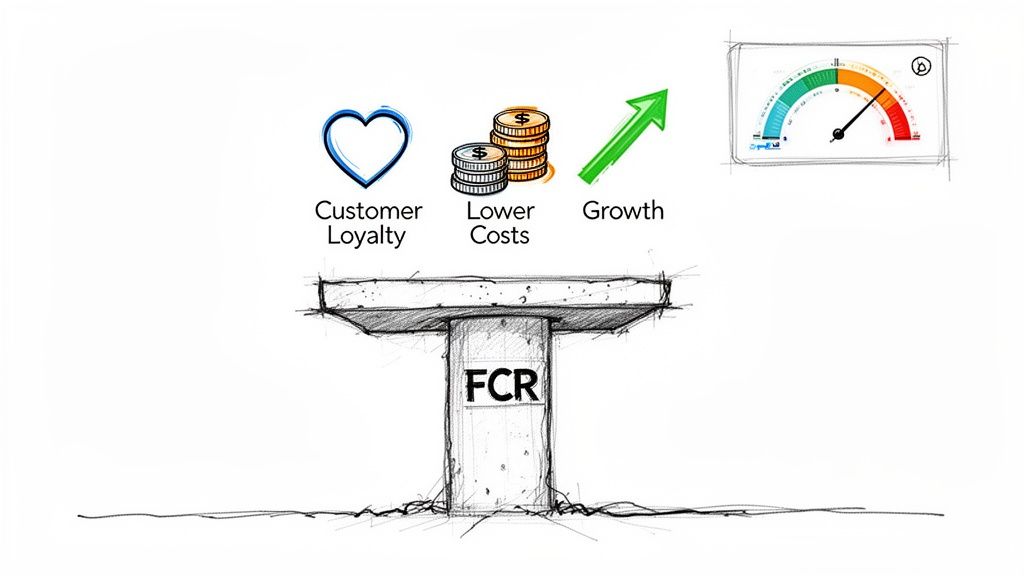
It's easy to see First Call Resolution (FCR) as just another number on a dashboard, but its real impact is much bigger. A high FCR rate is a powerful sign of your operational health and a cornerstone of customer loyalty.
When you solve a customer's problem on the first try, you do more than just close a ticket. You reinforce their trust in your brand and turn a potential point of friction into a genuinely positive experience. That’s how you build loyalty.
The financial side is just as compelling. Every repeat call is a drain on your resources—it costs agent time, ties up your systems, and adds to customer frustration. By focusing on how to improve first call resolution, you shift your support team from a reactive cost center into a proactive engine that creates real value for the business.
The benefits of a strong FCR strategy aren't just theoretical; they are clear and measurable. Industry benchmarks from SQM Group's extensive research show that a solid FCR rate sits between 70% and 79%.
Only an elite 5% of contact centers hit that world-class 80% or higher mark, but the payoff is huge. For every 1% improvement in FCR, the interactional Net Promoter Score (NPS) jumps by 1.4 points. Even more impressively, a staggering 95% of customers whose issues are resolved on the first call will stick with you.
This guide is your practical playbook for getting there. To give you a clear roadmap from the start, here’s a quick look at the core strategies we'll be breaking down.
| Strategy Area | Key Action | Expected Outcome |
|---|---|---|
| Data & Diagnostics | Establish a reliable FCR baseline and analyze repeat call drivers. | Clear understanding of where and why failures happen. |
| Process Redesign | Simplify and optimize internal workflows and escalation paths. | Reduced agent effort and faster, more consistent resolutions. |
| Agent Enablement | Provide targeted coaching, better scripts, and clear authority. | Confident, empowered agents who can solve more issues independently. |
| Knowledge Management | Create and maintain a single, accessible source of truth. | Agents find accurate information quickly, reducing hold times. |
| Omnichannel & Automation | Unify customer context across channels and use AI for guidance. | Seamless customer handoffs and smarter, guided agent workflows. |
| Feedback & KPIs | Implement robust feedback loops and track leading indicators. | Continuous improvement driven by both customer and agent insights. |
Each of these levers represents a critical piece of the FCR puzzle. By addressing them systematically, you create a foundation for lasting change.
The real goal of FCR isn’t just to close tickets faster. It’s to eliminate the reasons customers have to call back in the first place, building a more efficient and customer-centric operation.
This framework is designed to take you beyond just measuring the problem. It gives you actionable steps to diagnose the root causes, empower your team, and build smarter workflows. At the end of the day, improving FCR means investing in your customers' success—and that's an investment that always pays off.
If you want to improve your First Call Resolution, you first have to understand why customers are calling back in the first place. Knowing your FCR rate is one thing—it tells you that you have a problem. But it doesn't tell you why. The real work starts when you dig past the surface-level data to uncover the genuine root causes of those repeat contacts.
Many leaders jump to the conclusion that repeat calls are just an agent performance issue. But the data often tells a different story. Research from SQM Group found that while agent mistakes do cause about 38% of unresolved issues, a massive 49% are actually due to broken company policies and procedures. It’s a clear signal that you need to examine the entire system, not just individual agent interactions.
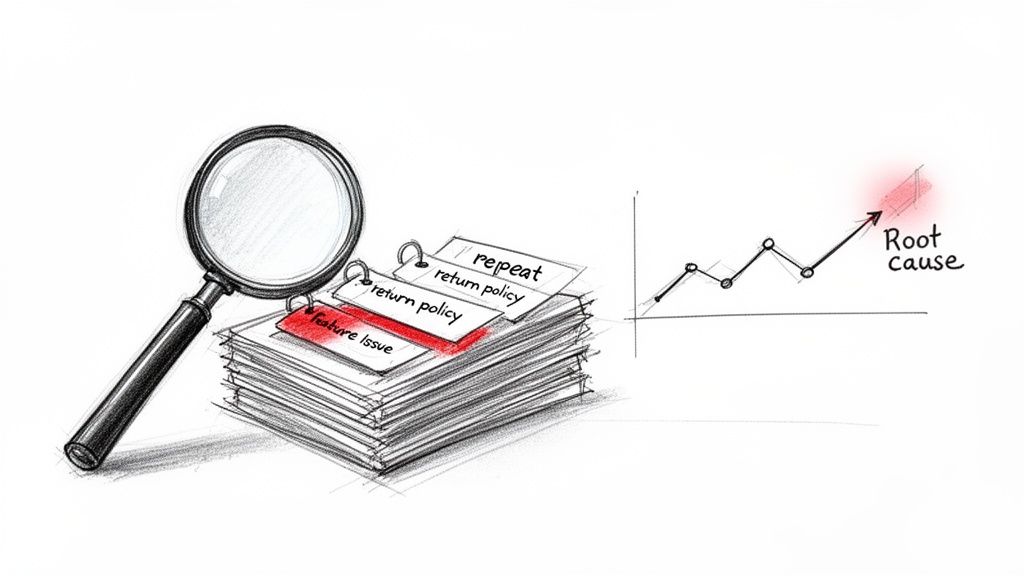
Think of a repeat contact audit as a detective's investigation. You're piecing together clues from different sources to build a clear picture of what’s really going wrong. The goal isn't just to look at data; it's to find specific, recurring patterns that point to fixable problems.
This is about getting surgical with your analysis. It's the difference between knowing "customers call us a lot about returns" and discovering that "25% of our return calls happen because the return shipping label link in our order confirmation email is broken." One is a vague observation; the other is an actionable insight.
Your own systems—your CRM, your ticketing platform, your call logs—are goldmines of information just waiting to be explored. When you combine the "what" (quantitative data) with the "why" (qualitative insights), you can stop guessing and start making evidence-backed decisions.
Here’s how to get started:
late_fee_dispute, payment_method_failed, or subscription_downgrade_confusion. Actionable Insight: If you see a spike in payment_method_failed tags every Monday, you might discover your payment processor runs weekend maintenance that isn't communicated to customers, giving you a clear problem to solve.Your agents are not just call handlers; they are your front-line intelligence network. They hear directly from customers every day and often have an intuitive sense of what's causing repeat issues long before the data confirms it.
Data will only ever give you part of the picture. For the complete story, you have to talk to the people on the ground who are having these conversations every single day: your agents. They hold invaluable insights that no dashboard could ever reveal.
Creating clear channels for this feedback is a non-negotiable part of any serious FCR strategy.
#broken-processes) or a simple form where they can report recurring complaints, outdated knowledge base articles, or policies that just don't make sense.Imagine a focus group reveals that a new software feature is driving tons of calls because the in-app tutorial is confusing. That's a high-impact insight your product team can use to make a small change that dramatically cuts call volume and frustration. By blending hard data with human intelligence, you can build a complete understanding of why customers call back and start creating solutions that actually last.
Once you've dug into why customers are calling back, the real work begins: empowering your agents to resolve those issues the first time around. Your support team is the absolute core of your FCR strategy, but they can't do their jobs if they're tied down by rigid policies or digging through a mess of outdated information.
The goal here is to shift them from being script-readers to confident, capable problem-solvers. This all comes down to arming them with the two most important tools they can have: knowledge and authority. Without both, even your best agents will struggle to deliver a one-touch resolution.
Let's be honest, a clunky, disorganized knowledge base is worse than having none at all. It just makes agents feel less confident and wastes precious time while they hunt for the right answer. A modern, searchable knowledge hub isn't a nice-to-have; it's a non-negotiable for high FCR.
Forget about long, dense paragraphs. You need to structure information for a quick glance and immediate use.
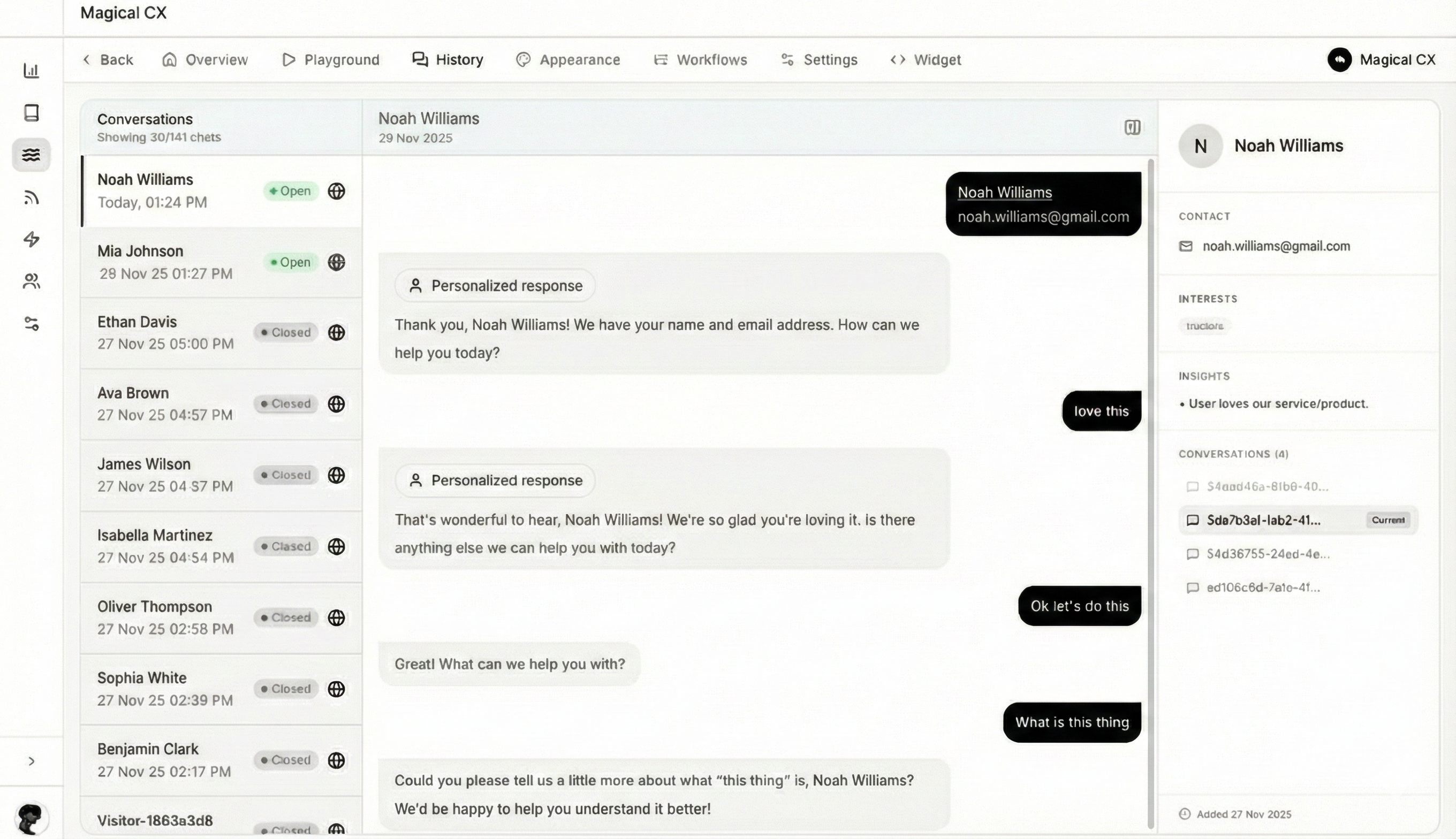
The screenshot below shows how a modern platform can pull all customer information into one place, so agents get the full story without juggling a dozen tabs.
This kind of unified view gives agents instant access to a customer's history and relevant data. It cuts down on repetitive questions and gets them to a solution much faster.
"Let me get my manager" is the sound of FCR failing. Empowerment doesn't mean giving agents a blank check. It’s about setting crystal-clear boundaries so they know exactly what they can do without asking for permission.
This clarity gets rid of hesitation and lets agents take decisive action. A simple "empowerment matrix" is a fantastic, actionable place to start.
| Issue Type | Agent Authority Level | Supervisor Approval Needed For |
|---|---|---|
| Billing Dispute | Waive up to $50 in late fees. | Fee waivers over $50. |
| Shipping Delay | Offer free expedited shipping on the next order. | Full refund for the delayed order. |
| Product Defect | Issue a replacement for items under $100. | Replacements for items over $100. |
Setting these boundaries doesn't just speed things up; it shows your agents that you trust their judgment. That trust is a powerful motivator that encourages ownership and boosts morale.
The data backs this up. The cost of unresolved issues is staggering. Zendesk has found that many contact centers see 30% repeat contacts, which blows up operational costs. But the opportunity is massive: customers whose issues are resolved the first time show 95% loyalty, and every gain in FCR leads to more referrals. You can dig into the numbers and their financial impact in Zendesk's detailed analysis on first contact resolution.
When agents have the right knowledge and the authority to act on it, they’re set up to succeed. This doesn't just move the needle on your metrics; it fundamentally improves the customer experience. If you're looking to take it a step further, exploring different customer experience management tools can give your team an even bigger advantage. By giving them the right resources, you aren't just crossing your fingers for better FCR—you're actively building a system designed to achieve it.
Look, even your best agent can’t fix a broken process. If your support workflows are a tangled mess of transfers and dead ends, you’re setting your team up to fail on FCR. Building a smarter system is all about creating the path of least resistance for everyone involved—your customers and your agents—so every conversation flows naturally toward a resolution.
This whole thing starts the second a customer reaches out. The number one goal is to banish the dreaded phrase, "Let me transfer you." That’s almost always a sign that your initial routing failed, and it puts FCR in immediate jeopardy. By designing smarter workflows, you get customers to the right expert on the first try.
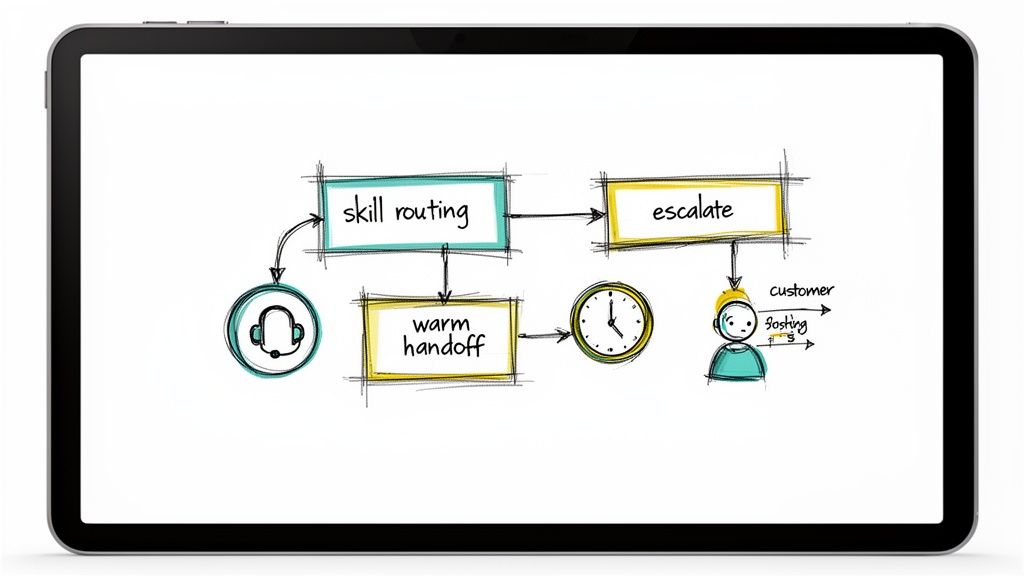
Intelligent routing is so much more than just sending a customer to the next person with a headset on. It’s about strategically matching their specific problem with the agent who actually knows how to solve it. This is where skill-based routing completely changes the game.
Instead of one giant, generic queue, you build specialized pools of agents based on what they know best.
Practical Example: A customer calling about their "Model X Pro" coffee machine should be routed directly to an agent trained on that specific model, not a generalist who has to spend five minutes just looking up the manual. That simple change can turn a painful 15-minute call into a clean, 5-minute fix.
Let's be real—sometimes, an escalation has to happen. The trick is to make that transfer feel completely invisible to the customer. A warm handoff is when all the important context and customer details travel seamlessly from one agent to the next. The customer should never have to repeat their story.
A cold transfer—where a customer is dumped into another queue to start from scratch—is an absolute customer experience killer. A warm handoff respects their time and keeps the momentum going.
This isn't just about process; it's about having the right tools. Your CRM or helpdesk needs to let agents jot down quick, clear notes that the next person can see instantly. Actionable Tip: Before making the transfer, the first agent should give the specialist a quick rundown: "Hey, I'm sending over Jane. She's getting a failed payment error on order #12345, and I've already confirmed her billing address is correct." Smooth, simple, and effective.
For those common but tricky issues—like a warranty claim or a software bug—leaving things to an agent's memory is asking for trouble. A guided workflow is a step-by-step process you build right into your helpdesk. It literally walks the agent through every required action, ensuring nothing gets skipped.
Take that warranty claim process. A guided workflow might look like this:
These workflows bake your best practices right into the system, slashing agent errors and making sure every customer gets the same efficient, high-quality service. When you structure processes this way, you don't just boost your FCR; you also reduce customer service costs by cutting down on all those expensive follow-ups. You're building a system where the right way to solve a problem is also the easiest path for your team.
Let's be clear: bringing AI into your contact center isn't about replacing people. It's about making your skilled agents even better at their jobs—smarter, faster, and more effective. Think of modern AI tools as a co-pilot, designed to handle all the tedious, time-consuming tasks so your team can focus on what they do best: critical thinking and creative problem-solving. This is where you’ll see your FCR numbers really start to climb.
Instead of your agents juggling ten different browser tabs while a customer waits, the right AI brings the exact information they need directly to their screen, at the moment they need it. It transforms a frantic, stressful search for answers into a smooth, guided conversation.
One of the most powerful applications here is conversational intelligence. This tech gives agents a complete, unified view of a customer’s entire history across every single channel—email, chat, social media, and previous calls.
Practical Example: A customer calls in, clearly frustrated after a chat session an hour ago went nowhere. Without this intelligence, your agent is starting from scratch, forcing the customer to re-explain their entire problem. That’s a recipe for a bad experience.
But with it, the agent’s screen immediately shows the chat transcript. They can open the call with, "Hi Sarah, I see you were just chatting with my colleague about your recent order. I've got the details here, so you don't have to repeat anything. Let's get this sorted out for you." That simple shift completely changes the dynamic and puts your agent in a position to solve the issue on the spot.
Another huge leap forward comes from agent-assist tools. These AI assistants are actively listening to conversations in real time and proactively helping the agent. It’s like having a subject matter expert whispering in their ear, providing the exact piece of information or next step needed to resolve the call.
Here’s what that looks like in practice:
The best AI tools don't just dump data on an agent's screen; they provide clear, actionable guidance. They anticipate what the agent needs next and remove the friction that so often leads to a second or third call.
We know this approach gets results. Industry data shows a typical service desk hits a 74% FCR, but with the right diagnostics and tools, that number can climb above 90% for eligible contacts. Tech upgrades have helped companies like CEQUENS jump from a 29% to a 70% FCR. You can dig into more benchmarks and tactics in these in-depth call center statistics.
Finally, AI is brilliant at automating the repetitive, manual tasks that drain an agent's time and mental energy. This is where the efficiency gains really add up.
Actionable Insight: Instead of the agent spending 3-5 minutes after each call typing up notes, summarizing the conversation, or filling out forms, the AI can handle it in seconds. For example, after an agent agrees to process a product return, the AI can automatically populate the return merchandise authorization (RMA) form with the customer's name, order number, and item details, generate a concise call summary, and trigger the confirmation email to the customer. This automation drastically cuts down on after-call work, reduces the risk of human error, and frees up your agents to move on to the next customer, refreshed and ready to help.
The difference between a fully manual process and one supported by AI is night and day. Take a look at this comparison to see how a platform like MagicalCX can change the game.
| Task | Traditional Manual Approach | AI-Powered Approach (e.g., MagicalCX) |
|---|---|---|
| Finding History | Agent manually searches multiple systems for past interactions. | AI presents a unified timeline of all past contacts instantly. |
| Information Lookup | Agent puts customer on hold to search the knowledge base. | AI surfaces the relevant article based on conversational cues. |
| After-Call Work | Agent spends several minutes manually typing call notes and summaries. | AI auto-summarizes the call and populates necessary forms. |
| Issue Resolution | Agent relies on memory and training to follow complex procedures. | AI provides a step-by-step guided workflow for consistency. |
By taking these manual burdens off your team's shoulders, you empower them to be more present, knowledgeable, and effective in their conversations—directly driving up your first call resolution rate.
Getting FCR right isn't a "set it and forget it" project; it's a constant process of refinement. If you want to make real, lasting progress, you need a system that tracks the right things and, more importantly, uses those insights to get better. This is how you create a powerful cycle where every customer conversation makes you smarter.
Sure, the standard FCR formula is simple: (Total issues resolved on the first try / Total number of unique issues) x 100. It gives you a starting point, a high-level benchmark. But the real magic happens when you start digging into what that number actually means.
A single, company-wide FCR score can be misleading. It often papers over critical weaknesses hiding just below the surface. To get information you can actually act on, you have to slice and dice the data.
Actionable Tip: Start tracking FCR by specific issue types, individual agents, or different support teams. It's not uncommon to find that your billing team is knocking it out of the park with a 90% FCR, while the tech support team handling a new product launch is underwater at 45%.
This granular view is your roadmap. It tells you exactly where to focus your coaching, your tools, and your resources. You can stop guessing and start making targeted fixes that actually move the needle. For a deeper look into the various metrics that tell the whole story, check out our guide on measuring customer service effectively.
Modern tools can give your agents an incredible advantage by providing context and automating routine tasks, which is a huge boost for FCR.
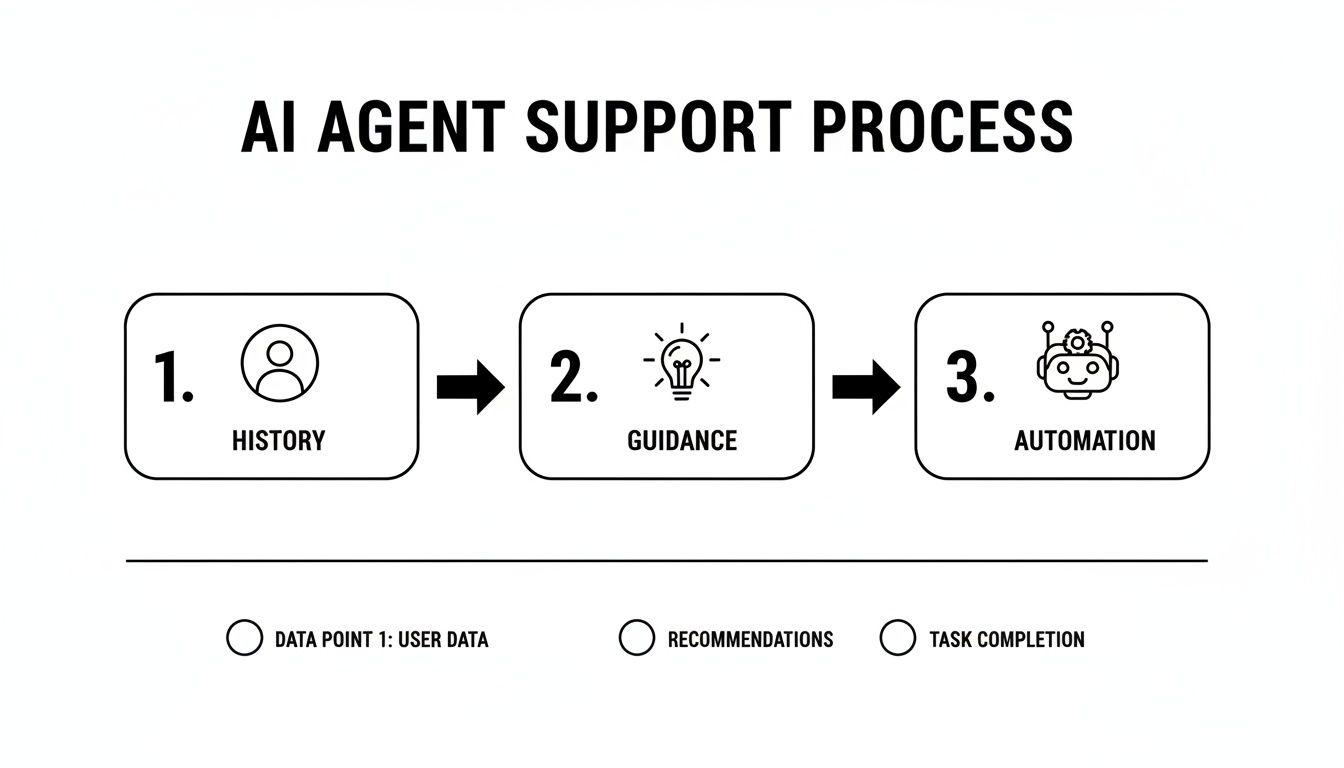
As you can see, giving agents instant access to a customer's history and walking them through the right steps isn't just a nice-to-have—it's fundamental to solving problems quickly and correctly on the first contact.
Data gathering dust on a dashboard is pointless. The real objective is to build a feedback loop where your FCR insights directly fuel improvements across the entire company. When you do this, your support team stops being just a reactive cost center and becomes a strategic intelligence hub.
Your FCR data isn't just a support metric; it's unfiltered feedback on your products, policies, and processes. Use it to drive meaningful change that prevents future calls from happening in the first place.
Here’s what this looks like in the real world:
Even with the best playbook, you're bound to have questions when the rubber meets the road. Let's tackle some of the most common ones I hear from teams trying to nail their First Call Resolution.
Everyone wants to know the magic number. The industry standard benchmark hovers between 70% and 79%, and that’s a solid target for most teams.
But hitting 80% or higher? That’s what we consider world-class territory, something only about 5% of contact centers consistently achieve. Keep in mind, context is everything. Practical Example: A retail support team handling order status questions will naturally have a higher FCR than a team handling complex B2B software issues. The real goal is to benchmark against your peers and, more importantly, against yourself. Focus on steady, meaningful improvement.
It's tempting to think that shorter calls mean better efficiency, but that's a classic trap when it comes to FCR. The relationship between Average Handle Time (AHT) and FCR is a bit of a balancing act.
Extremely long calls are often a symptom of a deeper problem—an agent is hunting for information, wrestling with clunky systems, or unsure of the next step. These are FCR killers. But slashing AHT for the sake of it is just as bad. Actionable Insight: The focus should be on efficiency, not speed. Give your agents the tools and knowledge to find answers quickly. That's how you can take a frustrating 15-minute call and turn it into a successful 7-minute resolution, improving both AHT and FCR the right way.
A word of caution: if your AHT is suspiciously low, it might be a red flag. It can mean agents are rushing customers off the phone before their problem is truly solved, which just guarantees a callback.
Absolutely. You can make a huge dent in your repeat call volume just by getting back to basics.
Don't underestimate the power of solid fundamentals. Sharpening your agent training, building a knowledge base that’s actually useful and easy to search, and giving your agents the autonomy to make decisions are massive levers you can pull. Practical Example: Simply creating and enforcing a "warm handoff" policy where agents must brief the next person before transferring can significantly improve resolution on the second touchpoint, which is a step in the right direction.
That said, to really break through to that elite, world-class level, technology becomes the game-changer. It’s what separates the good from the great. AI tools that give agents instant context or guide them through tricky workflows are what enable your team to scale that excellence consistently.
Ready to give your agents the AI co-pilot they need to solve issues on the first try? MagicalCX provides conversational memory and guided workflows to supercharge your team's FCR performance. Learn how MagicalCX can transform your customer support.


