See your AI teammate in action now
Ready to make support faster, kinder, easier and help customers feel good about choosing you?
PS: Sales improves too...
No credit card required
14 days free trial
DIY or Guided setup
Ready to make support faster, kinder, easier and help customers feel good about choosing you?
PS: Sales improves too...
No credit card required
14 days free trial
DIY or Guided setup
A guide to ecommerce customer support software ROI for D2C brands, covering omnichannel support, AI automation, integrations, key KPIs, and implementation workflows.
Manish Keswani
Summary by MagicalCX AI
Ecommerce customer support software turns support from a cost center into a growth lever by automating high-volume requests like WISMO, freeing up to 30% of your team’s time while meeting the 77% of shoppers who prefer self-service.
Let's be honest: traditional customer support just isn't cutting it anymore, especially in the fast-paced world of ecommerce. The old model of separate channels and endless ticket queues simply can't keep up with what today's shoppers expect. It leads to frustrating experiences that cost you sales and, more importantly, customer loyalty. The answer isn't to work harder; it's to work smarter with specialized ecommerce customer support software—tools built not just to solve problems, but to create relationships and actually drive revenue.
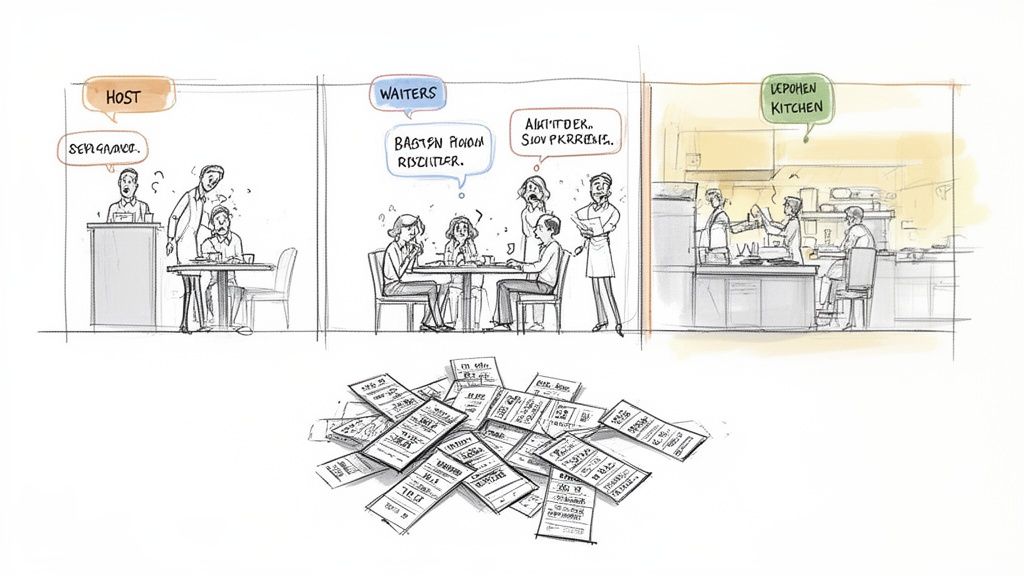
Think of a chaotic restaurant on a Saturday night. The host isn't talking to the servers, who have no idea what's happening in the kitchen. Customers are left stranded, orders get lost in the shuffle, and everyone's temper is running short. This is pretty much what happens when a growing D2C brand tries to manage support with a bunch of disconnected tools. Every channel—email, social media DMs, live chat—operates in its own little world.
When your tools don't talk to each other, you create a jarring, disjointed experience for your customers. Someone might DM you on Instagram about an order, send a follow-up email, and then jump on live chat—only to have to explain their problem from the very beginning three separate times. Each interaction feels like starting over, which chips away at their trust and makes your brand look disorganized.
Modern shoppers expect a single, continuous conversation, not a series of isolated tickets. They want you to know who they are, remember what they’ve asked before, and make the whole process feel personal and effortless.
To really see the difference, let's compare the old way with the new.
| Attribute | Traditional Support (The Old Way) | Modern Ecommerce Support (The New Way) |
|---|---|---|
| Focus | Reactive; solves problems as they come in. | Proactive; anticipates needs and turns support into a positive experience. |
| Customer Experience | Disconnected; customer repeats themselves across channels. | Unified; one continuous conversation history for each customer. |
| Agent Workflow | Manual; agents juggle multiple tabs and systems. | Integrated; agents see order history and conversation data in one view. |
| Channel Management | Siloed; email, chat, and social are separate queues. | Omnichannel; all conversations flow into a single, shared inbox. |
| Business Role | Cost center; a necessary expense. | Revenue driver; creates up-sell opportunities and builds loyalty. |
The table makes it clear: clinging to outdated methods means you're fundamentally misaligned with how modern commerce works.
When you're just starting out, handling a few dozen emails a day by hand seems doable. But what happens when you grow? A successful holiday sale or a viral marketing campaign can turn that manageable trickle of questions into a flood that completely overwhelms your team. This is precisely where manual, reactive support models fall apart.
As your order volume climbs, so does the complexity of the issues. Your agents get buried under an avalanche of repetitive questions like "Where's my order?" or "How do I start a return?" This not only burns out your team but also sends your response times through the roof, leaving customers angry and ready to take their business elsewhere. It's this exact pressure that's fueling explosive growth in the market. The global customer support software space is expected to jump from USD 4,805.74 million in 2026 to an incredible USD 23,074.89 million by 2035, as detailed in research on customer support software market growth. Brands are desperately seeking a way to manage the volume without hiring a massive team.
This is where modern ecommerce customer support software steps in. Think of it less as a simple tool for logging tickets and more as the central nervous system for all your customer interactions.
Ultimately, shifting to a modern platform isn't just an upgrade—it's a fundamental change in how you manage customer relationships. It’s how you scale your brand without ever sacrificing the quality of the experience that got you here in the first place.
Great ecommerce support software isn't just a collection of features; it’s the engine that powers a seamless customer experience. These core capabilities are what separate a clunky, reactive helpdesk from a proactive, revenue-driving support operation. Once you understand what to look for, you'll have a clear framework for evaluating any platform.
The most critical piece of the puzzle is omnichannel orchestration. This is the magic of uniting every customer conversation—from email and social media DMs to live chat and SMS—into a single, continuous thread. Instead of juggling fractured ticket queues, your agents see one chronological story for each customer, no matter how they choose to reach out.
Practical Example: A customer DMs your apparel brand on Instagram asking about the fit of a new jacket. A week later, after purchasing, they email support about a shipping delay. With an omnichannel platform, the agent handling the email instantly sees the previous Instagram conversation. They can reply, "I'm so sorry for the delay on your jacket! I know you were excited about the fit. Let me track that down for you right now." This small, context-aware touch makes the customer feel seen and valued.
Building on that unified conversation is conversational memory. Think of it as the platform’s ability to remember past interactions and use that history to be more helpful. This is way more than just showing old messages. Modern AI uses this context to understand what a customer really wants, anticipate their needs, and provide much smarter service.
Practical Example: If a customer has previously asked about hypoallergenic materials for their skincare products, the AI can flag this preference for an agent in a future chat about a new serum. The agent can then proactively say, "I see you're interested in our new serum. I remember you were looking for hypoallergenic options, and I can confirm this one is perfect for sensitive skin." That small detail turns a simple question into a personalized, thoughtful experience.
This is what elevates a support interaction from a transactional exchange to a genuine relationship-building moment. It shows the customer you’re paying attention.
For any growing D2C brand, intelligent automation is an absolute game-changer. I'm not talking about those frustrating, dead-end chatbots from a few years ago. I’m talking about smart automation that handles the high-volume, repetitive tasks that eat up your team's day, directly boosting your efficiency and keeping customers happy.
A huge part of this is giving customers the power to solve their own problems. As experts on building a modern self-service customer portal point out, empowering customers to find answers on their own is a massive win.
Here are some actionable examples:
By handling these common requests, automation lets your agents focus on the complex, high-value issues where a human touch really makes a difference. To see exactly how these workflows come to life, check out our guide on how to automate customer service.
While automation handles the routine stuff, an AI agent co-pilot gives your human team superpowers during live conversations. It's like having a smart assistant whispering in your agent's ear, feeding them the information they need to resolve issues faster and more accurately.
Practical Example: A customer asks a technical question about the battery life of an electronic gadget you sell. The AI co-pilot instantly surfaces the product's official spec sheet and three approved talking points about battery performance from your knowledge base, all within the agent's chat window. This dramatically cuts down on research time and ensures every agent provides accurate, consistent information.
Finally, none of these features work in a bubble. The best support software has to offer deep integrations with the tools you already rely on every day. It needs to be the central hub that connects your entire tech stack, creating a true 360-degree view of the customer.
For any D2C brand, a few integrations are non-negotiable:
Without these connections, your team is stuck toggling between a dozen browser tabs, which wastes time and invites mistakes. True integration puts all the necessary information right at their fingertips, all within the support platform.
Putting money into modern ecommerce customer support software is about so much more than just clearing out your ticket queue. It’s a strategic investment that directly pumps up your bottom line. The features built into these platforms aren't just bells and whistles; they’re designed to produce real business results that every D2C leader cares about, from cutting operational costs to boosting the lifetime value of every single customer.
This tight link between technology and profitability is exactly why the market is exploding. Projections show the retail e-commerce software market rocketing from USD 4.95 billion in 2026 to a staggering USD 26.95 billion by 2032. That’s a growth rate of 32.4% every year. This isn't just a trend; it's a full-blown tech arms race among D2C brands to nail their customer experience. You can explore the full market analysis on Research and Markets to see just how fast things are moving.
This concept map shows how core features like unified chat, AI, and key integrations come together to create a powerful, centralized support system.
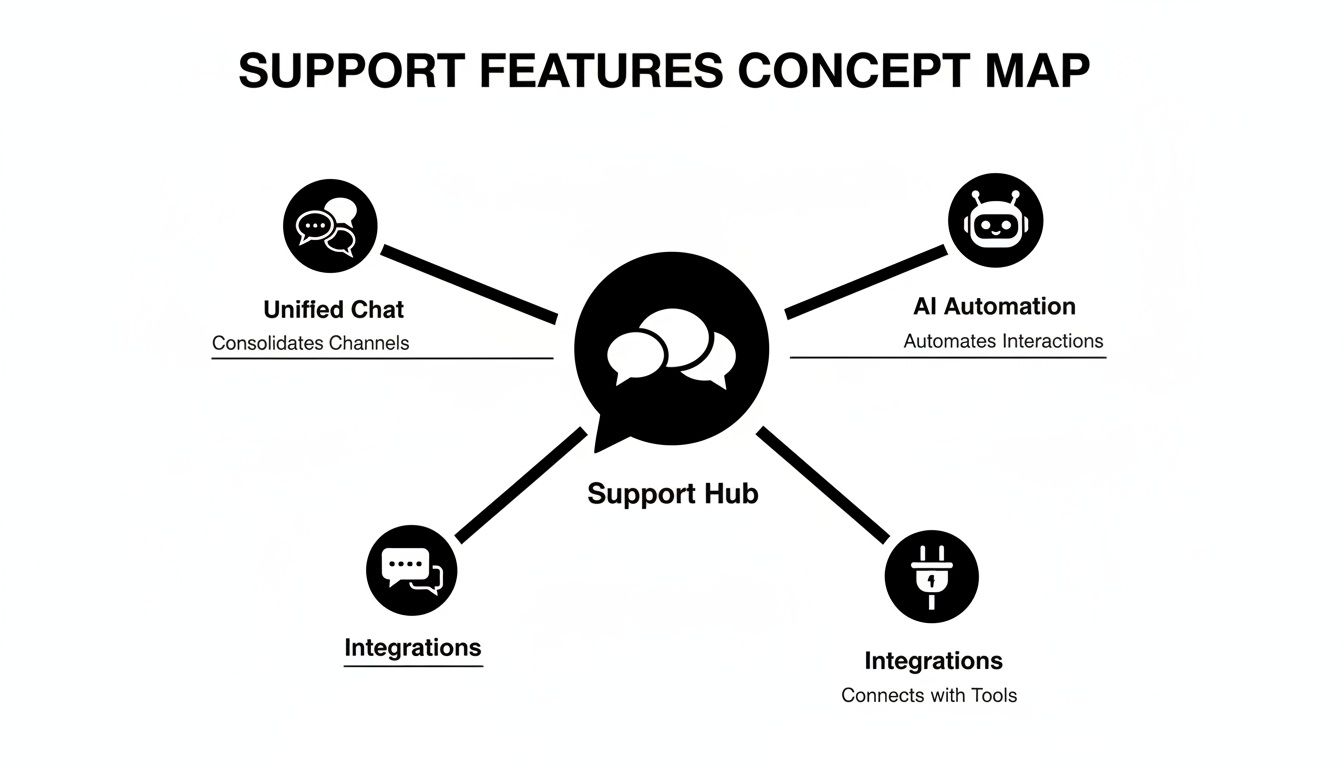
As you can see, no single feature works on an island. They all interconnect to build a system that fuels growth.
One of the first places you’ll see a financial win is with automation. When you automate all those repetitive, simple tasks, you immediately slash your cost-per-contact—a make-or-break metric for any support team.
Actionable Insight: Set up an automated workflow to handle all "Where Is My Order?" (WISMO) requests. If this type of ticket makes up 30% of your volume, automating it can free up nearly a third of your support team's time overnight, allowing them to focus on complex issues like product consultations or handling unhappy customers. This single action directly lowers your operational costs.
This newfound efficiency also sends your first-contact resolution (FCR) rate through the roof. With the easy stuff handled, your team has the time and mental space to solve complex problems right the first time. Think of automation not as a replacement for your people, but as the ultimate assistant that makes them better at their jobs.
Great support software doesn't just solve problems; it builds relationships that keep customers coming back for more. When an agent can see a customer's entire order history and every past conversation in one place, the interaction instantly becomes more personal and helpful.
A support interaction should be an opportunity to strengthen a customer relationship, not just close a ticket. Proactive, empathetic support is a powerful engine for loyalty and repeat purchases.
Practical Example: A customer at your apparel brand wants to return a shirt that's too small. Instead of a cold, transactional refund, a guided workflow can proactively offer an exchange for the right size and even suggest a pair of shorts that would complete the look, perhaps with a 10% discount to sweeten the deal. That simple, automated touch can turn a potential loss into a positive moment that builds real loyalty and increases the average order value.
This is also where having a solid customer education strategy comes into play, as it helps customers help themselves and reduces the need for reactive support in the first place.
Finally, a modern support platform is a goldmine of business intelligence. The analytics dashboards do way more than just track agent performance—they shine a light on problems across your entire business. By analyzing conversation tags and spotting trends, you can get ahead of issues before they snowball.
Actionable Insight: Create tags in your support software for reasons like "damaged in shipping," "confusing instructions," or "website bug." After one month, run a report. If "confusing instructions" is a top tag for your new coffee maker, that’s your cue to create a short how-to video for the product page and your post-purchase emails. This proactive step solves the problem at its source, preventing countless future support tickets.
These insights let you fix the root cause of problems, not just patch up the symptoms. By smoothing out these rough spots, you create a better experience for everyone and prevent thousands of future support tickets. For a deeper dive into the metrics that matter most, check out our guide on measuring customer service performance.
To make this even clearer, let's map the features we've discussed directly to the ecommerce KPIs they influence. This table shows how specific software capabilities translate into measurable business value.
| Software Feature | Primary KPI Impacted | How It Drives Business Value |
|---|---|---|
| Automation & AI Chatbots | Cost-Per-Contact | Deflects common, repetitive questions, reducing the need for live agent handling and lowering labor costs. |
| Omnichannel Support | First Contact Resolution (FCR) | Agents have full context from any channel, enabling them to solve issues on the first try without escalations. |
| Conversational Memory | Customer Satisfaction (CSAT) | Customers don't have to repeat themselves, leading to a smoother, less frustrating, and more personal experience. |
| Integrations | Average Handle Time (AHT) | Agents can access order data, process refunds, and manage subscriptions without leaving the helpdesk, speeding up resolutions. |
| Analytics & Reporting | Ticket Volume Reduction | Identifies recurring issues (e.g., product defects, unclear policies), allowing you to fix the root cause and prevent future tickets. |
| Agent Assist & Proactive Support | Customer Lifetime Value (LTV) | Empowers agents to turn service interactions into sales opportunities by upselling or cross-selling relevant products. |
This direct line from a feature to a financial outcome is why choosing the right support platform is one of the highest-leverage decisions an ecommerce leader can make. It's not an expense; it's an investment in efficiency, loyalty, and sustainable growth.
Picking the right ecommerce customer support software can feel like a monumental task. With so many options, it's easy to get lost in a sea of feature lists. But the best way to choose isn't by comparing features in a spreadsheet—it's by focusing on what actually solves your biggest headaches and improves your customer's experience.
The process should be a strategic decision, not a guessing game. It all starts with understanding your own business first.
First things first: map out your most common customer journeys. What are the top three to five reasons people reach out to your support team? These aren't just support tickets; they are the make-or-break moments where you either create a lifelong fan or a very vocal critic.
For most direct-to-consumer brands, these high-stakes scenarios usually boil down to a few key issues:
Once you've identified these core scenarios, you're ready to talk to vendors. And here's the key: don't sit back and watch a generic demo. You need to drive the conversation. Ask them to show you, step-by-step, how their platform handles your specific situations. Don't let them dazzle you with flashy features that you'll never use.
To get to the heart of what a platform can really do, you need to ask the right questions. These are designed to cut through the marketing fluff and reveal how the software will actually perform for your team and customers day in and day out.
A great demo shouldn’t just show you what a platform does; it should show you how it will make your team more effective and your customers happier. Focus on workflows, not just features.
Use this checklist to guide your conversations with vendors:
Asking pointed questions like these forces vendors to prove their platform's practical value instead of just talking about it.
Finally, remember you're not just buying software; you're entering a partnership. The onboarding and implementation support a vendor provides is a huge clue about what the relationship will be like down the road. You need to figure out if you're getting a hands-off setup or a true white-glove partner. As you explore your options, understanding the different types of customer experience management tools available can give you a better sense of what a quality partnership entails.
Make sure you ask every potential vendor about their implementation plan:
A vendor who genuinely invests in your success from day one is more than just a provider. They become a partner in your growth, and that's the kind of relationship that ensures you're not just buying a tool, but a solution that will grow right alongside your brand.
Picking the right ecommerce customer support software is a huge step, but the real magic happens when you bring it to life. Moving from a decision to a live system is more than just flipping a switch. It’s about creating a smart plan to weave the platform into your daily operations and build workflows that start paying for themselves right away. This is how you turn a list of features into real, revenue-driving actions.
The first part of the journey—onboarding—is absolutely critical. A good partner will walk you through connecting your most important systems, starting with your ecommerce platform like Shopify or BigCommerce. This syncs your entire order history, customer data, and product catalog, giving your new software the context it needs to be powerful from day one.
Next, you’ll plug in all your communication channels—email, social media DMs, live chat—into the new unified inbox. This simple step ensures no customer conversation gets lost in the shuffle. From there, it's all about building your first automated workflows, which is where you’ll see the quickest return on your investment.
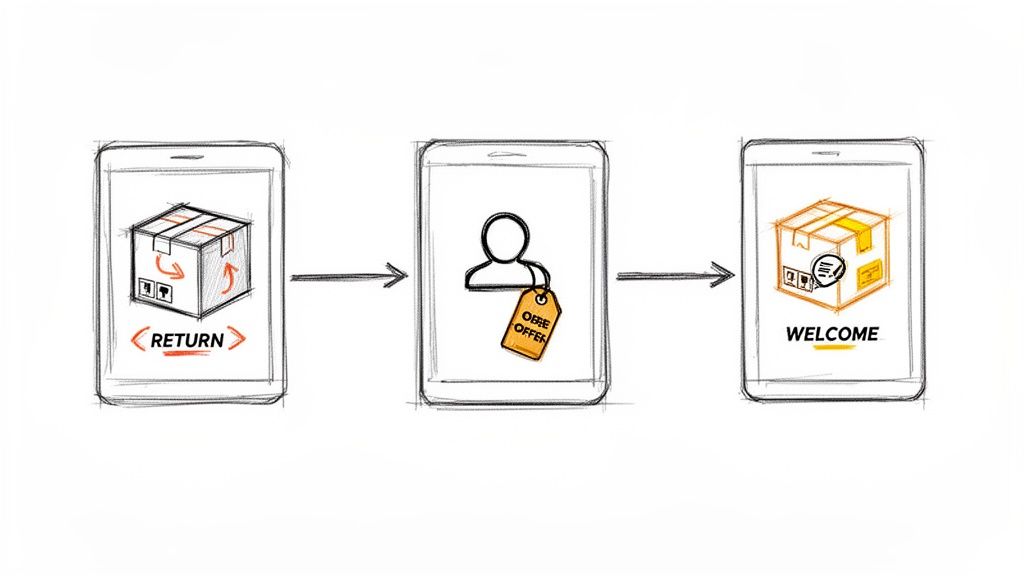
For any direct-to-consumer brand, returns are a massive operational headache. But they’re also a golden opportunity to keep revenue and earn a customer for life. Instead of just processing a refund and calling it a day, a smart workflow transforms a potential loss into a positive, self-service experience.
And let’s be honest, this is what customers want now. A staggering 77% of e-commerce customers prefer online self-service, which is a big reason why the global market is expected to hit $6.88 trillion by 2026. Automating returns speaks directly to that preference. You can explore more data on the rise of customer self-service software to see just how much this trend is changing customer expectations.
Here’s what a smart return workflow looks like in the real world:
This one workflow can deflect dozens of tickets, slash manual processing time, and actively save sales that you would have otherwise lost for good.
For subscription brands, churn is the silent killer. A proactive "subscription save" workflow is your secret weapon, using data to spot at-risk subscribers and step in before they click "cancel." This is where modern support software truly proves its worth, shifting from just answering questions to actively anticipating customer needs.
The best support platforms don't just solve problems; they prevent them. By identifying friction points in the customer journey, you can trigger automated, personalized outreach that strengthens the relationship and protects recurring revenue.
This kind of workflow is triggered by behaviors that scream "I might cancel!"—things like a declined payment, a skipped delivery, or even just lingering on the cancellation page.
This isn't something a basic chatbot can do. It requires a deep connection to your billing system and real-time customer data to pull off effectively.
Those first few moments after a customer places an order are crucial. They set the tone for the entire relationship and can head off a ton of future support tickets. A great post-purchase welcome workflow guides new customers through setup and usage on their favorite channel, making sure they get value from your product from the very start.
This is so much more than a simple order confirmation. Think of it as a multi-step, omnichannel sequence built to educate and delight.
Example Welcome Workflow for a Skincare Brand
By teaching customers how to succeed with your products, you're not just creating a fantastic onboarding experience—you're also drastically cutting down on the "how-to" questions that can clog up your support queue. Each of these workflows shows how a modern platform turns support from a reactive cost center into a strategic engine for retention and growth.
Making the leap from a reactive support queue to a proactive, revenue-generating engine is one of the most critical moves an ecommerce brand can make today. It’s no longer about just closing tickets. It’s about creating intelligent, seamless experiences that make customers want to come back. To do that, you need more than a simple helpdesk; you need a connected, omnichannel platform that acts as the very heart of your customer relationships.
So, what's next? The key is to move forward with a clear, deliberate plan. Don't try to solve everything at once. Focus on a few high-impact steps that will build momentum and show real results, fast.
Your journey starts with an honest look at where you are right now. Once you have that baseline, you can build a solid business case for investing in a modern ecommerce customer support software platform.
Here’s a simple three-step roadmap to get you started:
Jumping into the world of ecommerce customer support software can feel like a big step. It’s natural to have questions. Here are a few of the most common ones we hear from direct-to-consumer brands trying to dial in their customer experience.
Think of a traditional helpdesk as a ticketing system. Its whole world revolves around logging an issue, solving it, and closing the ticket. Done. It’s reactive and transactional.
Modern ecommerce customer support software is built for something entirely different: ongoing conversations. It weaves itself directly into your ecommerce platform, like Shopify, giving your agents a complete picture of who they're talking to—what they bought, when they bought it, and every conversation they've ever had with you.
This changes the game entirely. You’re no longer just closing tickets; you’re building relationships. Instead of a new ticket for every email or social media DM, you have one continuous thread for each customer, no matter how they reach out.
You’d be surprised. Most of the top platforms are designed to get you up and running fast. For a basic setup—hooking up your Shopify store and your main support channels—you can often be live in less than an hour. No developers needed.
Of course, if you're bringing over tons of historical data or connecting a dozen other apps, it might take a few days. The best companies will hold your hand through it with white-glove onboarding, making sure you start seeing a return on day one.
The whole point of a modern platform is to make your life easier, not add another layer of complexity. If the integration process feels like a nightmare, it’s a red flag that the vendor doesn’t get the needs of a busy D2C brand.
It can, but you have to know what you’re looking for. Forget the old-school chatbots that just followed a rigid, pre-written script. That’s not real AI.
Today’s AI taps into conversational memory and your customer data to have interactions that feel genuinely human and personal. For example, it can see that a customer is a VIP based on their lifetime spend and automatically offer them a special perk during a chat. Or it can look at their past orders to recommend a new product they’ll actually love, turning a simple support question into a sale.
Measuring the return on investment isn't just about one number; it's about tracking both cost savings and new revenue. Here are the key metrics you should be watching:
Ready to see how an empathy-first AI platform can turn your support team into a revenue engine? Discover MagicalCX and learn how our intelligent, context-aware system automates complex journeys and builds lasting customer loyalty. Visit the MagicalCX website to get started.